Window mode follows your eyes with your camera, in this browser only: no picture or position leaves your device.
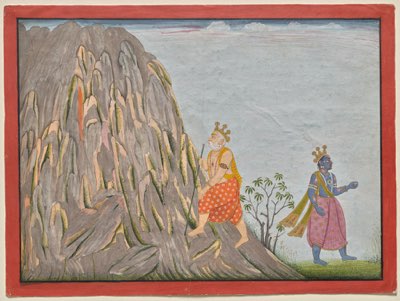
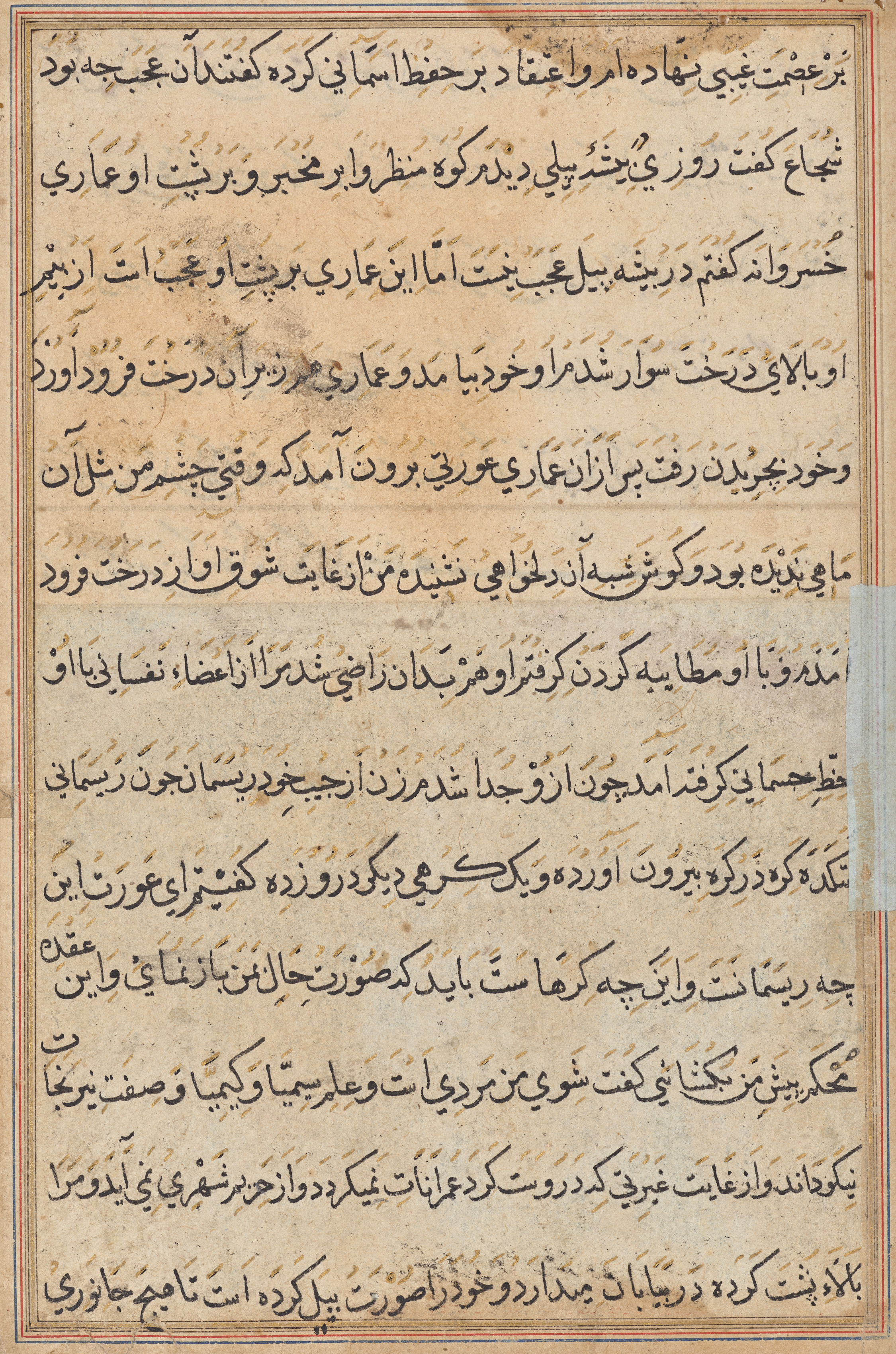
The mendicant’s wife deceives him with a soldier, from a Tuti-nama (Tales of a Parrot): Fourth Night
c. 1560
- Medium
- gum tempera, ink, and gold on paper
- Classification
- Painting
- Dimensions
- Painting only: 9.1 x 10.6 cm (3 9/16 x 4 3/16 in.); Overall: 20 x 13.5 cm (7 7/8 x 5 5/16 in.)
- Culture
- Mughal India, court of Akbar (reigned 1556–1605)
- Museum
- Cleveland Museum of Art, Indian and Southeast Asian Art
- Credit line
- Gift of Mrs. A. Dean Perry
- Rights
- Public domain (CC0), as the museum states it.
- Who can see it
- Teens profiles and older: its subject is for older viewers (war, death, the Passion, drink or the like). How works are placed
View at the Cleveland Museum of Art
About this work
According to this story, written in Persian, a skilled yogi in India reached such a high level of practice that he was able to perform acts of transformation. Anxious to prevent his wife from committing adultery, he transformed himself into an elephant and carried her hidden in a howdah on his back and stayed only in the deep forest, away from men. One day, when the elephant was out foraging for food, a lone soldier came upon the wife, and they made love. The moral of the story is that no matter how extreme the lengths to which one might go to prevent adultery, if someone is inclined to do so, it will happen.