Window mode follows your eyes with your camera, in this browser only: no picture or position leaves your device.
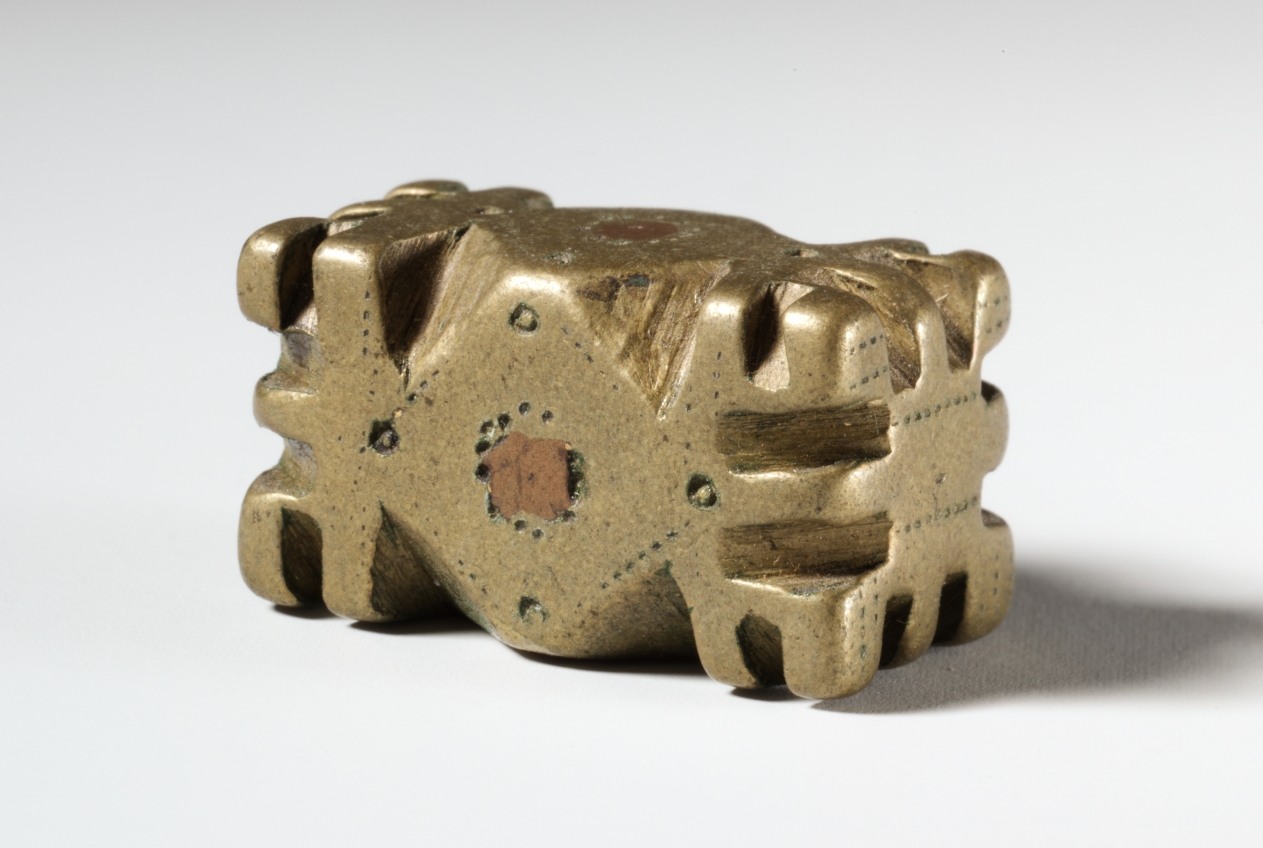
Gold Weight (abrammuo): Geometric Form
1800s
- Medium
- Copper alloy
- Classification
- Tools and Equipment
- Dimensions
- Overall: 2.4 x 1.4 x 1.2 cm (15/16 x 9/16 x 1/2 in.)
- Culture
- Africa, West Africa, Ghana, Akan-style artist
- Museum
- Cleveland Museum of Art, African Art
- Credit line
- Gift of Mr. and Mrs. Robert M. Hornung
- Rights
- Public domain (CC0), as the museum states it.
- Who can see it
- Little Ones profiles and older: it shows gentle subjects for the very young. How works are placed
View at the Cleveland Museum of Art
About this work
The Asante kingdom (an Akan state in present-day Ghana) primarily derived its wealth and power from its massive gold resources. Since at least 1600, small weights in brass and bronze were used to weigh gold dust and nuggets, which were the local form of currency. The rounded, worn-down edges of this weight suggest that it was used frequently. The royal court had the most elaborate store of weights, while commoners often had about a dozen. Their imagery falls into two broad categories: geometric and representational. The latter often refers to proverbs, which used judiciously, marked a wise person.