Window mode follows your eyes with your camera, in this browser only: no picture or position leaves your device.
Chrysanthemums and Cabbage
Tao Cheng (Chinese, active c. 1471–after 1502)
c. 1486 or before
- Medium
- handscroll; ink and slight color on paper
- Classification
- Painting
- Dimensions
- Overall: 28.6 x 253.7 cm (11 1/4 x 99 7/8 in.)
- Culture
- China, Ming dynasty (1368–1644)
- Museum
- Cleveland Museum of Art, Chinese Art
- Credit line
- Anonymous Gift
- Rights
- Public domain (CC0), as the museum states it.
- Who can see it
- Little Ones profiles and older: it shows gentle subjects for the very young. How works are placed
View at the Cleveland Museum of Art
About this work
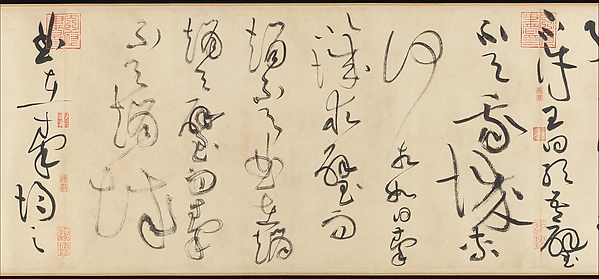
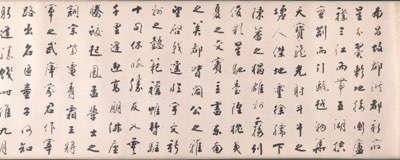
On an autumn day in Beijing, Tao Cheng had a gathering with a group of scholar-officials and created two paintings in a spontaneous, casual style. The first depicts chrysanthemums, slender bamboo stalks, and a rock in monochrome ink. Tao applied light colors for the second painting that depicts cabbage. Tao deliberately placed the images on the first sections of the paper so that his honorable guests could add their poetic inscriptions inspired by his imagery.
In the first section to the right, all seven poetic inscriptions refer to the beloved poet and recluse Tao Qian (also called Tao Yuanming, AD 365–427) who was particularly known for his profound love for chrysanthemum flowers. Most of the inscriptions in the second section express sympathy for the poor, since cabbage is the main ingredient in their humble food. Taken together, the poems and paintings allude to the life and responsibilities of the scholar-official: the importance of both an upright character and a concern for the poor citizens in order to achieve good government.