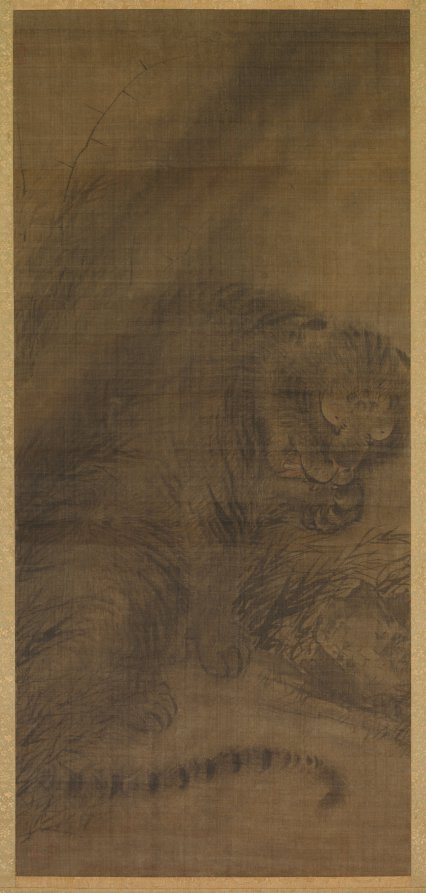
Tiger
Fachang Muqi (Chinese, 1220–1280)
c. 1250–79
- Medium
- Hanging scroll; ink and slight color on silk
- Classification
- Painting
- Dimensions
- Painting: 125.2 x 57.2 cm (49 5/16 x 22 1/2 in.); Overall with knobs: 227.1 x 78 cm (89 7/16 x 30 11/16 in.)
- Culture
- China, Southern Song dynasty (1127-1279)
- Museum
- Cleveland Museum of Art, Chinese Art
- Credit line
- Purchase from the J. H. Wade Fund
- Rights
- Public domain (CC0), as the museum states it.
- Who can see it
- Little Ones profiles and older: it shows gentle subjects for the very young. How works are placed
View at the Cleveland Museum of Art
About this work
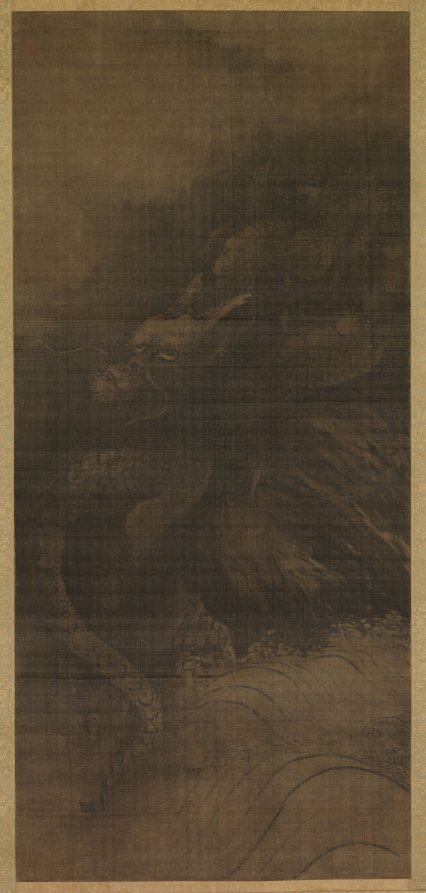
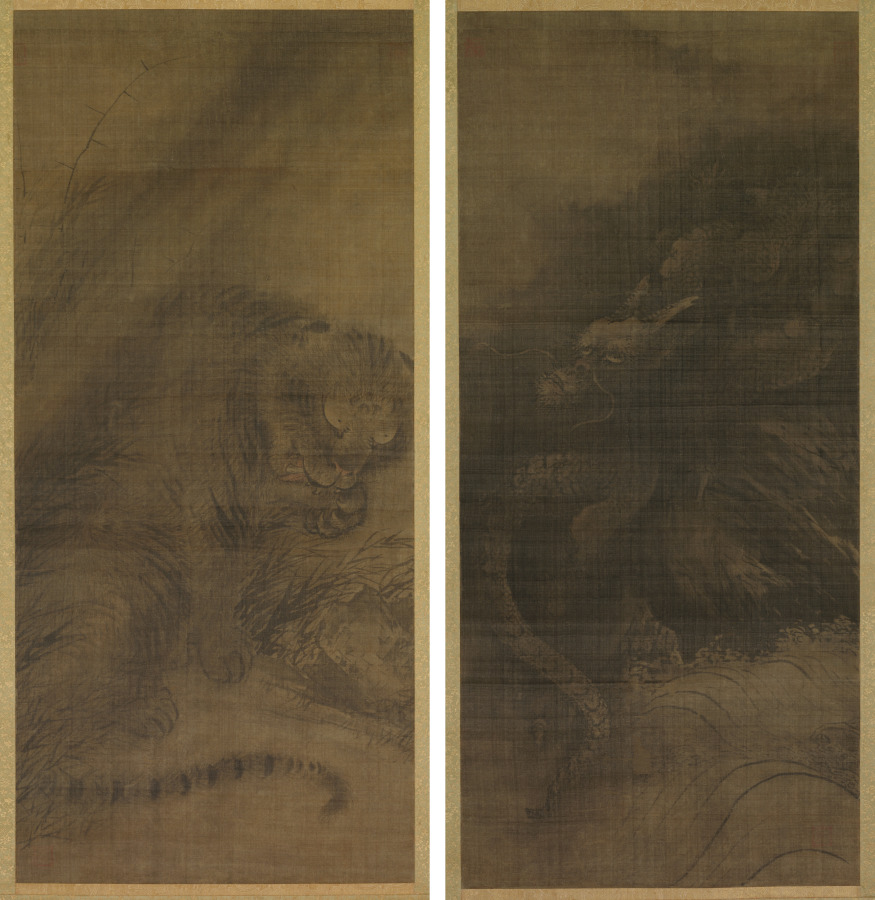
The dragon and tiger are tied to the philosophical concept of yin and yang, which describes opposite but complementary forces. The dragon occupies a tiered background of waves and mist. Its luminous head emerges from the darker passages, and its narrow twisting body is serpent-like. By contrast, the close-up view of the tiger emphasizes its bulk. The tiger bends its head to lick its paw while its tail curls in the foreground.
In their original Chan Buddhist context, this pair of scrolls likely flanked a central image, like the Bodhisattva Guanyin. The silk has darkened over the centuries, and the slight reddish shading in the tiger’s tongue and nose has faded.