Window mode follows your eyes with your camera, in this browser only: no picture or position leaves your device.
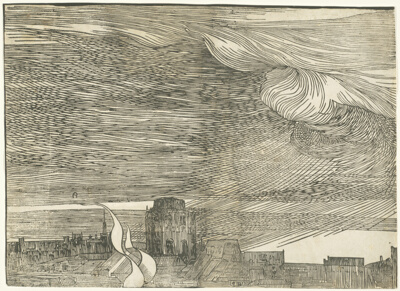
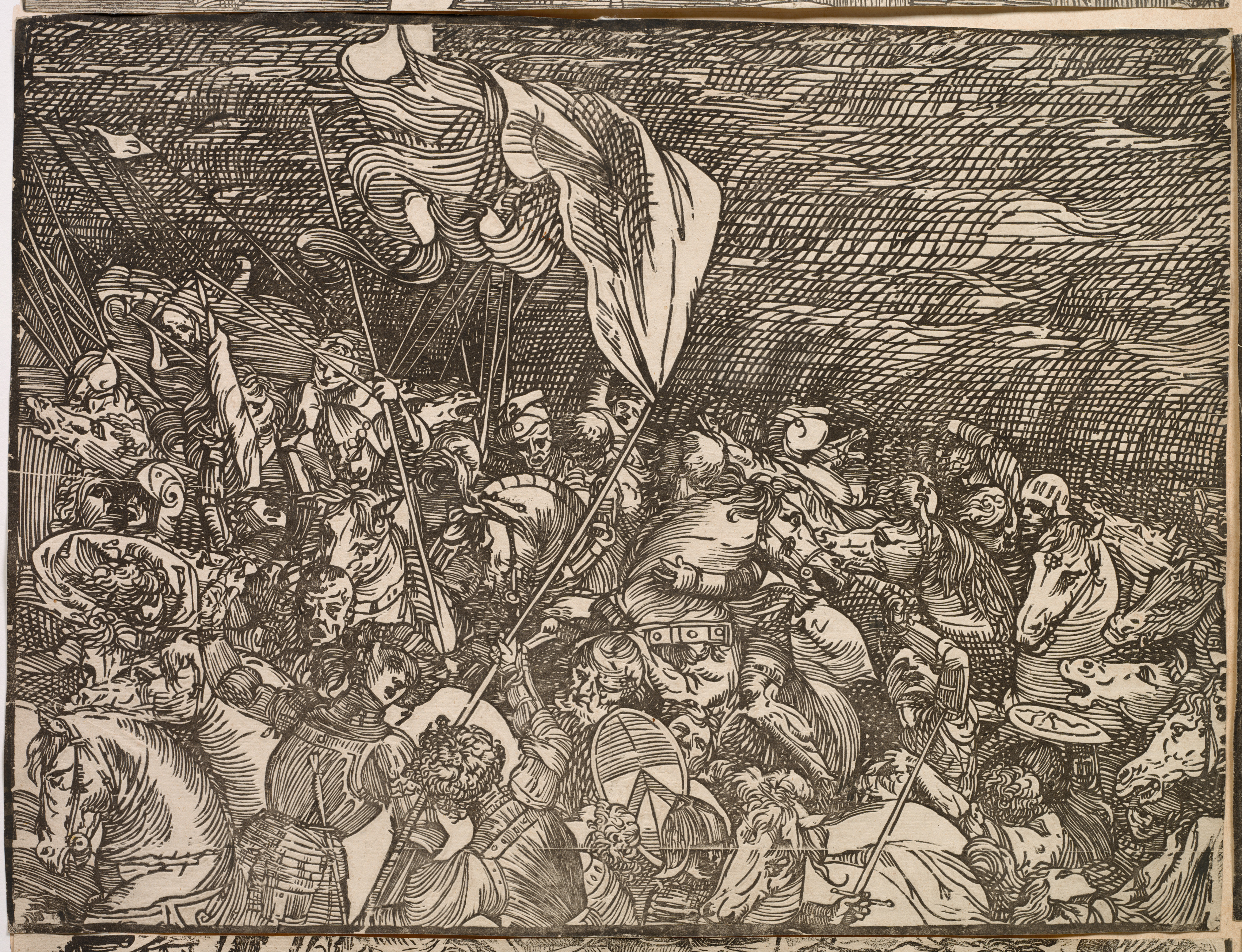
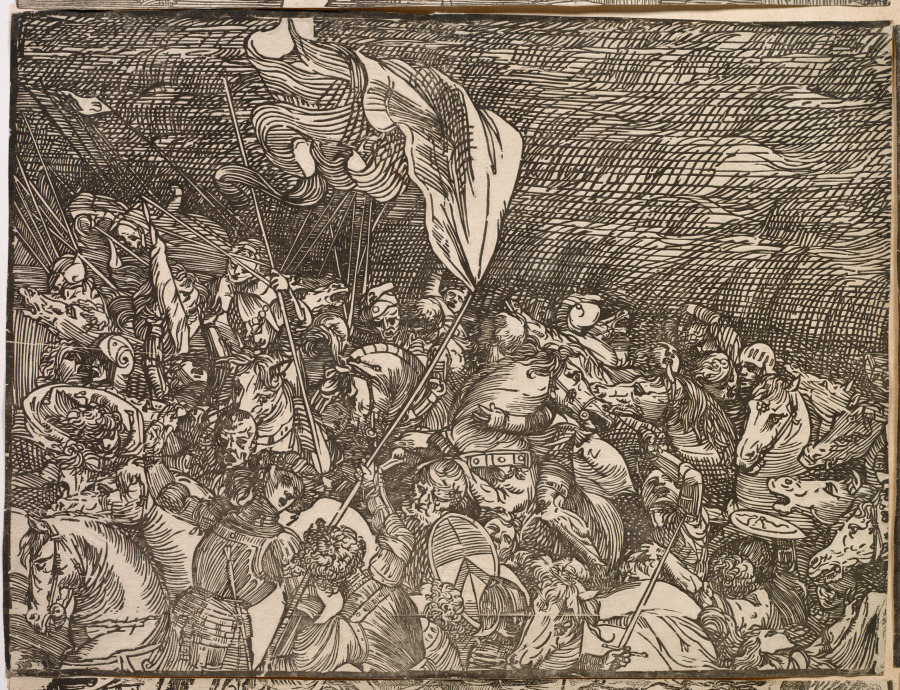
The Submersion of Pharaoh's Army in the Red Sea
Titian (Italian, c. 1488–1576)
publisher Domenico dalle Greche (Italian, 1503–1603)
1514–15, printed 1549
- Medium
- woodcut
- Classification
- Dimensions
- Unframed: 41.5 x 55.3 cm (16 5/16 x 21 3/4 in.)
- Culture
- Italy, Venice
- Museum
- Cleveland Museum of Art, Prints
- Credit line
- John L. Severance Fund
- Rights
- Public domain (CC0), as the museum states it.
- Who can see it
- Teens profiles and older: its subject is for older viewers (war, death, the Passion, drink or the like). How works are placed
View at the Cleveland Museum of Art
About this work
To make this monumental woodcut—considered one of the most ambitious prints of the Renaissance—Titian probably drew directly on the wooden blocks, after which a skilled cutter completed the blocks. The size rivals that of a painting, and the composition would have hung on a wall. Titian’s bold vision presents nature as a vehicle of God’s mercy and wrath. Moses, at right, having parted the seas for the Israelites to pass, commands them to close over the Egyptian forces (Exodus 14:21–31). Titian propelled the narrative with remarkable unity, dedicating entire blocks to the turbulent sea and rolling clouds that culminate in a magnificent cliff and Renaissance city. Some have interpreted the scene as an allegory of Venice’s troubles with the League of Cambrai, a military alliance that threatened the island city.