Window mode follows your eyes with your camera, in this browser only: no picture or position leaves your device.
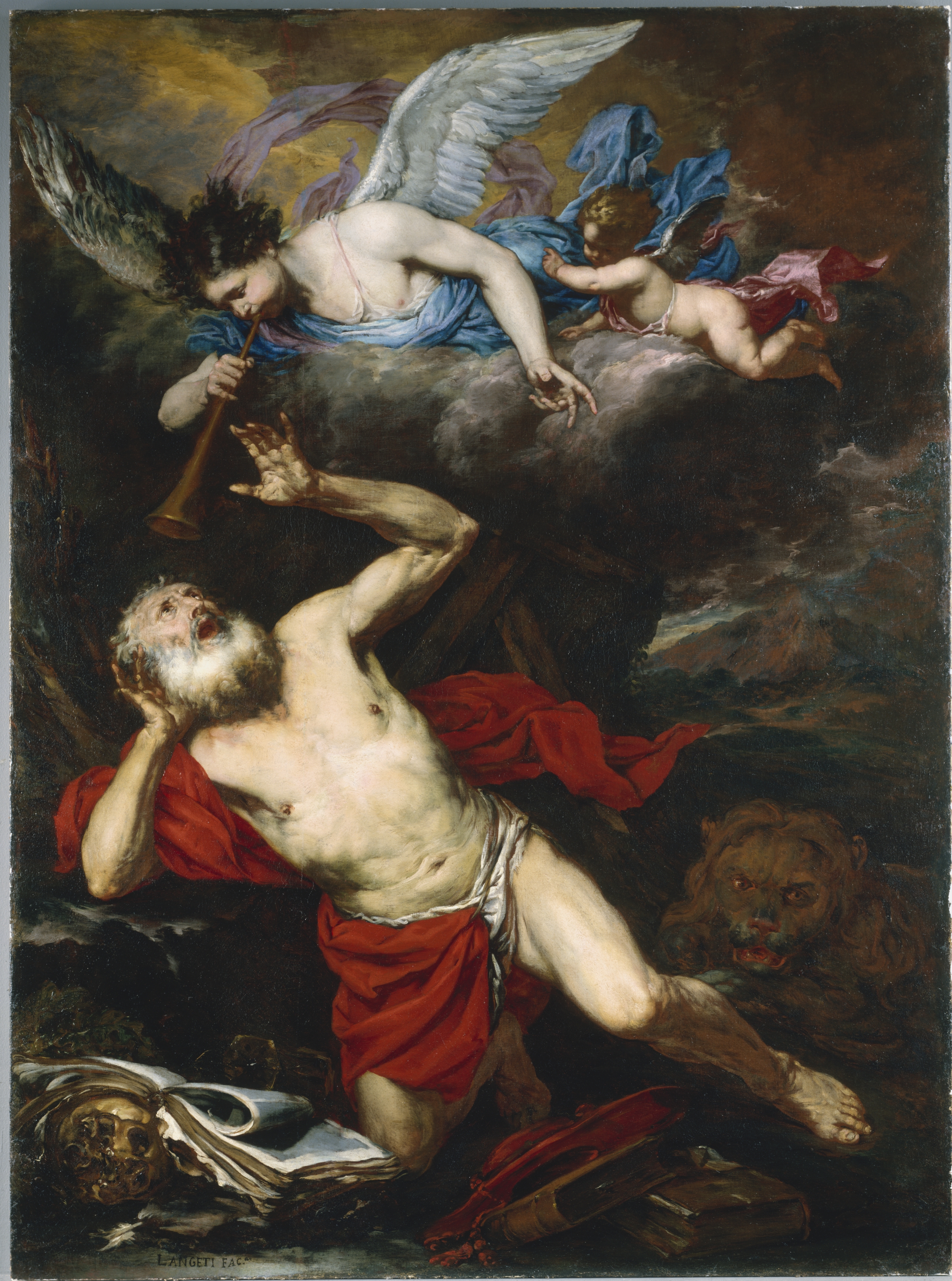
The Vision of Saint Jerome
Giovanni Battista Langetti (Italian, 1635–1676)
c. 1660
- Medium
- oil on canvas
- Classification
- Painting
- Dimensions
- Framed: 238 x 187 x 13 cm (93 11/16 x 73 5/8 x 5 1/8 in.); Unframed: 200.2 x 149.2 cm (78 13/16 x 58 3/4 in.)
- Culture
- Italy
- Museum
- Cleveland Museum of Art, European Painting and Sculpture
- Credit line
- Delia E. Holden and L. E. Holden Funds
- Rights
- Public domain (CC0), as the museum states it.
- Who can see it
- Tweens profiles and older: its subjects are known and suit older children. How works are placed
View at the Cleveland Museum of Art
About this work
Jerome (c. 347–420 CE) studied Greek and Latin literature in Rome, but eventually pursued theology, perceiving his conduct as corrupt and sinful. Around 374 CE, Jerome had a vision of the Last Judgment in which an angel called him to task for his transgressions. Jerome then withdrew from society, learned Hebrew, and studied the Gospels, which led to his influential translations of the Bible. Langetti here follows a convention by depicting Jerome's vision after he retreated from the world. Working in the northern Italian port of Genoa, Langetti absorbed Caravaggio's impact, seen in the composition's naturalistic bodies and dramatic light.