Window mode follows your eyes with your camera, in this browser only: no picture or position leaves your device.
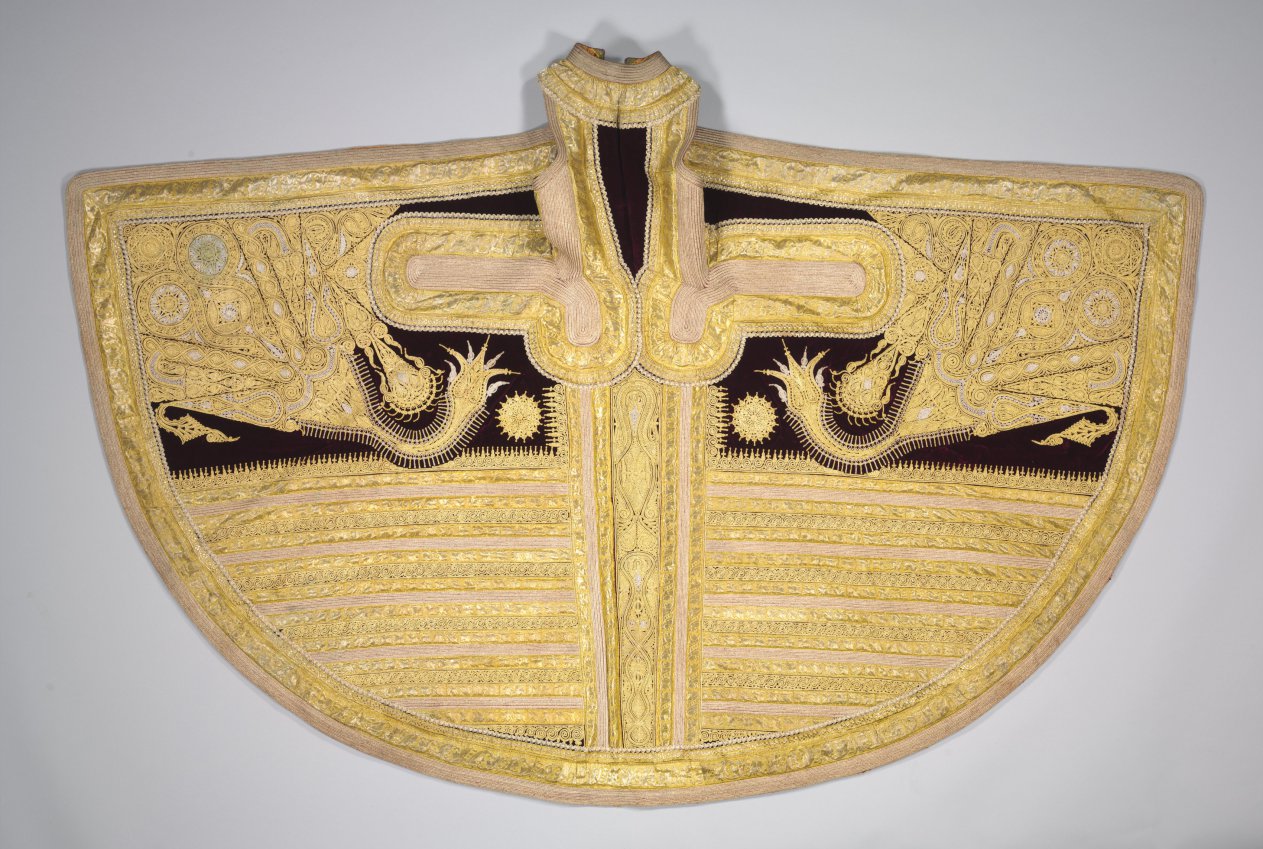
Gold-Thread Embroidered Garment for a Woman
late 1800s
- Medium
- silk, velvet; gold- and silver-thread: bands, cords, couched embroidery
- Classification
- Garment
- Dimensions
- Overall: 117 x 170.2 cm (46 1/16 x 67 in.)
- Culture
- Prizrend, Serbia, or Scutari, Albani, late 19th century
- Museum
- Cleveland Museum of Art, Textiles
- Credit line
- Gift of Jeannette Cox Morrill
- Rights
- Public domain (CC0), as the museum states it.
- Who can see it
- Tweens profiles and older: its subjects are known and suit older children. How works are placed
View at the Cleveland Museum of Art
About this work
This richly embellished garment was worn by Muslim women in Albania over a fine silk blouse with wide trousers decorated with matching embroidery. The Europeanized Ottoman style signaled social prestige in the late 19th century and differed from regional dress. The gold thread embroidery fashion was influenced by the attire of Ottoman officials and Eastern Orthodox church clergy. This spectacular garment was created with woven bands and twisted cords of gold thread plus stunning gold and silver thread embroidered motifs. Metal threads were secured on the velvet with a stitch from underneath, known as couching. Specialized workshops in urban centers embroidered similar but not identical models for Muslim and Christian women. Threads loosely attached to the velvet provided design guidelines for the embroiderers.