Window mode follows your eyes with your camera, in this browser only: no picture or position leaves your device.
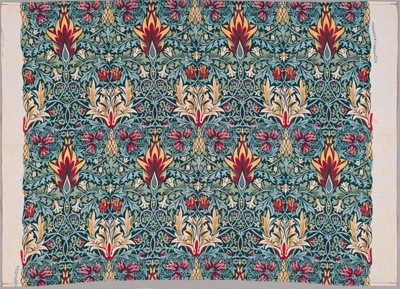
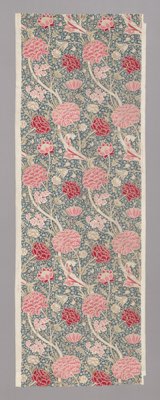
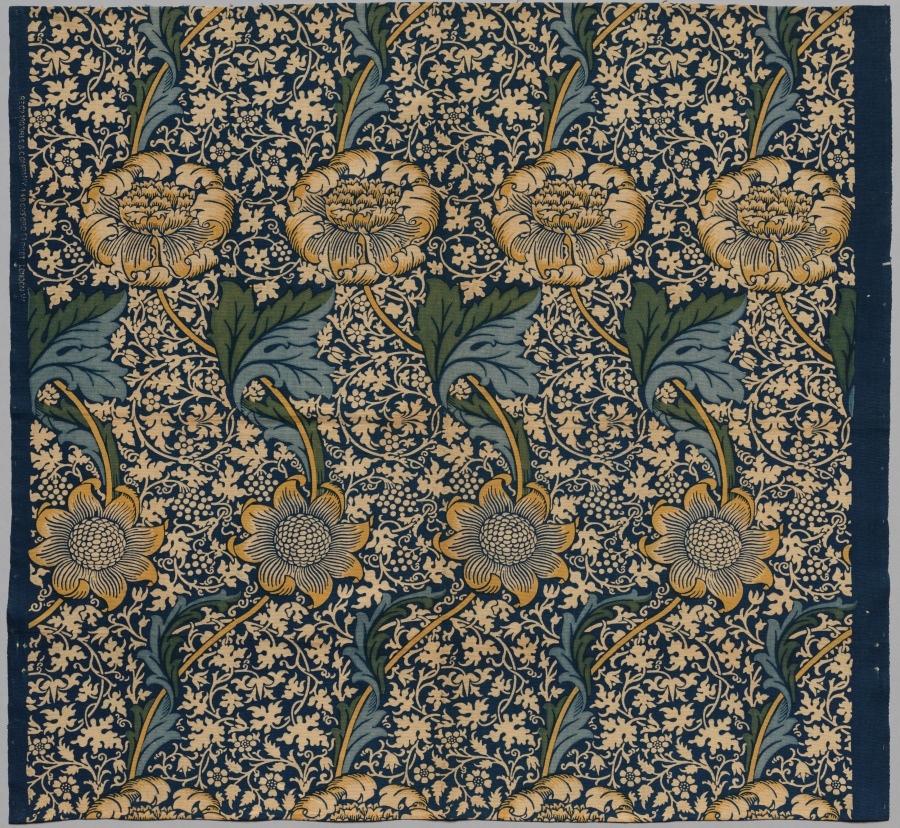
Kennet
designer William Morris (British, 1834–1896)
c 1920
- Medium
- plain weave cotton, printed
- Classification
- Textile
- Dimensions
- Overall: 90.2 x 97.8 cm (35 1/2 x 38 1/2 in.)
- Culture
- England, Merton Abbey, 20th century
- Museum
- Cleveland Museum of Art, Textiles
- Credit line
- Gift of Mrs. Henry Chisholm
- Rights
- Public domain (CC0), as the museum states it.
- Who can see it
- Tweens profiles and older: its subjects are known and suit older children. How works are placed
View at the Cleveland Museum of Art
About this work
Morris said that he used the South Kensington Museum (now the Victoria & Albert Museum) more than anyone alive. As one of the most knowledgeable textile historians of his day, Morris filtered his love of nature through the lens of history. Later textiles with strong diagonal orientation, such as Kennet, show a debt to the centuries-old Italian cut velvet that he had studied. Named after a river in the south of England that flows into the Thames, Kennet is an example of one of his patterns that could be purchased in a variety of colors and fabrics, including cotton, velveteen, silk, and Madras muslin, creating limitless possibilities to appeal to consumers’ needs and tastes.