Window mode follows your eyes with your camera, in this browser only: no picture or position leaves your device.
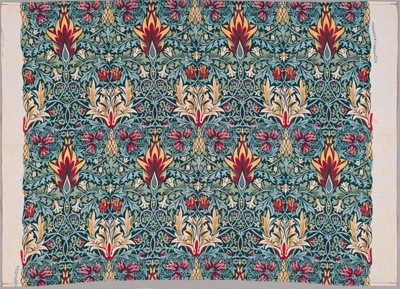
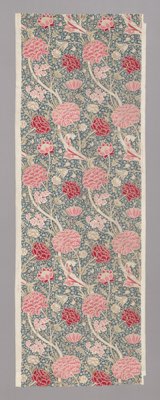
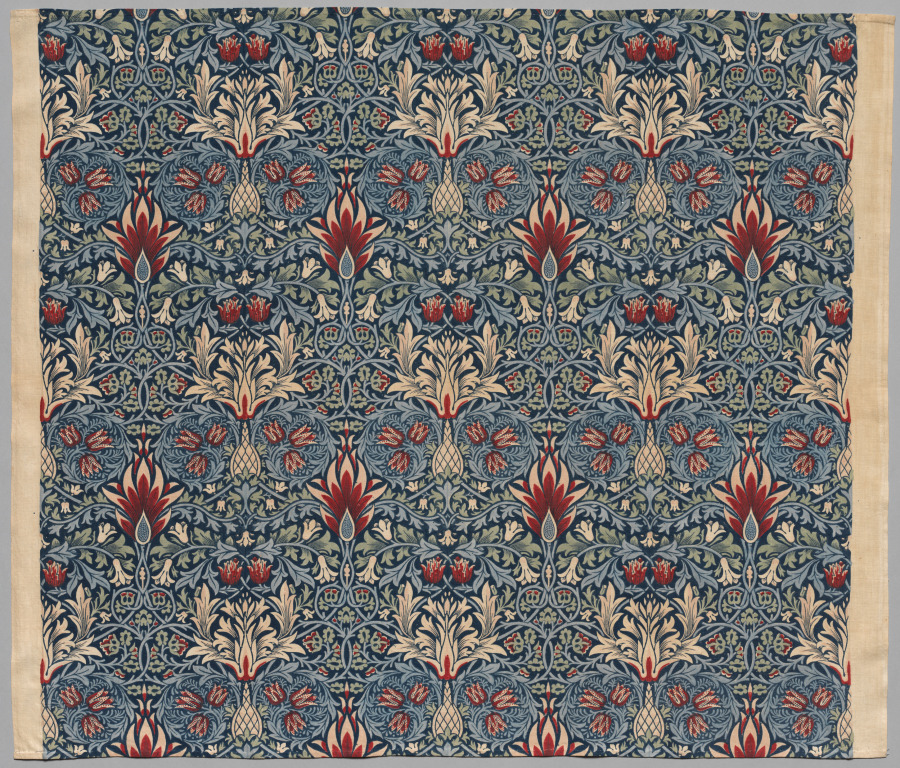
Snakeshead
designed in imitation of William Morris (British, 1834–1896)
Early 20th century
- Medium
- plain weave cotton, printed
- Classification
- Textile
- Dimensions
- Overall: 85.1 x 100.3 cm (33 1/2 x 39 1/2 in.)
- Culture
- England, Walthamstow, Early 20th century
- Museum
- Cleveland Museum of Art, Textiles
- Credit line
- Gift of Mrs. Henry Chisholm
- Rights
- Public domain (CC0), as the museum states it.
- Who can see it
- Tweens profiles and older: its subjects are known and suit older children. How works are placed
View at the Cleveland Museum of Art
About this work
When Morris designed Snakeshead in 1877, Indian silks were in style and widely imported from British India. This design stands out for its diminutive motifs and the strong red and black colors, which were fashionable only for a short time before paler hues regained favor with clients. While its color scheme suggests distant lands with warmer climates, the pattern showcases one of Morris’s favorite flowers: the fritillary, a wildflower that he remembered growing in the meadows near Oxford.