Window mode follows your eyes with your camera, in this browser only: no picture or position leaves your device.
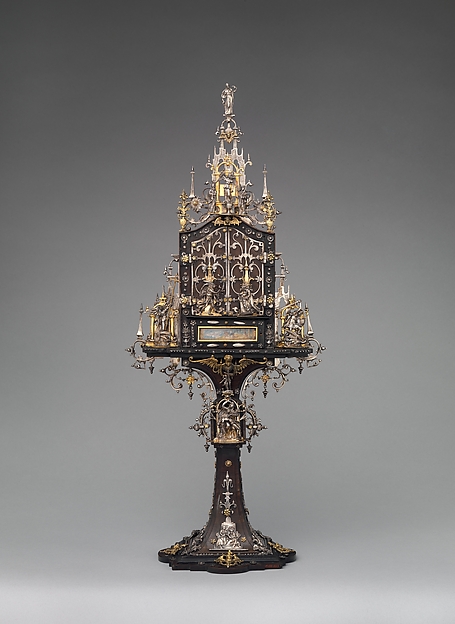
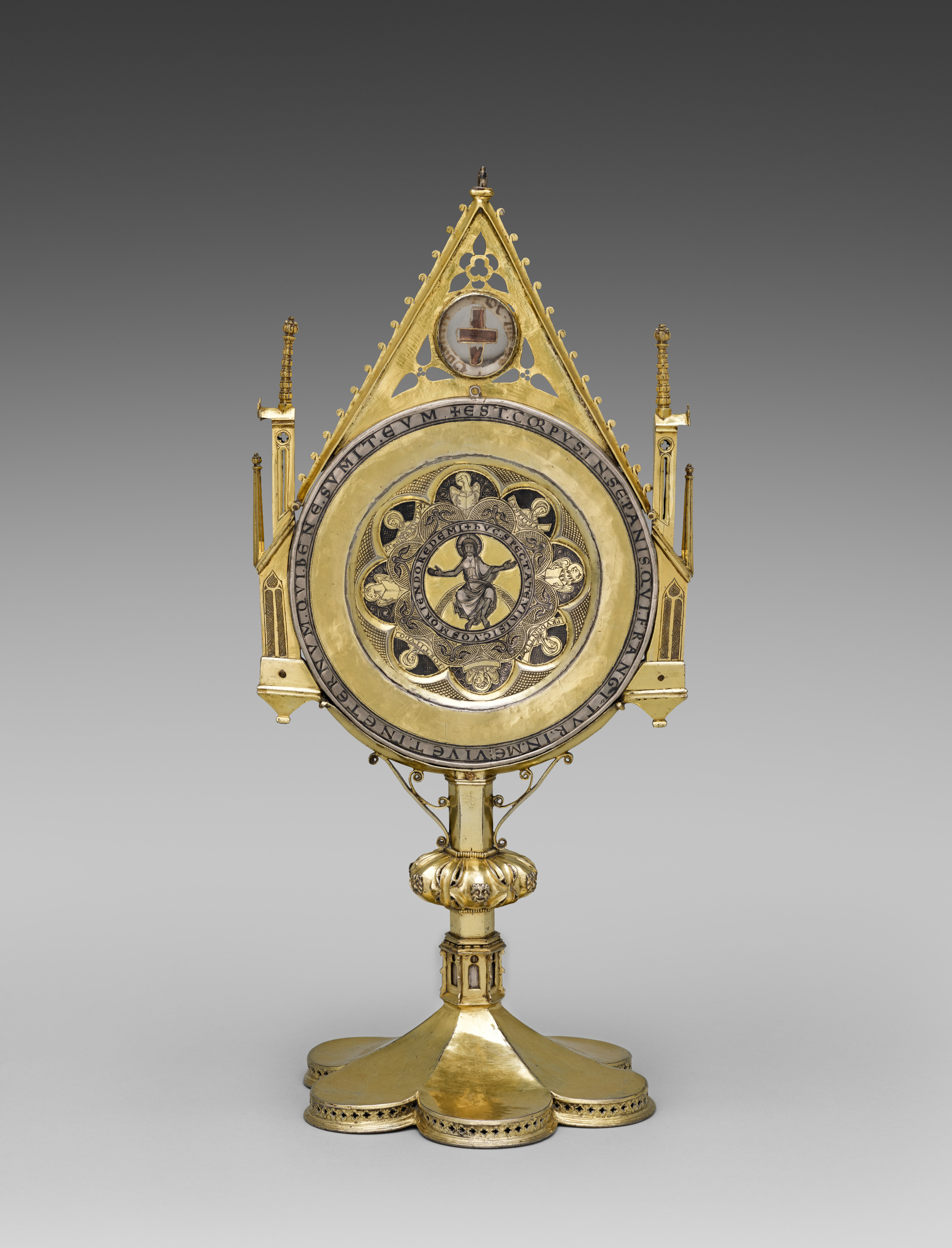
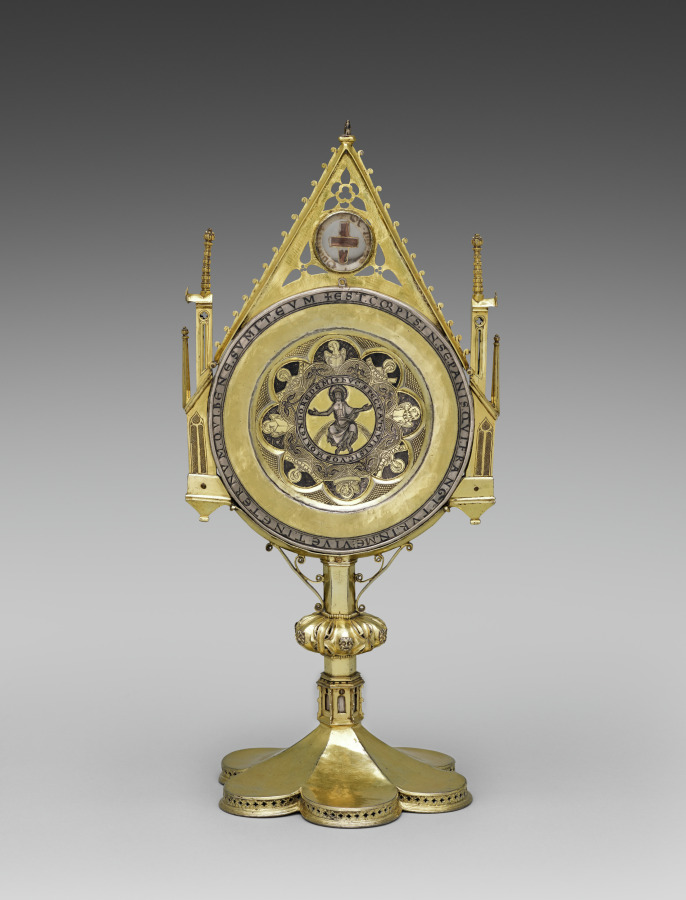
Monstrance with the "Paten of Saint Bernward"
paten by Saint Oswald Reliquary Workshop (German)
c. 1180–1190
- Medium
- silver, gilded silver, niello, rock crystal
- Classification
- Metalwork
- Dimensions
- Overall: 34.5 x 15.9 x 14 cm (13 9/16 x 6 1/4 x 5 1/2 in.); Part 1: 13.5 cm (5 5/16 in.); Part 2: 34.3 cm (13 1/2 in.)
- Culture
- paten: Germany, Lower Saxony, Hildesheim; monstrance: Germany, Lower Saxony, Brunswick, Gothic period, paten: 12th century; monstrance: 14th century
- Museum
- Cleveland Museum of Art, Medieval Art
- Credit line
- Purchase from the J. H. Wade Fund with additional gift from Mrs. R. Henry Norweb
- Rights
- Public domain (CC0), as the museum states it.
- Who can see it
- Tweens profiles and older: its subjects are known and suit older children. How works are placed
View at the Cleveland Museum of Art
About this work
Designed to facilitate the display and veneration of ten relics, this sumptuous ostensorium (from the Latin ostendere, meaning "to show") is one of the most unusual reliquaries in the Guelph Treasure. Elements of contemporary Gothic architecture in miniature frame an elaborately decorated liturgical paten, the shallow disc or plate used for the elevation of the Eucharist during Mass. Fragments of the True Cross are enclosed behind a rock crystal in the gable, while other saintly relics, each wrapped in silk and identified by inscriptions, are visible only from the back. The paten is inscribed on its outer rim with the words "The bread which is broken in me is the body itself. He who receives it in good faith shall live in eternity." Another inscription surrounding the image of the enthroned Christ at the paten's center, reads, "Behold, o men, I have thus redeemed you with my death." Symbols of the four Evangelists and personifications of the four cardinal virtues complete the paten's iconographic program.