Dance of Death: The Sailor
Hans Holbein the Younger (German, active England and Switzerland, 1497/98–1543)
c. 1526
- Medium
- woodcut
- Classification
- Culture
- Germany
- Museum
- Cleveland Museum of Art, Prints
- Credit line
- Gift of The Print Club of Cleveland
- Rights
- Public domain (CC0), as the museum states it.
- Who can see it
- Teens profiles and older: its subject is for older viewers (war, death, the Passion, drink or the like). How works are placed
View at the Cleveland Museum of Art
About this work
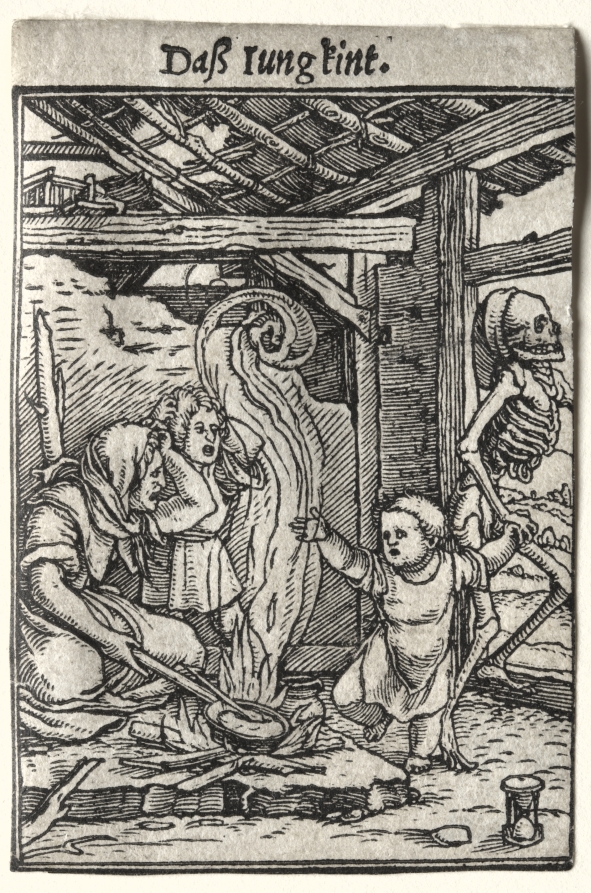
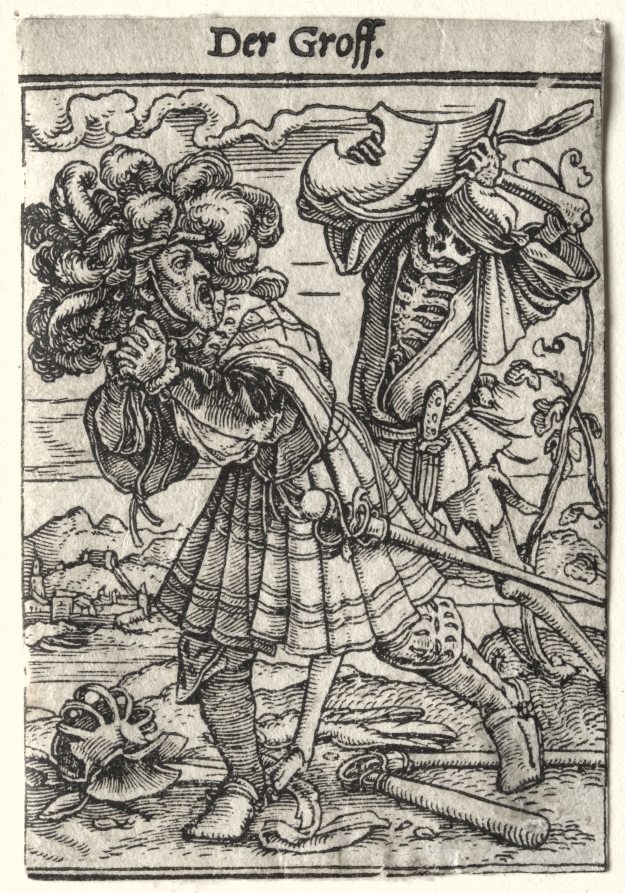
Dance of Death is the most celebrated series of woodcuts designed by Holbein. The forty-one blocks were cut by Hans Lützelburger in the years immediately before his death in 1526, though the set was not published until 1538. Dance of Death originated as a drama in the middle of the 14th century. Following widespread epidemics such as the black plague, these plays took place in a cemetery or churchyard. Actors, dressed in pale costumes painted to resemble skeletons, personified Death and summoned a group of people from all social classes in a dancelike procession. In a period when the life span was short, the purpose of the Dance of Death was to remind the populace to prepare for the Last Judgement.