Window mode follows your eyes with your camera, in this browser only: no picture or position leaves your device.
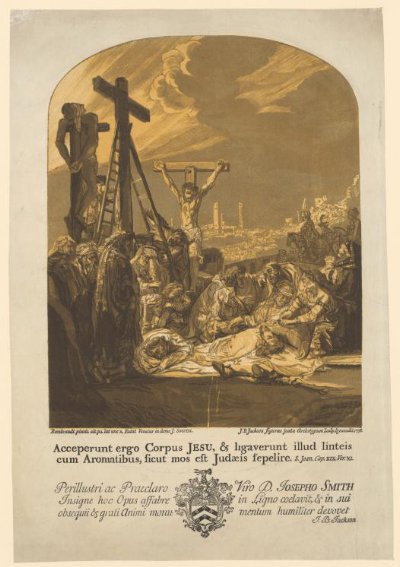
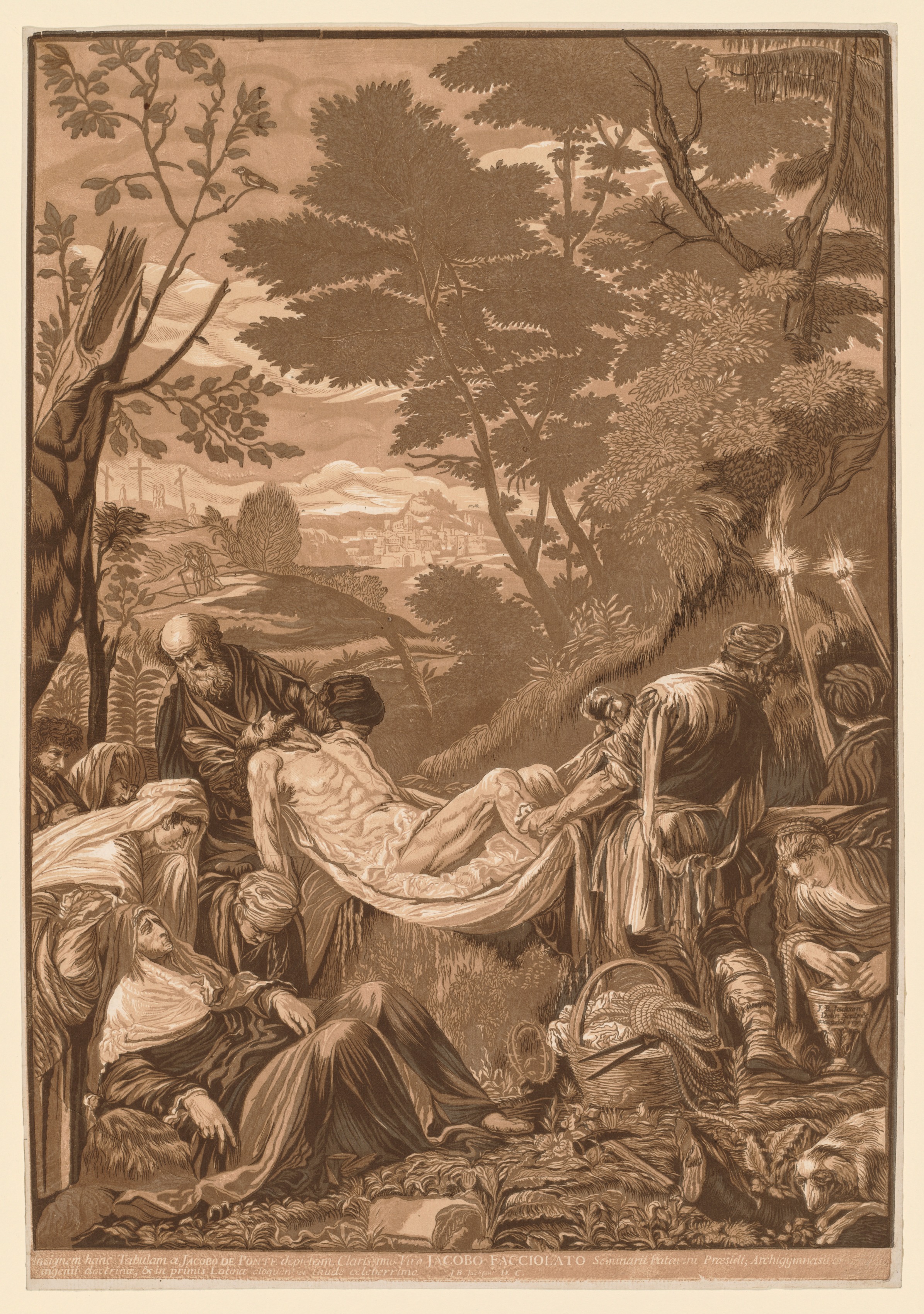
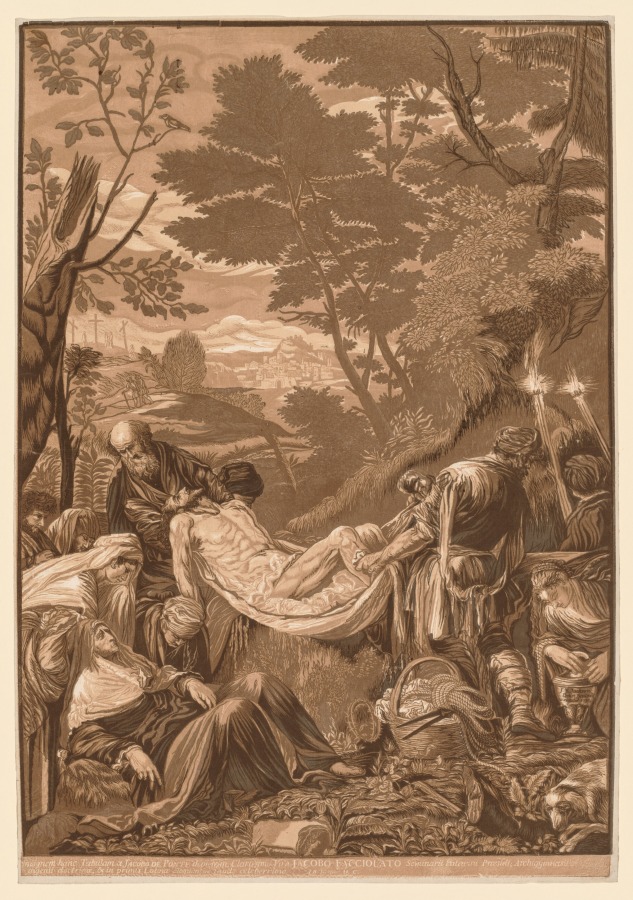
Venetian Set: Entombment of Christ
John Baptist Jackson (British, 1701-c. 1780)
after Jacopo Bassano (Italian, c. 1510–1592)
1739–43
- Medium
- chiaroscuro woodcut
- Classification
- Culture
- England, 18th century
- Museum
- Cleveland Museum of Art, Prints
- Credit line
- Charles W. Harkness Endowment Fund
- Rights
- Public domain (CC0), as the museum states it.
- Who can see it
- Teens profiles and older: its subject is for older viewers (war, death, the Passion, drink or the like). How works are placed
View at the Cleveland Museum of Art
About this work
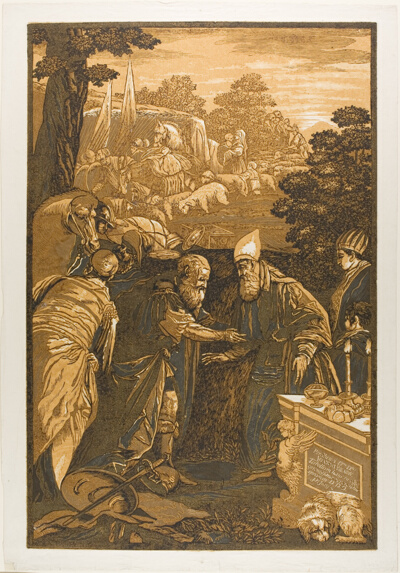
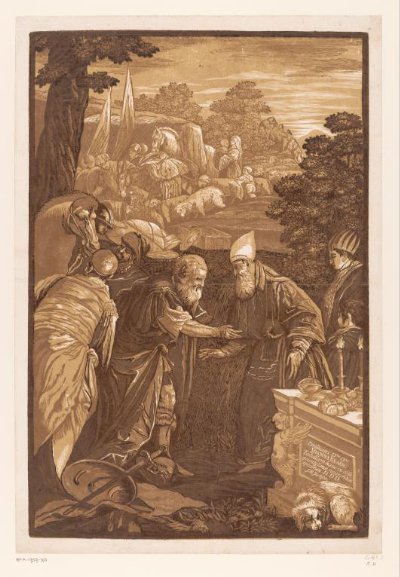
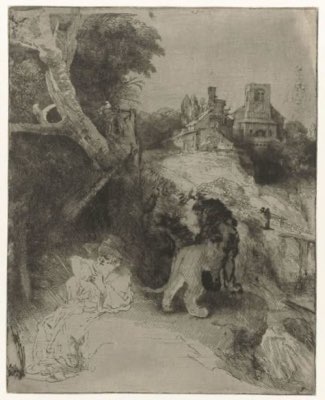
Jackson is the best known 18th-century specialist in chiaroscuro woodcuts. Woodcuts were not popular at this time, and the chiaroscuro technique never took hold in England, but he may have developed his interest in the medium from the Italian nobleman and printmaker Antonio Zanetti who reproduced his collection of Parmigianino drawings as chiaroscuros when in England around 1720. Jackson moved to Venice, where, in 1739, the great English patron Consul Joseph Smith and two other supporters commissioned him to produce chiaroscuro woodcuts after 17 paintings by the Venetian masters Titian, Paolo Veronese, Tintoretto, and Jacobo Bassano. Jackson completed the series in 1743, which was published by J. B. Pasquali in 1745 as a bound volume. These reproductions of masterpieces were meant as souvenirs for the tourist trade and the young gentlemen taking the Grand Tour of the Continent to further their education. Jackson's Venetian Set was the first large-scale group of chiaroscuro woodcuts to reproduce oil paintings. In order to capture the effects of color and light in the paintings, he created complex, virtuosic woodcuts with a multitude of lines and tones.