Window mode follows your eyes with your camera, in this browser only: no picture or position leaves your device.
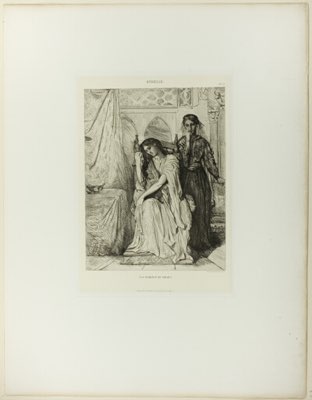
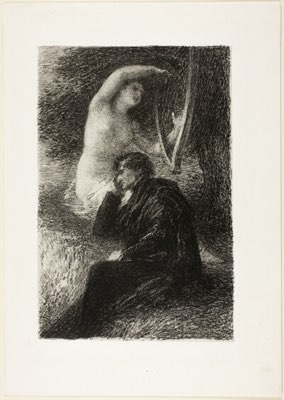
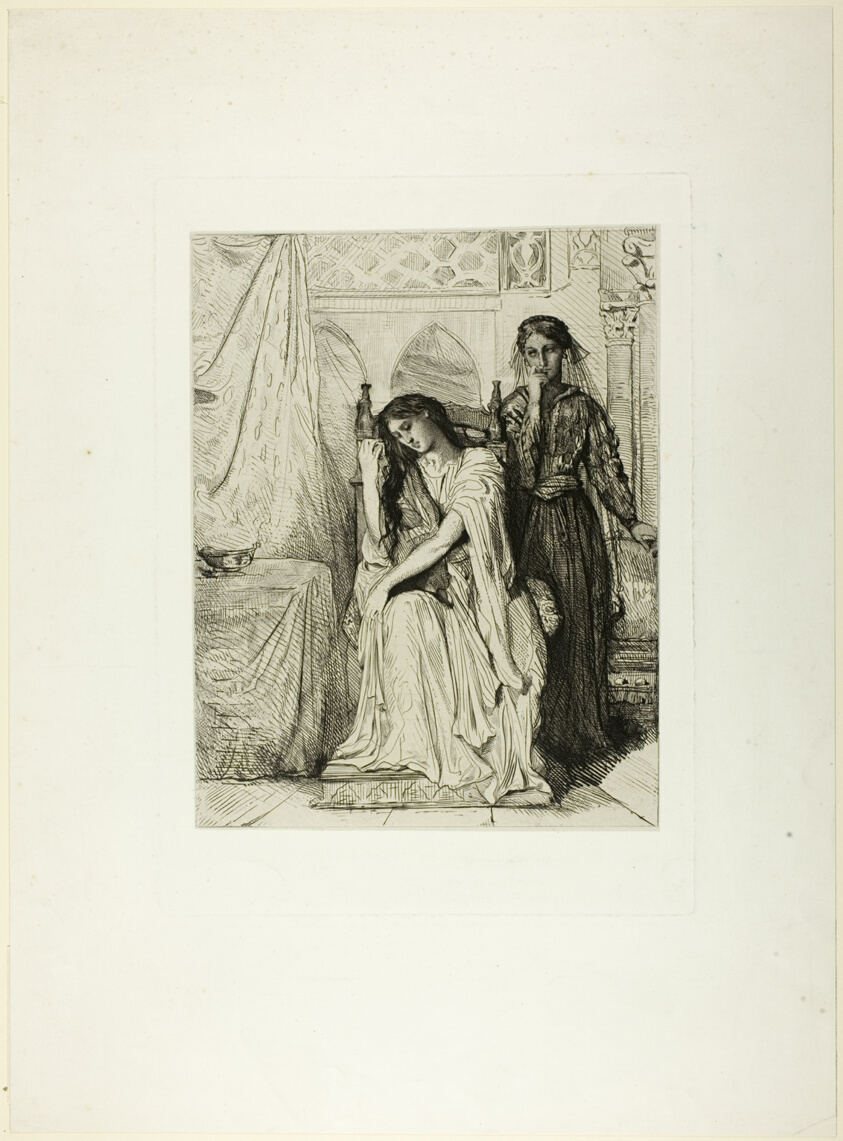
The Willow Song, plate nine from Othello
Théodore Chassériau (French, 1819-1856)
1844
- Medium
- Etching, engraving, roulette, drypoint on off-white China paper, laid down on white wove paper
- Classification
- Dimensions
- Image: 29.3 × 22.9 cm (11 9/16 × 9 1/16 in.); Plate: 36.8 × 26.3 cm (14 1/2 × 10 3/8 in.); Sheet: 55.7 × 41 cm (21 15/16 × 16 3/16 in.)
- Culture
- France
- Museum
- Art Institute of Chicago, Prints and Drawings
- Credit line
- The Joseph Brooks Fair Collection
- Rights
- Public domain (CC0), as the museum states it.
- Who can see it
- Tweens profiles and older: its subjects are known and suit older children. How works are placed
View at the Art Institute of Chicago
About this work
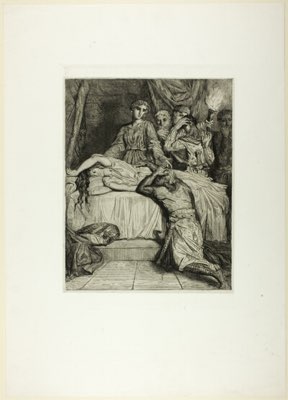
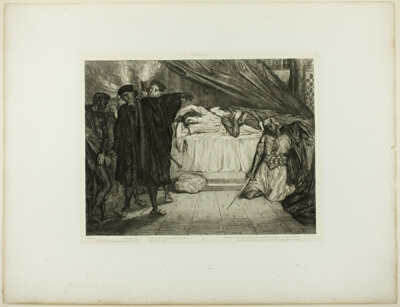
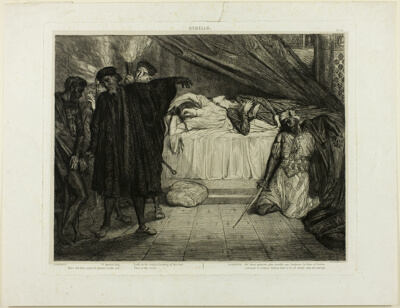
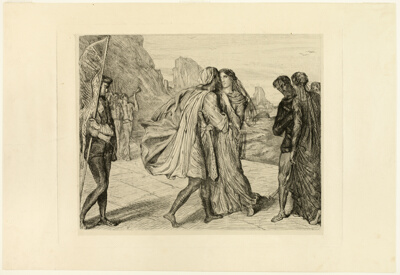
Shakespeare’s tragic tale of the Moorish general Othello, his bride, Desdemona, and the scheming Iago explores the timeless themes of racism, love, jealously, and betrayal. The play had gained considerable popularity in France by 1844. Though little is known of the specifics of this particular commission, it was a project that captivated Théodore Chassériau for years. These two prints, from Chassériau’s series of 15 plates, illustrate the emotional crescendo of Desdemona and Othello’s relationship. Plate 9 tenderly represents Desdemona’s despair when she sings the Willow Song. Her words—“Let nobody blame him; his scorn I approve”—are prophetic. Later, convinced of her infidelity, Othello smothers her with a pillow. Plate 14 shows the moment Emilia tells Othello of Desdemona’s innocence and Iago’s treachery. Chassériau’s use of gesture links the three central characters in a dramatic pyramidal composition that conveys the poignant meaning of the scene.
Description © Art Institute of Chicago, CC BY 4.0