Window mode follows your eyes with your camera, in this browser only: no picture or position leaves your device.
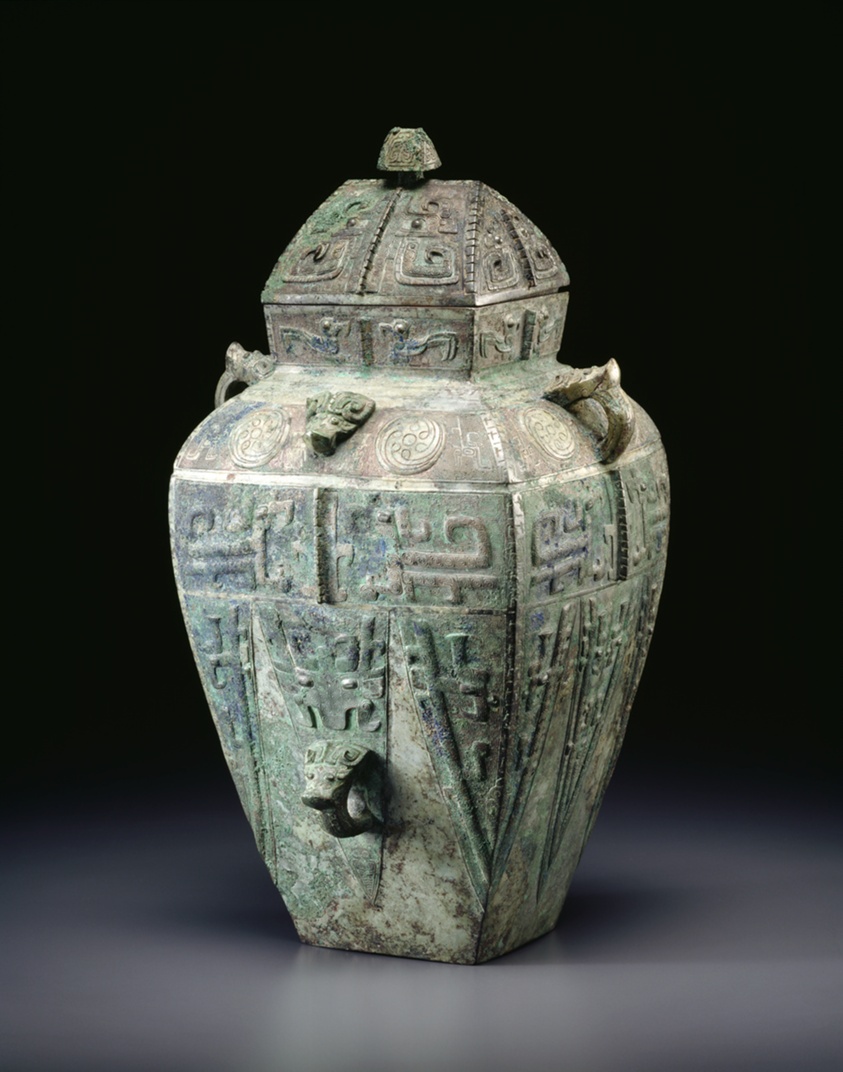
Wine Container
Shang dynasty ( About 1600–1046 BC ), 12th/11th century BC
- Medium
- Bronze
- Classification
- Metalwork
- Dimensions
- 45 × 24.8 cm (17 3/4 × 9 3/4 in.)
- Culture
- China
- Museum
- Art Institute of Chicago, Arts of Asia
- Credit line
- Lucy Maud Buckingham Collection
- Rights
- Public domain (CC0), as the museum states it.
- Who can see it
- Teens profiles and older: its subject is for older viewers (war, death, the Passion, drink or the like). How works are placed
View at the Art Institute of Chicago
About this work
The bronze vessels produced with sophisticated casting techniques and intricate designs by Chinese artisans of the late Shang dynasty (c. 1700-c. 1050 B.C.) are achievements unrivaled by any other Bronze Age culture. For the ruling elite of ancient China, prestigious objects made of bronze signified supreme political power as well as devout spiritual beliefs and exalted social status. Foremost among these bronzes are vessels that were made for the preparation and offering of food, wine, and water in ceremonial banquets conducted to seek and repay divine ancestral goodwill. Ancient Chinese wine was fermented from grain rather than fruit and, like beer, is best described as a type of millet ale. This square-shouldered jar for wine storage is animated by a menagerie of imaginary creatures that have been intricately cast onto the surface in several levels of relief. The most prominent of these is a horned ogre mask (later known as a taotie), whose significance remains one of the great enigmas of early Chinese art. Here the taotie, inverted across the roof-like lid, recurs along the body within pendant triangular blades, each of which also contains a wide-eyed cicada at its tip. The…
Description © Art Institute of Chicago, CC BY 4.0