Window mode follows your eyes with your camera, in this browser only: no picture or position leaves your device.
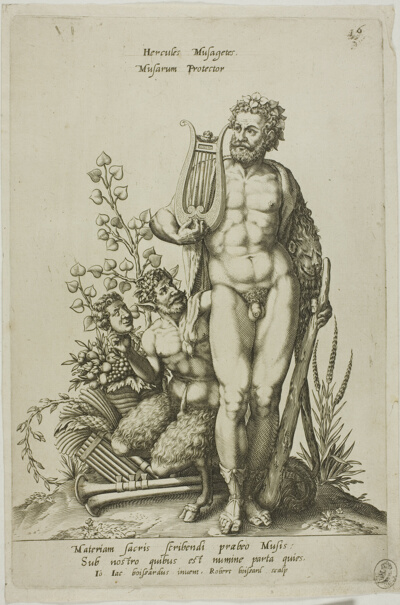
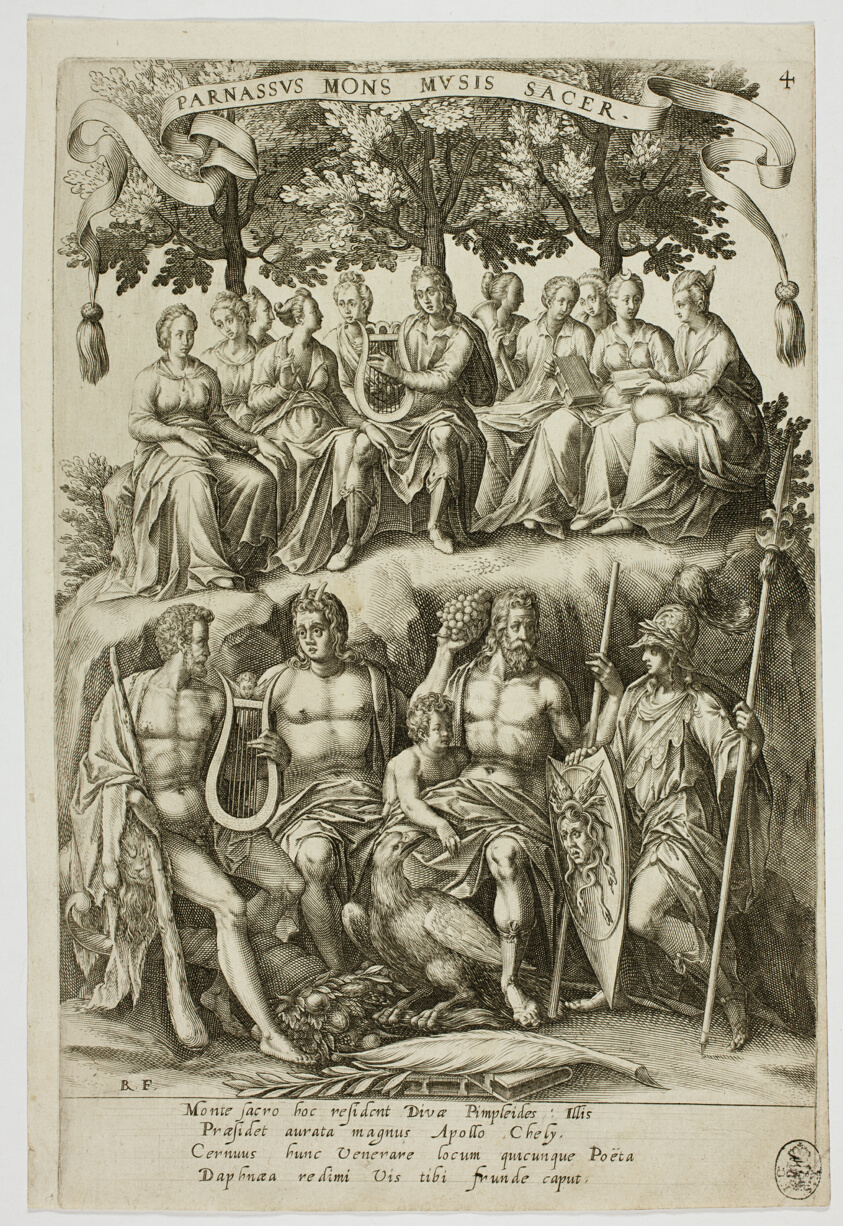
Parnassus, plate 4 from Parnassus Biceps
Robert Boissard (after Jean-Jacques Boissard (French, 1533-1598))
1601
- Medium
- Engraving in black on ivory laid paper
- Classification
- Dimensions
- Image: 24.6 × 18 cm (9 11/16 × 7 1/8 in.); Plate: 27.1 × 18 cm (10 11/16 × 7 1/8 in.); Sheet: 28 × 18.7 cm (11 1/16 × 7 3/8 in.)
- Culture
- Frankfurt an der Oder
- Museum
- Art Institute of Chicago, Prints and Drawings
- Credit line
- The Wallace L. DeWolf and Joseph Brooks Fair Collections
- Rights
- Public domain (CC0), as the museum states it.
- Who can see it
- Teens profiles and older: its museum says too little about what it shows to place it for younger viewers. How works are placed
View at the Art Institute of Chicago
About this work
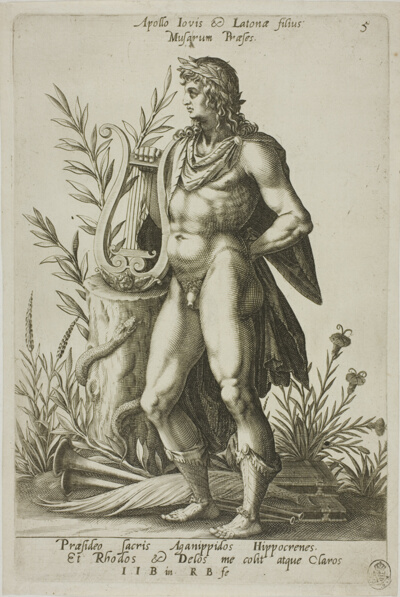
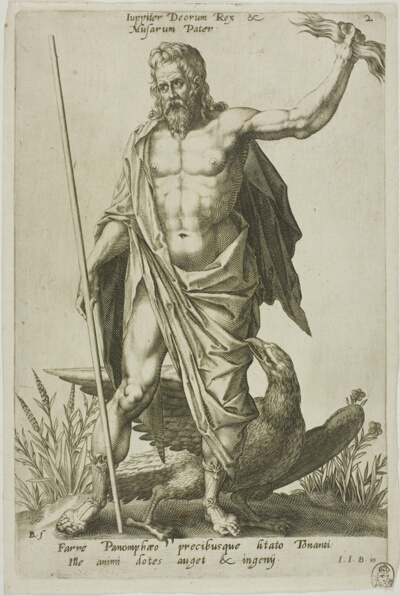
This plate comes from the same poetry anthology as the two prints in this exhibition showing the Muses Melpomene and Thalia (1920.2037 and .2043). This scene depicts Mount Parnassus, sacred home of the nine Muses, who are clustered on the top row, with Apollo, the god of music, at the center. In the foreground is Zeus, with his symbolic attribute the eagle at his feet, seated alongside a horned Dionysos, who holds up a cluster of grapes. Apollo, also the god of reason, was often perceived in a dichotomy with the irrational Dionysos.
Description © Art Institute of Chicago, CC BY 4.0