Window mode follows your eyes with your camera, in this browser only: no picture or position leaves your device.
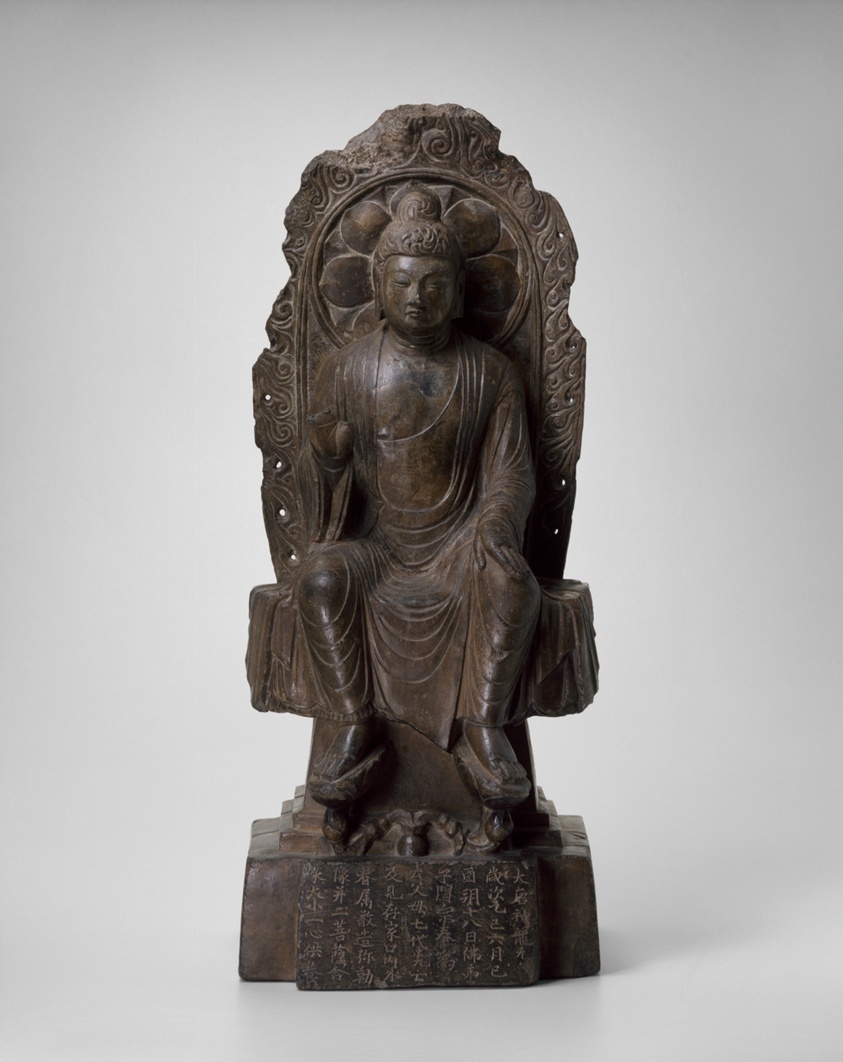
Maitreya Buddha
Shaanxi or Henan provinces, China
Tang dynasty (618–906), dated 705
- Medium
- Limestone
- Classification
- Sculpture
- Dimensions
- 82.3 × 33 × 30.2 cm (32 7/16 × 12 15/16 × 11 15/16 in.)
- Culture
- China
- Museum
- Art Institute of Chicago, Arts of Asia
- Credit line
- Gift of Alice Getty
- Rights
- Public domain (CC0), as the museum states it.
- Who can see it
- Tweens profiles and older: its subjects are known and suit older children. How works are placed
View at the Art Institute of Chicago
About this work
The depiction of the enthroned Buddha incorporates several key elements of Buddhist iconography. The posture, with both legs down and the feet firmly planted on the ground—known in Sanskrit as the bhadrasana or “auspicious pose”—originated in Northwest India. This pose was widely used across the Indian subcontinent and beyond to depict Hindu and Buddhist deities associated with royalty and fertility. The Buddha is clearly identified here by a dated inscription as Mile, a transliterated name for Maitreya, the future Buddha who is destined to descend from Tushita Heaven to bring enlightenment to the world. His majestic seated posture may symbolize Maitreya’s future reign from Mount Meru, the cosmic axis, and his imminent descent to the earthly realm, ready to fulfill the hopes and prayers of the faithful.
Description © Art Institute of Chicago, CC BY 4.0