The Combat of the Giaour and Hassan
Eugène Delacroix (French, 1798–1863)
1826
- Medium
- Oil on canvas
- Classification
- Painting
- Dimensions
- 59.6 × 73.4 cm (23 1/2 × 28 7/8 in.); Framed: 87.4 × 101.3 cm (34 3/8 × 39 7/8 in.)
- Culture
- France
- Museum
- Art Institute of Chicago, Painting and Sculpture of Europe
- Credit line
- Gift of Bertha Palmer Thorne, Rose Movius Palmer, Mr. and Mrs. Arthur M. Wood, and Mr. and Mrs. Gordon Palmer
- Rights
- Public domain (CC0), as the museum states it.
- Who can see it
- Adult profiles and older: its museum's description or title mentions violence, death or gore. How works are placed
View at the Art Institute of Chicago
About this work
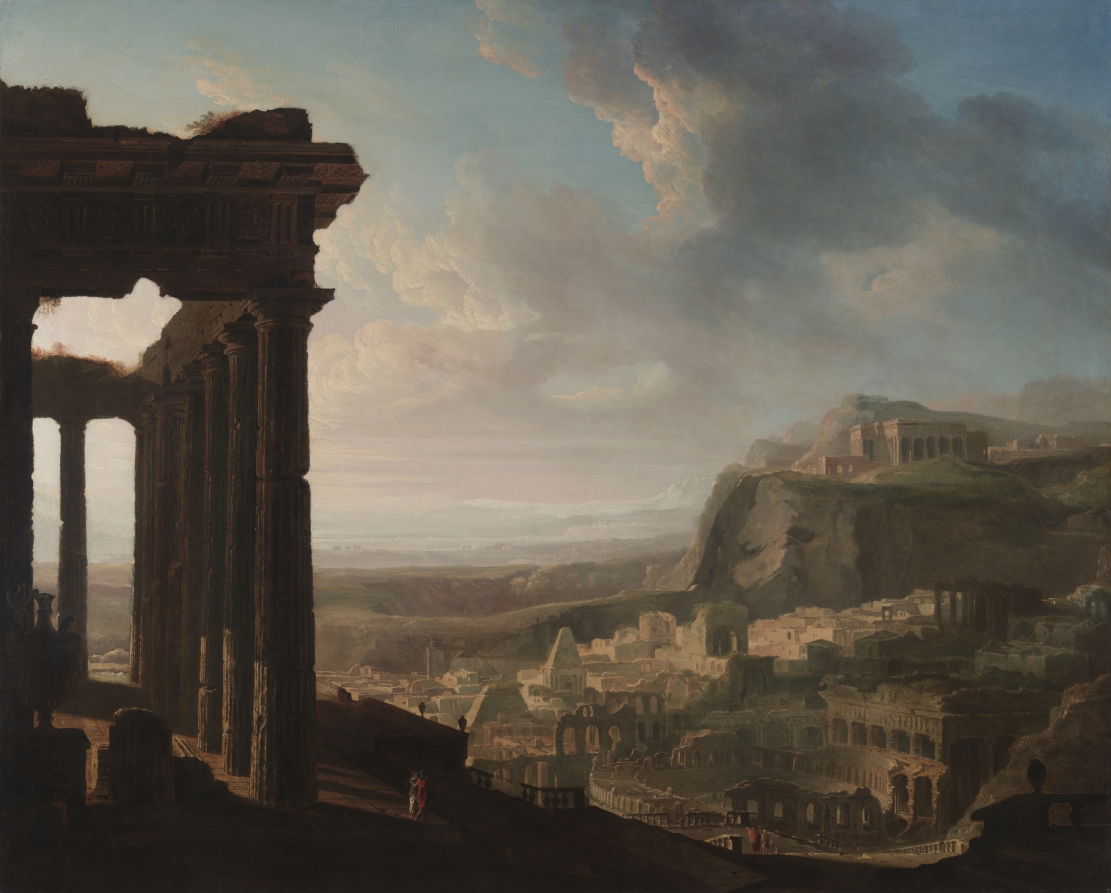
For this frenetic scene, Eugène Delacroix took inspiration from “The Giaour,” a poem in a popular series of romantic tales by the celebrated English poet Lord Byron. Giaour is a derogatory Turkish word for a Christian or non-Muslim applied here to the warrior at left clad in swirling white drapery. Amid a violent struggle, the Giaour is avenging the death of his lover at the hands of his opponent. Delacroix mirrored the two central figures and their horses as the Giaour is about to strike the fatal blow against the faceless Turk Hassan. The artist’s mastery of color is exemplified by his use of shimmering primary hues, while the loose handling of paint creates the sense of dynamism Delacroix was so capable of executing.
This painting reflects Delacroix’s sustained engagement with Orientalism, the artistic representation of non-European people and places, especially North Africa, Asia, and the Middle East. Delacroix was among the first European artists to travel to Africa when he visited Morocco in 1832, shortly after he completed this painting. Widespread in the nineteenth century, Orientalism was regularly leveraged to reinforce French colonial enterprises through often…
Description © Art Institute of Chicago, CC BY 4.0