Window mode follows your eyes with your camera, in this browser only: no picture or position leaves your device.
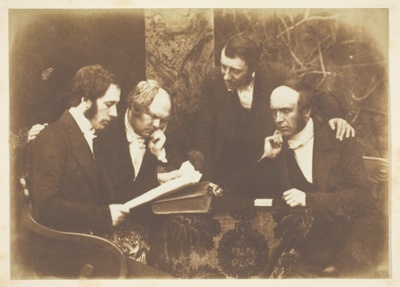
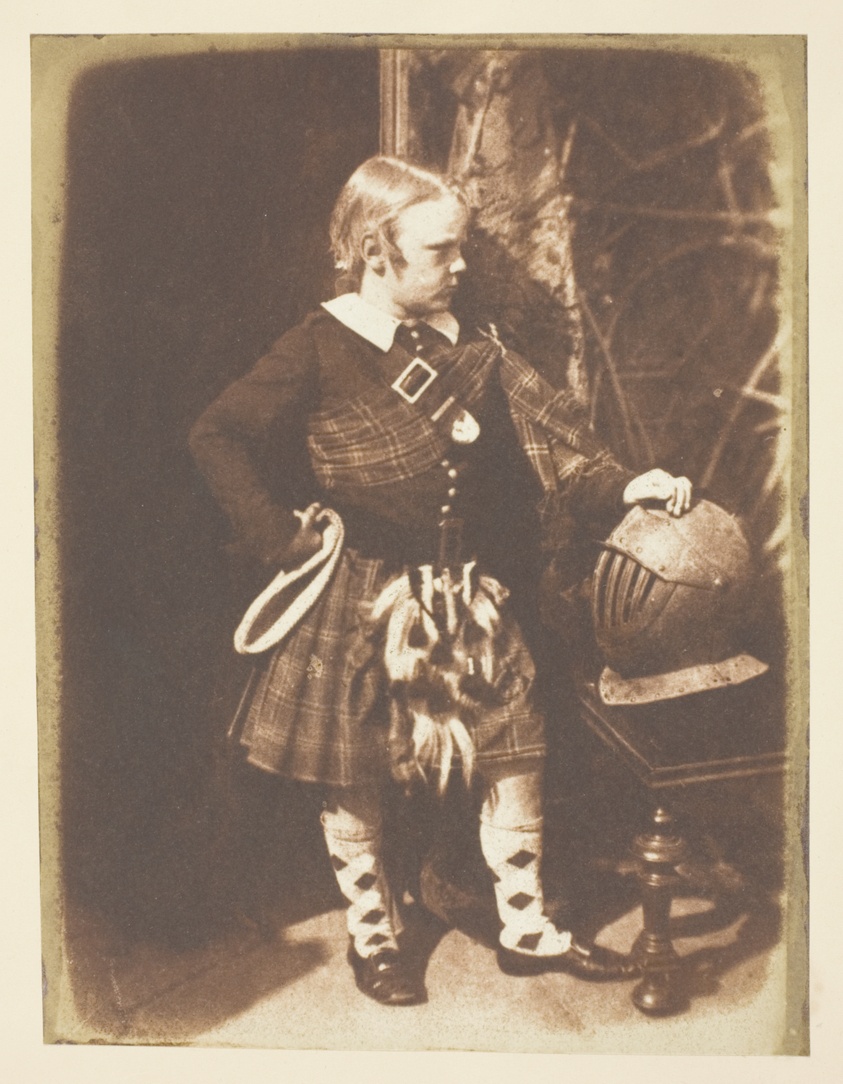
Master Miller
David Octavius Hill (Robert Adamson (Scottish, 1821–1848))
1844
- Medium
- Salted paper print
- Classification
- Photograph
- Dimensions
- Image/paper: 20.4 × 15.4 cm (8 1/16 × 6 1/8 in.); Mount: 37.3 × 26.7 cm (14 11/16 × 10 9/16 in.)
- Culture
- Scotland
- Museum
- Art Institute of Chicago, Photography and Media
- Credit line
- The Mary and Leigh Block Endowment Fund
- Rights
- Public domain (CC0), as the museum states it.
- Who can see it
- Teens profiles and older: its museum says too little about what it shows to place it for younger viewers. How works are placed
View at the Art Institute of Chicago
About this work
Coming from backgrounds in fine arts and chemistry, respectively, David Octavius Hill and Robert Adamson began their photographic collaboration in 1843. Hill wanted to produce a large history painting documenting the Disruption movement, which culminated in the establishment of the Free Church of Scotland. To document the more than 450 individuals who appear in the painting, Adamson made portraits of them with the calotype (paper negative) process, a technology that yielded prints rich in masses of form rather than sharp detail or tonal range. The pair made around 2,500 calotypes over the course of their remarkable five-year project, which went far beyond their initial goals before ending with Adamson's early death. Although Jimmy Miller, the son of Professor James Miller, did not appear in the painting that Hill finally completed in 1866, his father and three other family members are identifiable subjects in the grand composition.
Description © Art Institute of Chicago, CC BY 4.0