
Ancestral Voices Roundtable
Library Of Congress
History
Clips are not offered for this film: the Library of Congress states its rights in its own words, not as a public licence, which leaves reuse unclear.
Parts
About
This panel discussion highlights a collaborative initiative to digitally restore, provide access to and curate the oldest recordings in the Library of Congress collections, the 1890s wax cylinder recordings of the Passamaquoddy tribal nation of Maine. The collaboration involves the Passamaquoddy community, the American Folklife Center and university-based digital platforms -- the Mukurtu content management system and Local Contexts, which develops Traditional Knowledge (TK) attribution labels for heritage materials based on indigenous cultural protocols. Passamaquoddy elders have been reviewing the sonically restored recordings, transcribing songs and stories in their language, adding enhanced metadata and generating TK labels to enrich the Library's catalog records and the newly-launched collection website. The discussion focuses on several aspects of the initiative, ranging from control of indigenous intellectual property to digital repatriation to emerging digital technologies to ethical curation and community outreach. In particular, Passamaquoddy community members describe the critical importance of ethnographic field recordings for sustaining cultural memory, preserving native identity and stemming the loss of language. They perform songs learned through listening to the recordings, including the first public performance of a song not heard since its documentation 128 years ago.
Human-made No record of this work says a model made it. What this means.
- Archive
- Library of Congress, in Library of Congress: talks and concerts
- Licence or status
- Rights statement at the Library of Congress, as the Library of Congress states it.
- Credit
- Library of Congress
- Language
- English
- Country
- United States
- Who can watch
- The archive gives no rating. Invisible Network shows it to Tweens profiles and older, judged from its collection and subjects. How films are placed
More from Library of Congress: talks and concerts
 Talk
First Ladies: Historical Fiction About Pioneering Black Women
 Talk
Society for History in the Federal Government Awards Ceremony
 Talk
Ned Blackhawk and Kathleen DuVal: American History Is Native History
 Talk
2024 National Book Festival: Volunteer Close-Up with History
 Talk
2024 National Book Festival: Getting Your Hands on History
 Talk
Chronicling America: “Rights and Responsibilities” for National History Day
 Talk
How Historical Moments Influenced the Modern US Congress
 Talk
Photomechanical Prints: History, Identification, and Care
 Talk
Society for History in the Federal Government
 Talk
American History: “The New England Primer”
 Talk
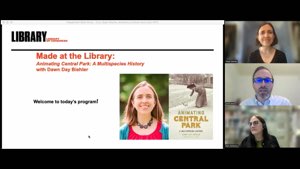
Animating Central Park: A Multispecies History
 Talk