Touch of His Hand, The
William Deneen Productions
Education
Clips are not offered for this film: no licence or public-domain mark is recorded for it.
Low resolution (320×240): this is the archive's own copy.
Parts
About
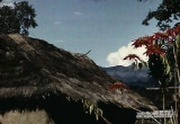
Sponsored by the Pontifical Institute for Foreign Missions, filmmaker Bill Deneen traveled three days by bullock cart to the remote leper colony run by Father Cesare Columbo in Kengtung (Kyiang Tong), Burma. It shows the culture of the colony, introducing new patients, and includes Columbo performing field surgery to remove a foot. Several scenes are shot in the Shan village of Mong Ping, Burma. Intended to be a film to be used for fundraising, the film is a fascinating documentary about a humanitarian effort that would soon be terminated by the Burmese government. The film is a precursor to 'Happy City'(also available on the Internet Archive), which Deneen made on Father Columbo's mission approximately five years later. The story of how this film was made is documented in Jean Maddern Pittrone’s 1970 book “The Touch of His Hand: Columbo, A Modern Day Damien in Burma,”pp. 85 - 105.
In mid-2003 AFA director Geoff Alexander went to Kengtung, Burma, to see what had become of the hospital and programs. Here is his report:
Kengtung (Kyiang Tong) is best accessed by air, as much of the surrounding area is essentially a war-zone, populated by armies from Burma, separatist movements, and drug traders. The city itself has no electricity for much of the day and night, and a cold beer is not to be found here. I took a motorcycle taxi to the Catholic mission, and asked for the person in charge, who happened to be, at the moment, Vicar Mario Matu. He was aware of Father Colombo, and offered to take me to Columbo’s hospital, which still has patients, and where a nun who had worked with Columbo still lived. The hospital in the film sits just outside the village of Naung Kan, seven miles from Kengtung. Now referred to as Hansen’s Disease, leprosy is a condition that effectively eats away at skin and bone. The 395 patients are mostly older, with the youngest being 12, and the average age at 30.
Many of the elderly patients, ravished by the disease, move as best they can by pulling themselves along the ground with what remains of their arms. Many are blind as well. Younger patients fare better, as the disease is easier to eradicate before it has progressed to an extensive state. The hospital is designed so family members of the patients live on the grounds as well, in separate quarters. After release, patients and their families typically move to Kengtung. In terms of economics, the drugs to support the hospital cost $1,250 per month, and the Burmese government contributes roughly $5 per month. Funding, which in a good month will support the hospital, is received from a Catholic group (PIME) which supports the hospital. The buildings built by Columbo still stand, although the upper story of the original hospital has been condemned. Columbo’s original operating room, seen in the film, sits undisturbed as a testimony to his memory.
For more about Kyaing Tong, Burma, visit www.wowasis.com/travelblog/?p=2076
For more on filmmaker Deneen, visit www.afana.org/deneen.htm
Human-made No record of this work says a model made it. What this means.
- Archive
- Internet Archive, in Academic films
- Licence or status
- The Internet Archive states none for this item.
- Credit
- William Deneen Productions
- Who can watch
- The archive gives no rating. Invisible Network shows it to Tweens profiles and older, judged from its collection and subjects. How films are placed
More from Academic films
 Educational
Frames of Reference
 Educational
Hangman
 Educational
Iran
 Educational
Baja California: the Pacific Coast of Mexico
 Commercial
Cliché Family in Televisionland
 Educational
Crisis in Levittown
 Educational
Basic Brown, Basic Blue
 Educational
Journey to the Center of a Triangle
 Educational
Congruent Triangles
 Educational
Silent Snow, Secret Snow
 Educational
Solar System (2nd Ed)
 Educational