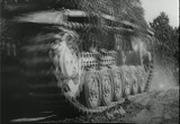
DIE DEUTSCHE WOCHENSCHAU, ca. 1943 - ca. 1944
National Archives and Records Administration
Education
Clips are not offered for this film: the US renewal records do not settle it.
Not offered: what its record states (its uploader's public-domain mark, or a licence not shown to be its rights holder's) leaves its US term to decide, and it is dated 1943; under US law a work of that year is free only on facts the site does not hold for it (its US renewal records, or its own country's term on 1 January 1996 for a work published abroad), and otherwise its US term runs to the end of 2038. Unclear is not offered. Open it at the Internet Archive.
Parts
About
National Archives and Records Administration - ARC 44362, LI 242-MID-6137 - DIE DEUTSCHE WOCHENSCHAU, ca. 1943 - ca. 1944 - DVD Copied by Nick Stoller. Series: Motion Picture Films From G-2 Army Military Intelligence Division, compiled 1918 - ca. 1947. NEWSREEL: Reel 1: German officers, troops and civilians dig anti-tank obstacles and two-man bunkers. (2) Animated map shows Vilnius, Warsaw and Narva. German soldiers help Estonian refugees aboard German ships. (3) Latvian volunteer regiment parades past German Army officials. (4) German FW-190's bomb and strafe city. (5) German "Grenadiers" and artillery attack Russian bridgehead. R.2: (6) Shows mobil German tanks and immobilized Russian tanks. (7) Germans dive-bomb Warsaw's suburbs. (8) Western Front map. German forces advance near Rhine river and take U.S. prisoners near Luneville, France and occupy city. (9) Minister of Propaganda Joseph Paul Goebbels speaks to troops and civilians at Rhineland tank factory; "King Tiger" type tank displayed for dignitaries.
Human-made No record of this work says a model made it. What this means.
- Archive
- Internet Archive, in FedFlix: US government films
- Licence or status
- CC0 1.0, as the Internet Archive states it.
- Credit
- National Archives and Records Administration
- Language
- English
- Who can watch
- The archive gives no rating. Invisible Network shows it to Teens profiles and older, judged from its collection and subjects. How films are placed
More from FedFlix: US government films
 Educational
Fred and the Voice of Food Safety: How to Avoid Food-Borne Illness
 Educational
FDA Approved - The Slide Show
 Educational
True Glory
 Educational
Duck and Cover
 Educational
BATTLE OF MIDWAY
 Educational
Vietnam War
 Educational
Island of Hope, Island of Tears
 Educational
Rural Surveillance
 Educational
China: The Roots of Madness
 Educational
Apartheid in South Africa
 Educational
India - Pakistan Refugees
 Educational