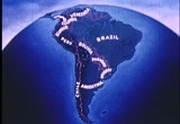
OUR NEIGHBORS DOWN THE ROAD
National Archives and Records Administration
Education
Clips are not offered for this film: the US renewal records do not settle it.
Not offered: its uploader marks it public domain, and the US Copyright Office's records do not settle that it is (a record that may be another film's, a film first published abroad, a year when renewal was automatic, or a country they do not name). Unclear is not offered. Open it at the Internet Archive.
Parts
About
National Archives and Records Administration - ARC 400246, LI 229.1 - OUR NEIGHBORS DOWN THE ROAD - DVD Copied by Ann Galloway. Office of Inter-American Affairs. Department of Information. Motion Picture Division. (03/23/1945 - 08/1945). Records an expedition by motor truck along the Pan American Highway in South America. The trip begins at La Guaira, Venezuela, and continues along mountain roads and through village markets to Caracas and the oil fields of Maracaibo, with a side trip across the Andes to Colombia. Shows the cathedral and plaza of Bogota, Colombia, and scenes of Quito and Guayaquil, Ecuador. Indian farmers thresh grain, and women drive Ilamas and sheep to market. Shows scenes of the Peruvian coastline, the cities of Lima and Ayacucho, Lake Titicaca, the ancient Inca capital near Cuzco, Peru, and the city of La Paz, Bolivia. Shows the nitrate beds along the coast of Chile, street scenes at Santiago, scenes of the Argentine countryside, and the city and seaport of Buenos Aires. Shows scenes of Montevideo, Uruguay, and cotton farms, roads, and the city of Rio de Janeiro in Brazil.
Human-made No record of this work says a model made it. What this means.
- Archive
- Internet Archive, in FedFlix: US government films
- Licence or status
- CC0 1.0, as the Internet Archive states it.
- Credit
- National Archives and Records Administration
- Language
- English
- Who can watch
- The archive gives no rating. Invisible Network shows it to Tweens profiles and older, judged from its collection and subjects. How films are placed
More from FedFlix: US government films
 Educational
Fred and the Voice of Food Safety: How to Avoid Food-Borne Illness
 Educational
FDA Approved - The Slide Show
 Educational
True Glory
 Educational
Duck and Cover
 Educational
BATTLE OF MIDWAY
 Educational
Vietnam War
 Educational
Island of Hope, Island of Tears
 Educational
Rural Surveillance
 Educational
China: The Roots of Madness
 Educational
Apartheid in South Africa
 Educational
India - Pakistan Refugees
 Educational