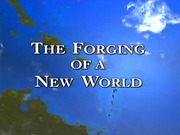
Spirits of the Jaguar: The Forging of a New World
George Page, Mark. Jacobs, Paul. Reddish, British Broadcasting Corporation., WNET (Television station : New York, N.Y.)
NatureHistory
Clips are not offered for this film: no licence or public-domain mark is recorded for it.
Parts
About
4 videocassettes (approximately 60 min. each) : 1/2 in (1st videocassette)
Using wildlife footage, dramatic recreations and computer simulation, this four-part series explores the great civilizations of the Aztecs, the Maya and the Taino, which dominated the Caribbean and Central America for centuries before disappearing totally
Not rated.
VHS
Narrator/host: George Page
Producer, Mark Jacobs; cinematographers, Mike Lemmon, Andrew Anderson, John Harris, Rod Clarke, Simon Carroll, Jeremy Humphries, Gavin Thurston; music, Martin Fridel
Broadcast in the USA as part of the series: Nature
Supplemented by: Spirits of the Jaguar / Paul Reddish
episode 1. The forging of a new world -- episode 2. Forests of the Maya -- episode 3. Hunters of the Caribbean sea -- episode 4. The fifth world of the Aztecs
Over 100 million years ago, Central America and the islands of the Caribbean were born out of explosions of rock and lava in the Pacific Ocean. The new land masses migrated east and collided with both North and South America, creating a land bridge for species such as giant iguanas, tiny hummingbirds, leaping crocodiles - and the jaguar. Humans were the last to arrive. When hunters followed giant mammoths southwards from North America, they formed the beginning of the great civilizations of the region.
Human-made No record of this work says a model made it. What this means.
- Archive
- Internet Archive, in The VHS Vault
- Licence or status
- The Internet Archive states none for this item.
- Credit
- George Page, Mark. Jacobs, Paul. Reddish, British Broadcasting Corporation., WNET (Television station : New York, N.Y.)
- Language
- English
- Who can watch
- The archive gives no rating. Invisible Network shows it to Tweens profiles and older, judged from its collection and subjects. How films are placed
More from The VHS Vault
 Documentary
Connections by James Burke (Seasons 1-3)
 Film
The New Alfred Hitchcock Presents (1985-1989)
 Film
Nickelodeon Animals Friends (2009) VHS
 Film
Amazing Animals
 Film
SR-71 Blackbird: The Secret Vigil (1989)
 Documentary
National Geographic—Amazon: Land of the Flooded Forest (1991)
 Film
The Warriors (1979) Debut Video Release 1980 Paramount Home Video
 Documentary
National Geographic—Killer Whales: Wolves of the Sea (1993)
 Film
Baby's First Impressions VHS Collection
 Film
Fourways Farm (VHS Collection)
 Documentary
The Gulf War
 Film