U.S. NAVY WWII NEWSREEL KAMIKAZE PILOTS GILMORE BROTHERS 76644
WarNewsIndustrial and advertising
Clips are not offered for this film: no licence or public-domain mark is recorded for it.
Low resolution (640×360): this is the archive's own copy.
Parts
About
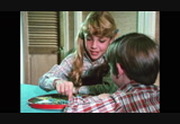
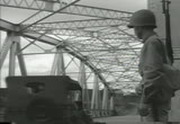
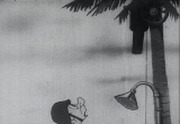
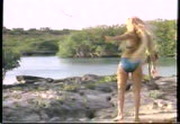
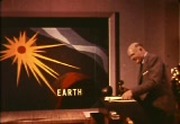
This U.S. Navy newsreel consists of several segments. The first tells the story of the Gilmore Brothers, Charles and Lyman, who attempted to build an airplane several years prior to the Wright Brothers. The second segment shows the Japanese Kamikaze pilots and tells the story of "how they got that way". Next, a sexy interlude called "Showtime" with singer Joy Hodges. This soundie is typical of the 1940s era, where music videos often consisted of cute vignettes. This one is complete with the proverbial "bouncing ball" lyrics.
Actress and singer Joy Hodges appeared with Fred Astaire and Ginger Rogers in Follow the Fleet (1936), but made her greatest impact by advising Ronald Reagan to ditch his spectacles, then introducing him to a Hollywood agent.
Lyman Wiswell Gilmore, Jr. (June 11, 1874 - February 18, 1951) was an aviation pioneer. In Grass Valley, California, he built a steam-powered airplane and claimed that he flew it on May 15, 1902. Due to the requirement of a heavy boiler and the dependency on coal as a power source, the flights would have been unsustainable. Records and evidence relating to his claim were lost in a 1935 hangar fire.
Gilmore, in a 1936 interview, reported a successful tethered glider flight in 1893 and a free glider flight in 1894. Gilmore further added that (although he had not reported it until 1927) he made a controlled steam-powered flight on May 15, 1902, however all records and papers related to his aircraft were destroyed in a fire.
There are photographs from 1898 showing Gilmore's machine, but none showing it in the air. The claims of the aircraft achieving flight are unconfirmed, and given the weight evident by the grounded aircraft photos, the possibility of flight is highly unlikely.
Lyman Gilmore was in contact with other flight pioneers like Samuel Langley and, eventually, the Wright brothers.
In 1902, Gilmore was granted two patents on steam engines. He invented in other areas too: for example, a rotary snowplow. On March 15, 1907, Gilmore opened the first commercial airfield, Gilmore Airfield, in Grass Valley. There is now a middle school named in his honor on the site of the airfield.
In 1935, Lyman's airplane hangar and the two aging monoplanes were destroyed by fire. The fire cancelled plans to exhibit the larger monoplane at the World Fair in Chicago. Gilmore began mining for gold and died a poor man in Nevada City, California. His grave can be found in Pine Grove Cemetery, about a half mile outside of town.
The Lyman Gilmore Elementary School in Grass Valley has the motto, "Flying into the Future" and photos of a mural depicting flight.
This film is part of the Periscope Film LLC archive, one of the largest historic military, transportation, and aviation stock footage collections in the USA. Entirely film backed, this material is available for licensing in 24p HD and 2k. For more information visit http://www.PeriscopeFilm.com
Human-made No record of this work says a model made it. What this means.
- Archive
- Internet Archive, in Ephemeral films
- Licence or status
- The Internet Archive states none for this item.
- Who can watch
- The archive gives no rating. Invisible Network shows it to Teens profiles and older, judged from its collection and subjects. How films are placed