HISTORY OF H.J. HEINZ TOMATO KETCHUP THE SEARCH FOR THE PERFECT TOMATO 76054
HistoryIndustrial and advertising
Clips are not offered for this film: no licence or public-domain mark is recorded for it.
Low resolution (640×360): this is the archive's own copy.
Parts
About
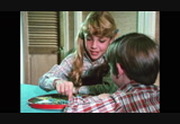
This rarely seen 1940s corporate film attempts to explain the history of the H.J. Heinz Company and one of its all time great products, tomato ketchup. It starts over a hundred years ago with a search for tomatoes...and that's about 13 minutes of story. Finally the right seeds are developed by a firm that ends up being called the Livingston Seed Company. The experimentation done by Heinz to develop the perfect ketchup is dramatized at 14:30, with chemical analysis of different tomato varieties, that leads to a feat of genetic engineering...producing the "perfect tomato". The film ends with images of modern ketchup production as it occurred in the 40s, with shots of tomatoes being harvested and processed at a large factory. The handling of the tomatoes is something to seen as they are sorted, cleaned, trimmed -- that's the last time they are touched by human hands -- and then scalded, cooked and moved into bottles.
00:00 The film starts with an historical vignette set in Europe. Here, a man named Jonathan attempts to leave the country. He is stopped by a customs official who warns him that exporting rice or "love apples" (tomatoes) is punishable by death to protect the local trade monopoly. Jonathan feigns a sprained arm, successfully smuggling seeds hidden inside his bandage past the guards.
4:18 Jonathan distributes the smuggled seeds 12 rice and 12 tomato to American farmers. He mentions that while the Aztecs and Italians eat them, many Americans still view tomatoes with superstition. He encourages the farmers to grow them, predicting they will become a staple crop in the United States.
5:59 The film jumps forward to the 19th century. Alec Livingston, a dedicated farmer, is courted by Matilda. Alec is obsessed with breeding a better tomato, treating it as a serious agricultural science rather than a hobby. He dreams of developing a uniform, smooth fruit to replace the wrinkled, inconsistent varieties of the time.
9:27 Fifteen years later, Alec feels he has failed because he cannot get the tomatoes to breed true. He realizes his error: he has been selecting seeds from the best fruit rather than the strongest whole plant . By changing his selection method to focus on the overall health and yield of the parent vine, he finally creates the "Paragon" tomato, the first uniform variety.
14:10 In a laboratory setting, a chemist presents an analysis of tomato varieties to H.J. Heinz. The scientist explains that by using the laws of genetics discovered by Gregor Mendel, they can scientifically breed out bad traits and breed in good ones specifically targeting pectin, acid, and sugar levels.
15:54 Mr. Barnes, a representative for the Heinz Company, recruits a young farmer named Eddie Corey. Barnes explains the rigorous science behind the seedlings provided by the company. He details the cross-pollination process, where scientists manually remove the anthers (male parts) of a flower and brush pollen onto the pistol (female part) to create a hybrid with specific characteristics.
20:02 Eddie plants the crop, and it initially thrives. However, a few weeks later, he discovers black spots on the plants. Barnes identifies it as "leaf spot," a fungus caused by warm, damp weather. They save the crop by immediately dusting the entire 40-acre field with fungicide.
24:47 Eddie’s wife takes a seasonal job at the local cannery. The film follows the tomatoes as they are delivered on a strict schedule to ensure freshness. The industrial process is shown in detail: the tomatoes are washed under high pressure, sorted, peeled, cooked, and bottled as ketchup, chili sauce, or tomato juice within hours of being picked.
27:15 Eddie receives his payment and a contract for the following year. He reflects on the satisfaction of farming, feeling connected to a long history of agricultural progress and the "sacred trust" of feeding the world. The End.
Motion picture films don't last forever; many have already been lost or destroyed. We collect, scan and preserve 35mm, 16mm and 8mm movies -- including home movies, industrial films, and other non-fiction. If you have films you'd like to have scanned or donate to Periscope Film, we'd love to hear from you. Contact us via the link below.
This film is part of the Periscope Film LLC archive, one of the largest historic military, transportation, and aviation stock footage collections in the USA. Entirely film backed, this material is available for licensing in 24p HD and 2k. For more information visit http://www.PeriscopeFilm.com
Human-made No record of this work says a model made it. What this means.
- Archive
- Internet Archive, in Ephemeral films
- Licence or status
- The Internet Archive states none for this item.
- Who can watch
- The archive gives no rating. Invisible Network shows it to Tweens profiles and older, judged from its collection and subjects. How films are placed