" OPERATION CUE " 1955 NEVADA ATOMIC BOMB TEST HISTORIC FILM / OPERATION TEAPOT 71662
WarIndustrial and advertising
Clips are not offered for this film: no licence or public-domain mark is recorded for it.
Low resolution (640×360): this is the archive's own copy.
Parts
About
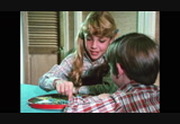
Created by the Federal Civil Defense Administration in 1955 and then revised in 1964, "Operation Cue" is one of the most famous films to emerge from the atomic era. Perhaps this is because of the film's disturbing subject and odd pairing of domestic life -- here shown in a "typical American house" stocked with typical foods and appliances and mannequins dressed like Mom, Dad, Sister and Brother -- with an atomic explosion.
The blast shown was the Civil Defense Apple-2 shot on 5 May 1955. It was intended to test various building construction types in a nuclear blast. An assortment of buildings, including residential houses and electrical substations, were constructed at the site nicknamed "Survival Town". The buildings were populated with mannequins, and stocked with different types of canned and packaged foods. Not all of the buildings were destroyed in the blast, and some of them still stand at Area 1, Nevada Test Site. By 1964, with the arrival of the Hydrogen bomb, it was clear that the 1955 film understated the severity of the effects of the bomb. A hydrogen bomb would be 250 times more powerful than the bomb observed -- and hardly survivable except from a great distance from Ground Zero. Thus the film was revised and a new disclaimer added at the start.
• 0:21 - 0:54: Comparison of the destructive power of a 30-kiloton bomb to modern thermonuclear weapons, highlighting the much greater damage radius of the latter.
• 1:26 - 1:40: Introduction to Operation Q, a program to test the effects of an atomic blast on everyday items.
• 1:56 - 2:14: The reporter's perspective on witnessing Operation Q and the preparations for the test.
• 2:17 - 2:33: Explanation of the test's scope and the importance of shelter in surviving an atomic blast.
• 3:03 - 3:13: Testing various types of shelters, including industrial and family shelters.
• 3:25 - 3:50: Testing power infrastructure, including power poles, lines, and substations, to understand their resilience and repair times.
• 4:08 - 4:22: Testing radio towers and broadcasting equipment to assess their durability.
• 4:31 - 4:51: Testing gas facilities to determine their safety and potential for causing fires.
• 5:07 - 5:24: Testing different types of houses and their furnishings to evaluate their resistance to atomic blasts.
• 6:31 - 6:50: Testing textiles and synthetic fabrics for their reaction to the blast.
Human-made No record of this work says a model made it. What this means.
- Archive
- Internet Archive, in Ephemeral films
- Licence or status
- The Internet Archive states none for this item.
- Who can watch
- The archive gives no rating. Invisible Network shows it to Teens profiles and older, judged from its collection and subjects. How films are placed