1950s CUBA & ISLAND OF MARGARITA CARIBBEAN ST. PETERSBURG TRAVELOGUE FILM 53084
TravelIndustrial and advertising
Clips are not offered for this film: no licence or public-domain mark is recorded for it.
Low resolution (640×360): this is the archive's own copy.
Parts
About
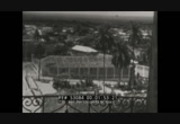
World Acquaintance Films presents “Cuban Holiday” — the first of three short travel films that once aired on ABC TV. Filmed in cooperation with the Cuban Tourism Commission, "Cuban Holiday" is a late 1940s black-and-white travelogue that touts Cuba as a popular vacation spot, particularly for US residents, as tranquil scenes from the island are shown. Remains of the Convent of San Francisco in Trinidad in central Cuba (mark 01:28) and other structures including modern hotels are shown as the narrator briefly delves into the town’s history, including the recruitment of men by Hernando Cortes. The film visits cathedrals and homes along the southern coastline, as well as a Atkins Garden, a botanical center maintained by Harvard University (mark 04:20) in Cienfuegos, before heading to the capital city of Havana (mark 05:12). We visit Havana Cathedral (which once held the remains of Christopher Columbus) and a monument in honor of the USS Maine (ACR-1), which sank in Havana Harbor in 1898. There are scenes from luxury hotels and apartment buildings along with roads designed with the idea that “motoring should be a form of recreation” (mark 07:27). Dancers perform a rumba (mark 08:08) and we see celebratory Cuban nightlife and parades before the film ends.
At mark 12:34, this picture continues with “Margarita,” another 1940s-era travel film produced for the the government of Venezuela by the Hamilton Wright Organization. The film opens with beach scenes (mark 13:18) on Margarita Island, the largest island in the Venezuelan state of Nueva Esparta. A map pinpoints Margarita’s location (mark 13:48) as the narrator explains how residents cater to the tourist trade as a woman sews a custom-made hat for visitors. Men collect oysters in the bay (mark 15:20) and visitors are encouraged to dive for pearls, we are told, as a couple frolics in the water. The film takes the viewer to historic old forts (mark 17:18) before again returning to such leisurely pursuits as water skiing or climbing a palm tree for a coconut. Young girls perform native dances and musicians play along starting at mark 22:00 while the narrator explains the significance of some of the numbers.
A third portion of this selection, titled “February Fair,” begins at mark 22:48 at takes the viewer to Florida. Families head to the beach or sail around the waters of St. Petersburg, and we see vast groves of grapefruit and oranges, before heading to the Pinellas County Fair (mark 23:35). Crowds enjoy the Florida sunshine while visiting standard agricultural displays created by “good solid Americans.” There are games on the carnival midway and scenes of kids eating cotton candy and candied apples, as well as Ferris wheels (mark 25:19) and stomach-churning rides before joining the crowd for a thoroughbred demonstration and of course, a blue ribbon competition. The last minute of the film (mark 27:47) touts the safety and security of investing in US Savings Bonds.
We encourage viewers to add comments and, especially, to provide additional information about our videos by adding a comment! See something interesting? Tell people what it is and what they can see by writing something for example: "01:00:12:00 -- President Roosevelt is seen meeting with Winston Churchill at the Quebec Conference."
This film is part of the Periscope Film LLC archive, one of the largest historic military, transportation, and aviation stock footage collections in the USA. Entirely film backed, this material is available for licensing in 24p HD, 2k and 4k. For more information visit http://www.PeriscopeFilm.com
Human-made No record of this work says a model made it. What this means.
- Archive
- Internet Archive, in Ephemeral films
- Licence or status
- The Internet Archive states none for this item.
- Language
- English
- Who can watch
- The archive gives no rating. Invisible Network shows it to Tweens profiles and older, judged from its collection and subjects. How films are placed