" REHEARSAL FOR DISASTER " 1957 CIVIL DEFENSE / TRUCKERS & TRUCKING INDUSTRY FILM 28192
WarIndustrial and advertising
Clips are not offered for this film: no licence or public-domain mark is recorded for it.
Low resolution (640×360): this is the archive's own copy.
Parts
About
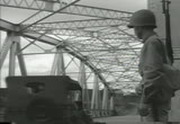
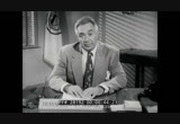
Produced in 1957 and presented by America's Trucking Industry, "Rehearsal for Disaster" shows the important role that motorized transport and in particular the trucking industry, plays in civil defense today, and in the event of an atomic attack. As the film says, "the trucking industry, organized on a nationwide basis, can be a tremendous factor in saving lives and property in the event of any emergency, natural or war-caused." The underlying idea of the film is that truck drivers would be absolutely vital in the event of an enemy atomic attack. Thanks to the Eisenhower's heavy investment in infrastructure following WWII, America now had a system of streets and highways, webbing the nation from coast to coast. Civil Defense planners viewed this network as vital since it would allow aid could to be shipped in, and survivors evacuated out. The film even shows how big rigs can be driven off-road, so that materials can be moved after the bomb drops. The film follows two long-haul drivers, Joe and Slim, as they discuss how the emergency needs of any community can be met by dedicated trucking personnel.
The film emphasizes the importance of civil defense, highlighting that it involves individuals and groups working together beyond just preparing for enemy attacks. It introduces truck drivers Joe and Slim, who play a crucial role in civil defense, particularly in flood relief efforts. Slim shares his experiences and the significant impact of truckers in rescue operations. The discussion extends to the mobilization of trucks for civil defense during attacks, their roles in evacuating people, transporting the injured, and delivering supplies to disaster areas. The film underscores the comprehensive planning and organization of the trucking industry for emergency uses, involving various people, including children, in civil defense efforts. It also reflects on past disaster responses and the trucking industry's readiness to handle future disasters, emphasizing that civil defense is a collective responsibility for everyone, especially trade and industry groups.
• 0:09-0:24: Civil defense is more than just preparing for enemy attacks; it's about individuals and groups working together.
• 0:27-0:56: Civil defense activities are ongoing and beneficial today, touching all lives.
• 1:09-1:25: Introduction of two truck drivers, Joe and Slim, and their role in civil defense.
• 2:17-2:24: Slim returns from helping with flood relief.
• 2:30-2:41: Slim describes his experience hauling people out of the flood zone.
• 2:56-3:24: News report on the flood's impact and the truckers' role in the rescue operation.
• 3:35-3:46: The Red Cross's involvement in the flood relief.
• 3:49-4:01: Slim reflects on the flood relief efforts.
• 4:04-4:54: Slim shares memories of the emergency feeding station and the items people took with them during the evacuation.
• 5:00-5:18: Discussion on mobilizing trucks for civil defense in case of an attack.
Human-made No record of this work says a model made it. What this means.
- Archive
- Internet Archive, in Ephemeral films
- Licence or status
- The Internet Archive states none for this item.
- Who can watch
- The archive gives no rating. Invisible Network shows it to Teens profiles and older, judged from its collection and subjects. How films are placed