B-52 Stratofortress Film Report 1964 "Flight Without A Fin" 23364
WarIndustrial and advertising
Clips are not offered for this film: no licence or public-domain mark is recorded for it.
Low resolution (640×360): this is the archive's own copy.
Parts
About
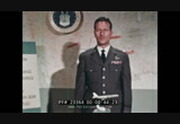
This incredible film, FLIGHT WITHOUT A FILM, recounts an extraordinary accident that took place in 1964. As Lt. Col. Schmidt of Norton Air Force Base explains, on January 10, 1964 a flight crew flying a B-52H for Boeing was testing the aircraft over mountainous terrain. Flying from Boeing's Wichita plant, pilot Chuck Fisher took off in a B-52H with a three-man Boeing crew, flying a low-level profile to obtain structural data. Over Colorado, cruising 500 feet above the mountainous terrain, the B-52 encountered some turbulence. Fisher climbed to 14,300 feet looking for smoother air. The bomber then flew into clear-air turbulence. As Fisher recounts, it felt as if the plane had been placed in a giant high-speed elevator, shoved up and down, and hit by a heavy blow on its right side.
Fisher told the crew to prepare to abandon the plane. He slowed the aircraft and dropped to about 5,000 feet to make it easier to bail out.
But then Fisher regained some control. He climbed slowly to 16,000 feet to put some safety room between the plane and the ground. He informed Wichita about what was happening. Although control was difficult, Fisher said he believed he could get the plane back in one piece.
Response to the situation at Wichita, and elsewhere, was immediate. An emergency control center was set up in the office of Wichita's director of flight test. Key Boeing engineers and other specialists were summoned to provide their expertise. Federal Aviation Administration air traffic control centers at Denver and Kansas City cleared the air around the troubled plane. A Strategic Air Command B-52 in the area maintained radio contact with the crew of the Wichita B-52.
As Fisher got closer to Wichita, a Boeing chase plane flew up to meet him and to visually report the damage. When Dale Felix, flying an F-100 fighter, came alongside Fisher's B-52, he couldn't believe what he saw: The B-52's vertical tail was gone.
Felix broke the news to Fisher and those gathered in the control center. There was no panic. Everyone on the plane and in the control center knew they could be called upon at any time for just such a situation.
In the emergency control center, the engineers began making calculations and suggesting the best way to get the plane down safely.
The Air Force was also lending assistance. A B-52, just taking off for a routine flight, was used to test the various flight configurations suggested by the specialists before Fisher had to try them.
As high gusty winds rolled into Wichita, the decision was made to divert the B-52 to Blytheville Air Force Base in Northeastern Arkansas.
Boeing specialists from the emergency control center took off in a KC-135 and accompanied Fisher to Blytheville, serving as an airborne control center.
Six hours after the incident first occurred, Fisher and his crew brought in the damaged B-52 for a safe landing.
"I'm very proud of this crew and this airplane," Fisher said. "Also we had a lot people helping us, and we're very thankful for that."
Human-made No record of this work says a model made it. What this means.
- Archive
- Internet Archive, in Ephemeral films
- Licence or status
- The Internet Archive states none for this item.
- Who can watch
- The archive gives no rating. Invisible Network shows it to Teens profiles and older, judged from its collection and subjects. How films are placed