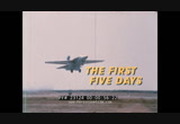
"THE FIRST FIVE DAYS" 1980s EF-111 ELECTRONIC WARFARE AIRCRAFT PROMO NATO vs. WARSAW PACT 23124
Industrial and advertising
Clips are not offered for this film: no licence or public-domain mark is recorded for it.
Low resolution (640×360): this is the archive's own copy.
Parts
About
Produced in the 1980s at the peak of Cold War paranoia, this Grumman Aerospace film discusses the theoretical first five days of air combat that would occur in the event of an outbreak of hostilities between NATO and the Warsaw Pact. The film highlights the critical role of electronic warfare (EW) in modern military conflicts, particularly in a potential Central European war where outcomes could be determined within five days. With the Soviet Union significantly expanding its conventional and strategic forces, including advanced radar and missile systems, the U.S. faces a technological and positional disadvantage. To counter this, the U.S. Air Force emphasizes the need to dominate the electromagnetic spectrum and degrade Soviet command and control capabilities. Central to this strategy is the EF-111, a modified F-111 aircraft equipped with the ALQ-99 jamming system, designed to blind enemy radar, protect strike aircraft, and ensure mission success through standoff, close-in, and deep penetration jamming roles. Tested successfully in Red Flag and Green Flag exercises, the EF-111 integrates effectively with other aircraft and is seen as essential for maintaining technological parity and tactical deterrence in an era where electronic countermeasures are as vital as firepower.
0:00 – The U.S. must rapidly deny enemy communications and radar spectrum access to gain tactical advantage.
1:03 – A war in Central Europe could be decided in 5 days, with air power playing a decisive role. However, electronic warfare (EW) is equally critical due to Soviet emphasis on jamming and radar systems.
1:38 – The Soviet Union is massively expanding both its conventional and strategic fighter forces, posing a significant threat to NATO.
2:01 – Any Central European conflict would occur on Soviet home ground, giving them radar and missile system advantages.
2:26 – While the U.S. may hold a technological edge, the Soviets are rapidly closing the gap both quantitatively and qualitatively, especially with advanced aircraft and radar.
3:00 – Soviet electronic combat strategy aims to deny the U.S. use of the electromagnetic spectrum through a dense radar network.
3:23 – The U.S. Air Force is countering this with advanced electronic warfare resources, particularly with aircraft like the EF-111.
4:01 – The EF-111, equipped with the ALQ-99 jamming system, plays a central role in jamming Soviet radar and supporting tactical aviation.
4:45 – If a Warsaw Pact attack occurred, the U.S. would only have 4–5 days to respond with existing forces—no time for extended build-up like in WWII.
5:14 – The EF-111’s goal is to degrade Soviet command, control, and radar systems, blinding the enemy before they can strike.
5:42 – At Grumman Aerospace, F-111 bombers are converted into EF-111 electronic warfare aircraft through extensive modifications.
Human-made No record of this work says a model made it. What this means.
- Archive
- Internet Archive, in Ephemeral films
- Licence or status
- The Internet Archive states none for this item.
- Language
- English
- Who can watch
- The archive gives no rating. Invisible Network shows it to Teens profiles and older, judged from its collection and subjects. How films are placed