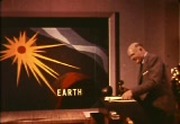
PEOPLES OF THE PHILIPPINES 1940s TRAVELOGUE MOVIE PART 1 MANILA 20784
TravelIndustrial and advertising
Clips are not offered for this film: no licence or public-domain mark is recorded for it.
Low resolution (640×360): this is the archive's own copy.
Parts
About
Produced by Canadian Pacific, which operated a steamship line that serviced Manila, this color film shows stunning views of the Philippines pre-WWII. The movie was made during the American colonial rule by Richard and Elizabeth Hubert, who lived in Asia in the 1930s. After escaping from Shanghai on one of the last ships that left before the Japanese invasion of Pearl Harbor on Dec. 7, 1941, Richard Hubert, a Canadian citizen, went to work for the U.S. Office of War Information in 1942. He brought his expert knowledge of Japanese life and culture to the Allied efforts to convince the Japanese to surrender. After the war he became executive director of the Greenwich Housing Authority.
The film begins with images of Manila around the :40 mark, including the Spanish influenced areas, the city wall, and the Santo Tomaso University. At 3:15 the Paco Cemetery and the ruins of the Guadalupe Monastery are seen. At 5:22 is the newer, American influenced Manila with its government buildings and wide boulevards. At 7:00 the Manila Hotel is seen on the Esolta, as well as the Luneta Park. A Canadian Pacific liner can be seen in the harbor. At 8:00, the National Museum is shown, and Ateneo College. At 9:30, various industries are shown including embroidery, sugar plantations, etc. At 15:00 the film switches to Northern Luzon with a focus on three rural tribes which the film labels as "pagans", including the Bontec Tribe, a feared war-like group of indigenous people who actively indulged in tribal wars with its neighbours until the 1930s. Every Bontoc male had to undergo a rites of passage into manhood, which may include head hunting, where the male has to journey (Sometimes with companions) and hunt for a human head. The Bontocs also used the jaw of the hunted head as a handle for its gongs, and as late as the early 1990s, evidence of this practice can be seen from one of the gongs in Pukisan, Bontoc. The town also hosts the UNESCO tentatively-listed Alab petroglyphs.
We encourage viewers to add comments and, especially, to provide additional information about our videos by adding a comment! See something interesting? Tell people what it is and what they can see by writing something for example: "01:00:12:00 -- President Roosevelt is seen meeting with Winston Churchill at the Quebec Conference."
This film is part of the Periscope Film LLC archive, one of the largest historic military, transportation, and aviation stock footage collections in the USA. Entirely film backed, this material is available for licensing in 24p HD, 2k and 4k. For more information visit http://www.PeriscopeFilm.com
Human-made No record of this work says a model made it. What this means.
- Archive
- Internet Archive, in Ephemeral films
- Licence or status
- The Internet Archive states none for this item.
- Language
- English
- Who can watch
- The archive gives no rating. Invisible Network shows it to Teens profiles and older, judged from its collection and subjects. How films are placed