
In Our Hands, Part 1: How We Got What We Have
Wilding Picture Productions, Inc., Jack Tilles, James Prindle
Industrial and advertising
Clips are not offered for this film: no licence or public-domain mark is recorded for it.
Parts
About
Part 1 of 4 of "In Our Hands". From the How We Live in America Series.
Anti-communist, pro-capitalist film espousing the political freedom and economic progress that comes from the accumulation of privately owned tools of production. Demonstrates the need for tools by showing a young couple with their infant child in a wilderness with nothing but natural resources and their hands.
Titles on leader: 3730A American Foundation Long version in four parts.
Synopsis from study guide inside can:
The introductory scenes present a contract between our own American form of government and the kind of government run by a "strong man," a dictator.
The narrator makes this statement: One worker out of five lives close to the land on our six million farms and ranches. The other four work away from the land.
The title of the film is put in question form, "How did we get what we have?"
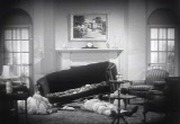
All our wealth — our farms, industries, and homes — everything is wiped away. Tom, Midge and their baby — a 20th century family — find themselves alone in the wilderness, without equipment of any kind.
Tom tries to provide for man's basic needs, shelter (a cave) and food (wild berries and roots). He is at a disadvantage trying to get food with his bare hands. He catches two fish, but lacking a knife he can't clean them; lacking matches he can't male a fire to cook them.
Tom finds a man who has a fire and a knife. In exchange for a fish, he is willing to let Tom use his fire and knife. After a fist fight, they finally agree on the exchange
We learn that man's material wants depend on three basic factors: natural resources, human energy and tools. The Indians had these three factors but they did not improve their crude tools. Our early settlers had crude implements but they worked to improve them.
A tractor pulling a modern plough (plow) now replaces the crude instrument of the pioneer. As our tools have improved, our output per worker has increased.
Human-made No record of this work says a model made it. What this means.
- Archive
- Internet Archive, in Prelinger Archives
- Licence or status
- The Internet Archive states none for this item.
- Rights statement
- "Copyright MCML Wilding Picture Productions, Inc."
- Credit
- Wilding Picture Productions, Inc., Jack Tilles, James Prindle
- Language
- English
- Who can watch
- The archive gives no rating. Invisible Network shows it to Tweens profiles and older, judged from its collection and subjects. How films are placed
More from Prelinger Archives
 Short
About Bananas
 Short
Doctor in Industry (Part I)
 Short
Sleep for Health
 Short
Eat for Health
 Short
Care of the Skin
 Short
Personal Hygiene (Part I)
 Short
122 Eyes
 Short
Health: Your Posture
 Short
From the Ground Up
 Short
Have I Told You Lately That I Love You?
 Short
Right to Health, A (Part I)
 Cartoon