
Make a clip
CC BY-SA 4.0 · Carsten Steger
Up to 60 seconds, at most the picture size of the copy it is cut from. The clip carries the title, the credit, the licence and a link back here. It is made in this browser, and nothing is sent to this site.
Or send the moment itself: https://invisiblenetwork.ai/watch/archive/commons/165999405?play=1&t=0
Parts
About
This video shows a Boerdijk-Coxeter helix in the 16-cell – a twisted ring of eight regular tetrahedra, in which each tetrahedron has one face in common with the next. The eight vertices of the tetrahedra that make up the helical ring are all located on the surface of the 3-sphere, i.e., they all have a distance of 1 from the center of the 3-sphere (the origin of the euclidean 4D space). The tetrahedra are projected from 4D to 3D using a stereographic projection of the vertices. Stereographic projection was used to ensure that tetrahedra, which are disjoint in 4D, do not cross each other as a result of the projection. Because of the projection, the tetrahedra are severely distorted and do not appear to be regular, even tough in 4D they are. The helical ring rotates throughout the video to show its geometry more clearly. Initially, the tetrahedra are visualized by their faces. After one revolution, the edges of the tetrahedra are faded in. One set of edges is colored cyan. This set of edges forms a helical polygon: a Petrie polygon of the 16-cell. It connects all eight vertices cyclically. Each tetrahedron contains exactly three edges of the Petrie polygon. The cyan helix winds around the Boerdijk-Coxeter ring exactly three times. In addition, two sets of edges each are colored magenta. They connect vertices to each other in steps of two vertices, i.e., they skip every second vertex of the Petrie polygon. Each magenta helix winds around the Boerdijk-Coxeter ring exactly once. The two magenta helices are intertwined: they form a Hopf link. Finally, one set of edges is colored orange. The edges connect vertices to each other in steps of three vertices, i.e., it skips every second and third vertex of the Petrie polygon. The orange helix winds around the Boerdijk-Coxeter ring exactly once and forms a second Petrie polygon of the 16-cell. The three types of helical polygons form the complete set of edges of the tetrahedra. After they have been faded in, the tetrahedra are faded out. Since it is hard to see how the tetrahedra that make up the Boerdijk-Coxeter helix are connected to each other, for the next two revolutions, they are shown individually in the order in which the appear in the helix. In the final revolution, the Boerdijk-Coxeter ring is visualized only by the three types of helical polygons. This video was created based on:
H. S. M. Coxeter: Regular Polytopes, 3rd edition, Dover Publications, New York, 1973, pp. 245,
H. S. M. Coxeter: The Simplicial Helix and the Equation tannθ=ntanθ, Canadian Mathematical Bulletin, 28(4):385–393, 1985, p. 386.
Human-made No record of this work says a model made it. What this means.
- Archive
- Wikimedia Commons, in Wikimedia Commons
- Licence or status
- CC BY-SA 4.0, as the Wikimedia Commons states it.
- Rights statement
- Creative Commons Attribution-Share Alike 4.0
- Credit
- Carsten Steger
- Who can watch
- The archive gives no rating. Invisible Network shows it to Teens profiles and older, judged from its collection and subjects. How films are placed
More from Wikimedia Commons
 Short
¿Qué es Wikipedia?
 Short
Wie entstehen Fossilien (CC by 4.0)
 Short
Curiosity's Seven Minutes of Terror
 Short
Wikilovesmonuments.org
 Short
Wikipedia - FactsMatter2016
 Short
Ikusgela – Simone de Beauvoir
 Short
Ikusgela – Bernart Etxepare eta XVI. mendeko literatura
 Short
OYME - Tyushtya's song
 Short
Lift Every Voice and Sing - United States Navy Band
 Short
Ward Cunningham, Inventor of the Wiki
 Documentary
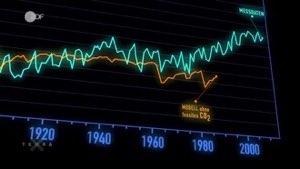
Die wichtigsten Klimafaktoren (ZDF, Terra X) 720p 50FPS
 Short