Podcasts · Dysregulated Kids: Science-Backed Parenting Help for Behavior, Anxiety, ADHD and More
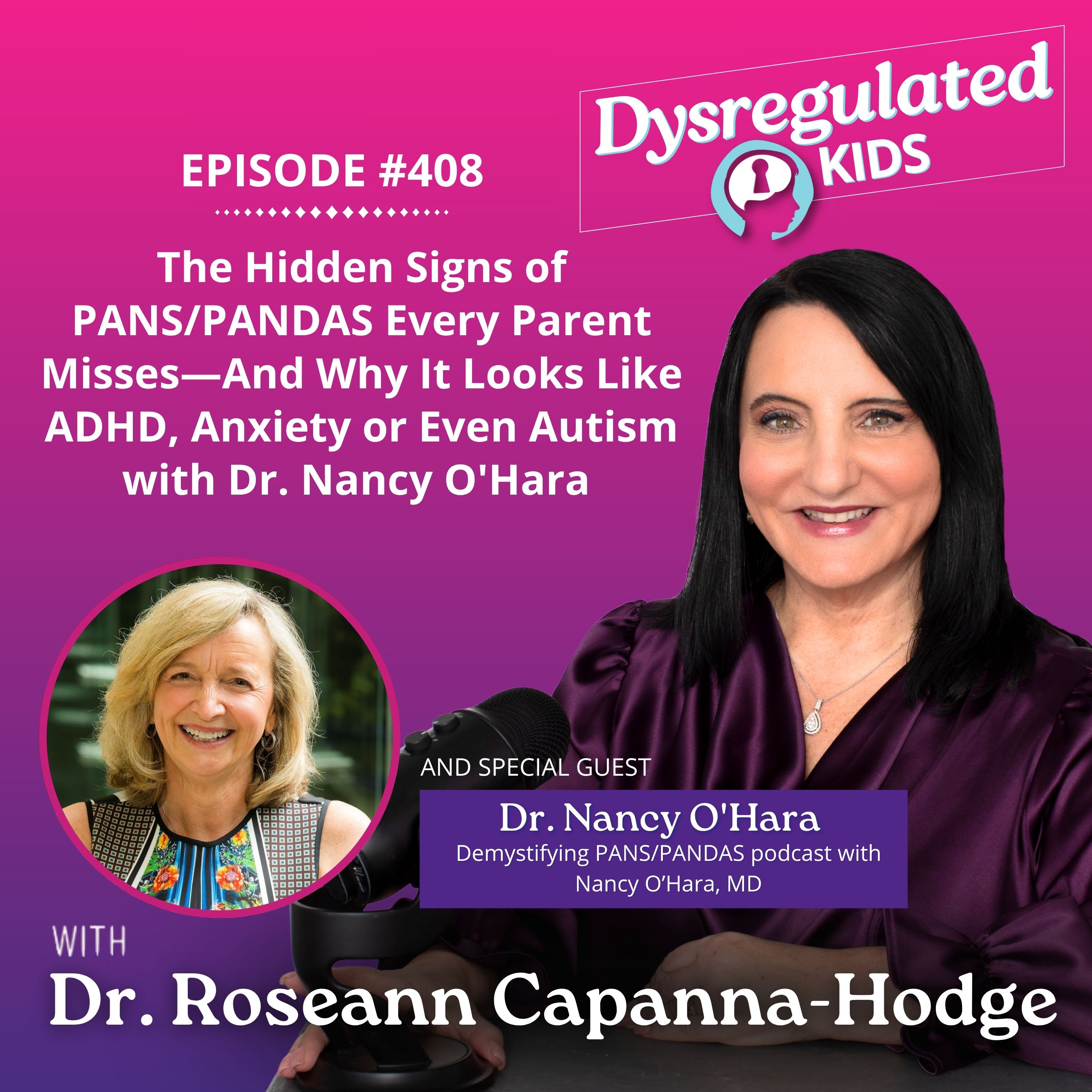
The Hidden Signs of PANS/PANDAS Every Parent Misses—And Why It Looks Like ADHD, Anxiety or Even Autism with Dr. Nancy O'Hara l Emotional Dysregulation in Children l E408
· 50 min · Episode 408
Episode The Hidden Signs of PANS/PANDAS Every Parent Misses—And Why It Looks Like ADHD, Anxiety or Even Autism with Dr. Nancy O'Hara l Emotional Dysregulation in Children l E408
Something feels off even when tests come back normal. Discover the hidden signs of PANS/PANDAS every parent misses as Dr. Nancy O’Hara unpacks sudden symptoms often mistaken for ADHD, anxiety, or autism. Dr. Roseann Capanna-Hodge, expert in Regulation First Parenting™, guides parents through emotional dysregulation and what to do next.
Parents often know something is wrong—even when tests come back “normal.” In this powerful conversation with Dr. Nancy O’Hara, we explore the hidden signs of PANS/PANDAS every parent misses, and why so many children are misdiagnosed with ADHD, anxiety, or even autism.
The truth? Sudden behavioral shifts, OCD, and physical symptoms may signal immune-driven brain inflammation—not “just behavior.” In this episode, you’ll learn what PANS/PANDAS really is, how it affects the brain, and the overlooked signs parents and providers often miss.
Why did my child suddenly change behavior overnight?
When a child shifts abruptly—from calm to anxious, obsessive, or emotionally reactive—it can feel confusing and scary for parents.
Dr. O’Hara explains that this sudden onset is a key marker of PANS/PANDAS, often triggered by infection or immune dysregulation.
What parents should know:
• Sudden onset matters—changes can happen within days to weeks • OCD, anxiety, or eating changes may appear quickly • It’s not bad parenting—it’s a dysregulated immune response • Triggers may include strep, viruses, mold, or environmental stressors
Real-Life Example: A child who was once easygoing suddenly develops intense fears, refuses foods, or becomes highly anxious after an illness.
As I always remind parents, behavior is communication—and sudden shifts deserve deeper investigation.
Is OCD in kids always obvious—or can it be hidden?
One of the most missed signs of PANS/PANDAS is hidden OCD, especially intrusive thoughts that don’t look like typical compulsions.
Dr. O’Hara emphasizes that many children suffer silently.
Hidden OCD signs include:
• Intrusive, scary thoughts they can’t explain • Withdrawal, shutdown, or emotional overwhelm • Avoidance of situations without clear reason • Shame or embarrassment about thoughts
A child seems “anxious about everything,” but underneath is a looping fear they can’t verbalize.
This is where misdiagnosis often happens. It may look like generalized anxiety or even ADHD—but it’s actually neurological inflammation affecting the brain’s fear circuits.
Let’s be clear: your child is not choosing this. Their brain is overwhelmed.
Why are medical tests normal if my child is struggling so much?
This is one of the most frustrating experiences for parents—being told everything is “fine” when it clearly isn’t.
Dr. O’Hara explains that PANS/PANDAS is primarily a clinical diagnosis, not a lab-based one.
Key insights:
• Bloodwork can look completely normal • Some children cannot mount detectable immune responses • Inflammation may still be present in the brain • Diagnosis relies heavily on pattern recognition + history
Real-Life Example: A child with severe behavioral changes has “normal labs,” leading families to feel dismissed—despite clear real-world impairment.
This is where validation matters. You’re not imagining it.
You don’t have to figure this out alone.
Become a Dysregulation Insider VIP and get your FREE Regulation Rescue Kit:
How to Stay Calm When Your Child Pushes Your Buttons and Stop Oppositional Behaviors.
Head to www.drroseann.com/newsletter and start your calm parenting journey today.
What physical symptoms are easy to miss in PANS/PANDAS?
Parents often focus on behavior and miss the body-based clues.
Dr. O’Hara highlights that somatic symptoms are frequently overlooked—but incredibly important.
Common missed signs:
• Urinary frequency or urgency • Bedwetting after being dry • Sleep disturbances or restless sleep • Handwriting changes or regression • Sensory overload or motor changes
Real-Life Example: A child begins waking frequently at night and…
Links in the notes 6
Shows are listed from Apple Podcasts' charts and directory, and Podcast Index where it is used. Every show and episode belongs to its publisher and plays from the publisher's own feed; this site hosts none of them. Explicit shows are for adult profiles only, and children’s profiles hear only children’s shows. More about this list.