Podcasts · Dysregulated Kids: Science-Backed Parenting Help for Behavior, Anxiety, ADHD and More
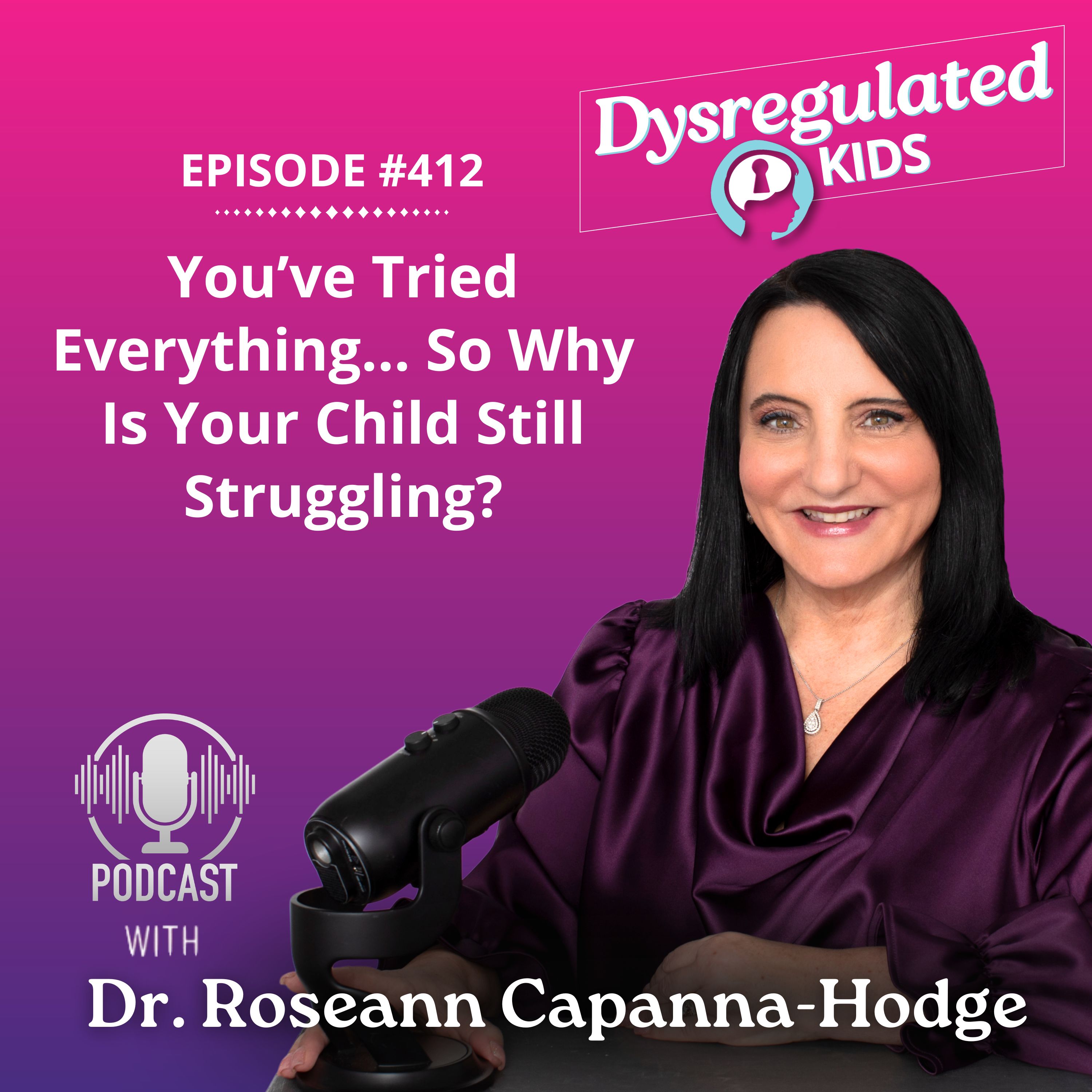
You’ve Tried Everything… So Why Is Your Child Still Struggling? | Regulation-First Parenting | E412
· 36 min · Episode 412
Episode You’ve Tried Everything… So Why Is Your Child Still Struggling? | Regulation-First Parenting | E412
If you’re wondering why your child is still struggling despite trying everything, the answer may lie in nervous system dysregulation. Dr. Roseann Capanna-Hodge, expert in Regulation First Parenting™, shares how calming the brain unlocks real, lasting change.
Why is your child still struggling—even after trying everything? If you feel like you’ve done it all and nothing sticks, you’re not alone.
This episode reveals the real reason kids stay stuck—and how calming the nervous system changes everything.
Why is my child still struggling even after trying everything?
If you’re here, you’ve likely tried therapy, consequences, diet changes—even staying calm when it’s really hard. And yet… your child is still struggling.
Here’s the truth: it’s not that nothing works—it’s that the nervous system hasn’t been addressed first.
When a child is dysregulated, their brain is in survival mode. That means:
• Thinking brain goes offline • Stress chemistry takes over • Behavior becomes reactive, not intentional
It’s not bad parenting—it’s a dysregulated brain.
Imagine trying to teach coping skills while your child feels like there’s a “robber breaking in.” That’s what dysregulation feels like internally.
Why does my child go from calm to meltdown so quickly?
That “0 to 60” reaction isn’t random—it’s a nervous system stuck in high alert.
When the brain is dysregulated, it constantly asks:
• Am I safe? • What should I do to survive this?
Over time, the brain learns to expect stress, even in small moments like homework or being told “no.”
You might notice:
• Low frustration tolerance • Big emotional reactions • Anxiety that keeps growing
Real-Life Example: One parent shared how mornings felt like a battle before the day even began—tears, shutdowns, and constant tension.
Behavior is communication. And your child’s behavior is saying, “My nervous system is overwhelmed.”
If you’re tired of walking on eggshells or feeling like nothing works…
Get the FREE Regulation Rescue Kit and finally learn what to say and do in the heat of the moment.
Become a Dysregulation Insider VIP at www.drroseann.com/newsletter and take the first step to a calmer home.
Why don’t therapy, parenting strategies, or consequences work?
Because most strategies assume your child can:
• Think logically • Use coping skills • Stay flexible
But a dysregulated brain can’t access those skills consistently—or at all.
That’s why you might see:
• Progress one day… gone the next • “Good behavior” at school, but not at home • A child who can do it—but suddenly can’t
Let’s calm the brain first. Everything else follows.
What actually helps a dysregulated child?
The key is simple—but often missed:
👉 Regulate first, then teach.
When you support the nervous system, you:
• Lower stress and reactivity • Improve emotional recovery • Increase flexibility and cooperation
It’s gonna be OK. Every brain can build regulation capacity.
Real-Life Example: One child who once shut down daily began:
• Saying “okay” instead of melting down • Sleeping better • Trying again
Those small shifts? That’s regulation at work.
How does nervous system regulation actually work?
Regulation happens at the cellular level, not just in behavior.
When the nervous system is stuck in fight-flight-freeze:
• The body stays in constant activation • The brain sees everything as a threat • The “stress cup” keeps overflowing
We don’t dump the stress—we slowly release it.
That’s why consistency matters more than quick fixes.
🗣️ “It’s not that nothing works—it’s that the nervous system hasn’t been addressed first.” — Dr. Roseann
Takeaway & What’s Next
When your child is still struggling, it’s not because you haven’t tried hard enough. You’ve just been missing the first step.
Calm the nervous system, and suddenly—everything else starts to stick. You’re not alone in this, and there is a path forward.
Tools like Quick CALM and my book The Dysregulated Kid can help you learn how to regulate your…
Links in the notes 6
- https://drroseann.com/behavioral-signs-dysregulated-nervous-system/
- https://drroseann.com/podcast/small-shifts-childs-dysregulation/
- https://drroseann.com/podcast/363-is-everyday-stress-quietly-rewiring-your-childs-brain/
- https://drroseann.com/quickcalm
- https://drroseann.com/dysregulatedkid
- https://drroseann.com/regulatedchildsummit/
Shows are listed from Apple Podcasts' charts and directory, and Podcast Index where it is used. Every show and episode belongs to its publisher and plays from the publisher's own feed; this site hosts none of them. Explicit shows are for adult profiles only, and children’s profiles hear only children’s shows. More about this list.