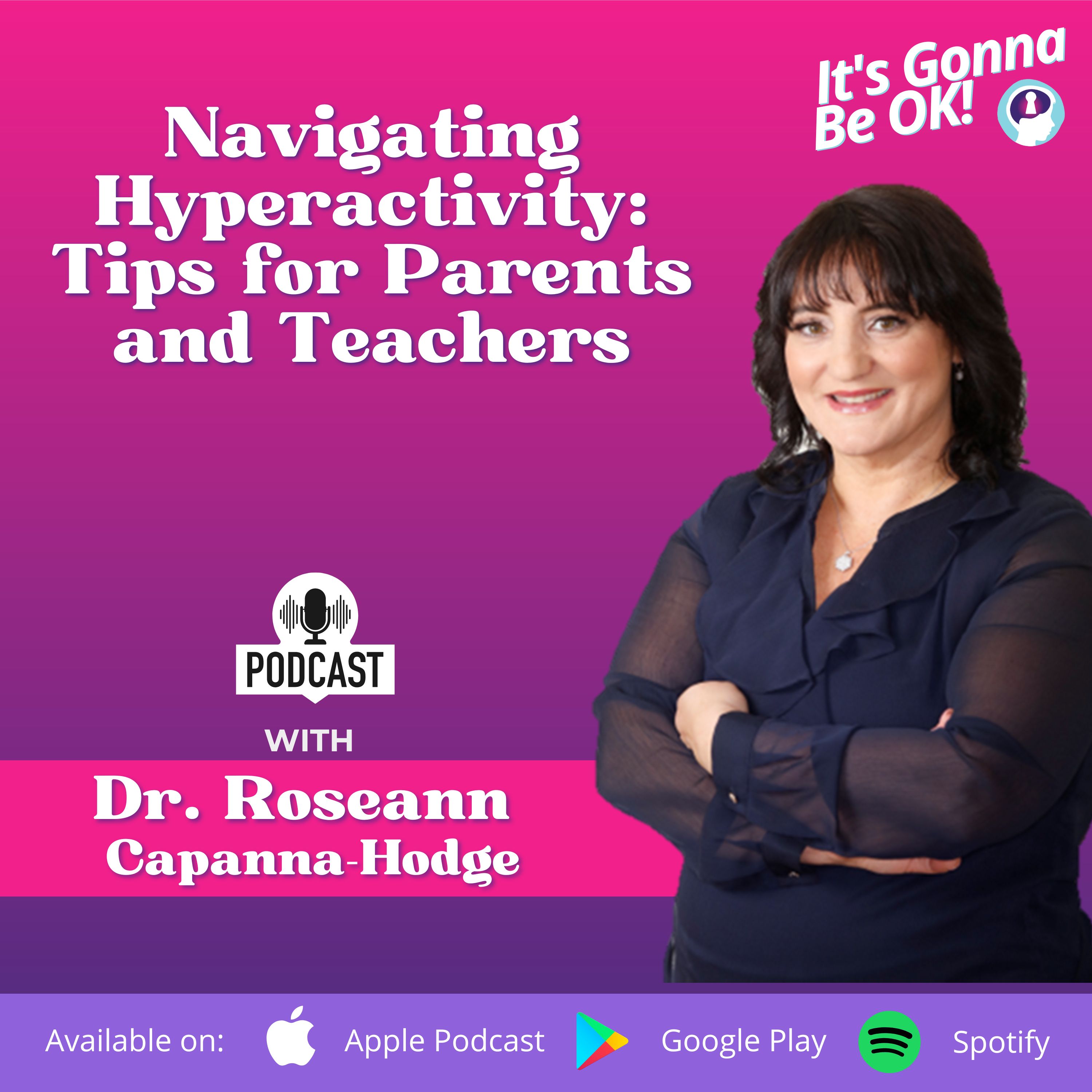
Podcasts · Dysregulated Kids: Science-Backed Parenting Help for Behavior, Anxiety, ADHD and More
Calming Techniques for Hyperactivity in Kids | Nervous System Strategies | E244
· 17 min · Episode 244
Episode Calming Techniques for Hyperactivity in Kids | Nervous System Strategies | E244
Calming Techniques for Hyperactivity in Children
If your child is constantly “on,” running, jumping, or struggling to transition, it’s not misbehavior—it’s a dysregulated child. Calming techniques for hyperactivity help bring the nervous system back into balance. In this episode, Dr. Roseann shares brain-based strategies using movement, sensory input, and co-regulation to reduce meltdowns and improve focus.
In this episode, you’ll learn:
• How calming techniques for hyperactivity reduce emotional outbursts and impulsivity • Practical strategies for ADHD Meltdowns and ADHD and Emotional Dysregulation • How to support a Dysregulated Child at home and school • Ways to integrate routines, sensory supports, and nutrition to regulate the nervous system
Why hyperactive kids seem “always on”
High-energy kids can shift gears. Hyperactive kids cannot easily stop or transition. Key signs:
• Trouble starting or stopping activities • Impulsive behavior before thinking • Difficulty downshifting after stimulation
Parent tip: Start with regulation first, then correction. Regulate → Connect → Correct™.
Fast, science-backed calming strategies
Movement + mindfulness reset the nervous system:
• Micro-breaks: 30–90 seconds wall pushes, chair push-ups, hallway “heavy work” • Scheduled sprints: jumping jacks, carrying items to another room • Mindful downshifts: 4–6 breathing, humming to extend exhale, quiet music, dim lights
Supporting factors
• Nutrition: protein and healthy fats stabilize blood sugar • Sleep: consistent bedtime and dark, cool environment, screens off 60 min prior • Supplements: magnesium supports nervous system regulation
Parent story: A child focused better on homework after adding brief PEMF sessions, movement breaks, and magnesium.
School strategies
• Predictable structure with movement breaks and sensory tasks • Praise micro-successes: “You paused and raised your hand—nice self-control” • One skill at a time: teach stop-start and practice in short sessions • Coordinate with teachers for consistency
Parenting consistency
• Unified approach at home reduces power struggles • Pre-plan routines, micro-breaks, and praise cues • Use structured programs to reinforce skills and calm the nervous system
🗣️ “Structure, routine, movement breaks, and positive reinforcement are game-changers for hyperactive kids—let’s calm the brain first.” — Dr. Roseann
Listen + Take the Next Step
Get your FREE Regulation Rescue Kit to support co-regulation and skill-building:
👉 www.drroseann.com/newsletter
Takeaway
Calming techniques for hyperactivity are essential for reducing meltdowns, improving focus, and teaching self-control. With consistent routines, sensory support, and co-regulation, children can thrive both at home and school.
It’s gonna be OK.
FAQs
Q1: Do rewards “bribe” my child?
No. Immediate, specific reinforcement wires positive habits.
Q2: Can diet really change hyperactivity?
Yes. Stabilizing blood sugar and reducing processed foods helps regulation.
Q3: What’s a quick calm-down technique?
4–6 breathing: inhale 4, exhale 6, repeat 5 times.
Dr. Roseann Capanna-Hodge helps parents understand Emotional Dysregulation in Children and teaches practical Nervous System Regulation in Children and Co-Regulation Techniques through Regulation First Parenting™.
Links in the notes 4
Shows are listed from Apple Podcasts' charts and directory, and Podcast Index where it is used. Every show and episode belongs to its publisher and plays from the publisher's own feed; this site hosts none of them. Explicit shows are for adult profiles only, and children’s profiles hear only children’s shows. More about this list.