A story to play, from The Adventures of Sherlock Holmes
The Red-Headed League
From Arthur Conan Doyle’s story, first published in The Strand Magazine, August 1891.
A red-headed pawnbroker is paid to copy the Encyclopædia, until the League that pays him vanishes. Join Holmes and Watson, and choose well: the case can be lost.
AI-assisted Drafted with AI assistance by Claude (Anthropic) on 2026-11-07, from the text of Project Gutenberg #1661, each line tied to the passage of the book it comes from. Not yet reviewed by a person. What this means.
Calder is not in the book. The story adds one person to it: Calder, a copying clerk of twenty-six, who has come to Baker Street that morning with a fair copy of some papers for Mr. Holmes, and stays for the case.
Your place in the story is kept only in this browser, from your press of Begin; nothing about your choices is sent to this site.
Human-made only is on in this browser, so stories written with AI assistance are left out. Settings.
- For
- Kids and older. No death, injury, romance, alcohol or drugs is told: the crime is a planned theft, stopped, and the arrest is told without force.
- The book
- The Adventures of Sherlock Holmes, from Project Gutenberg: every beat shows the passages it is written from.
- Pictures
- Drawn by Sidney Paget for The Strand Magazine (1891) and signed S.P.; from Harper & Brothers’ edition of 1892, Project Gutenberg #48320.
- Offered in
- the United States, the European Union, Iceland, Liechtenstein and Norway, Spain, France, the United Kingdom, Japan, the Republic of Korea, Canada, Australia, Jamaica, Colombia, India, China, Taiwan, Hong Kong, Singapore, the Philippines, Indonesia, Viet Nam, Thailand, Malaysia, Russia, Ukraine, Türkiye, Israel, Saudi Arabia, the United Arab Emirates, Nigeria, South Africa, Brazil, Peru, Switzerland, New Zealand, Pakistan, Nepal, Sri Lanka, Kazakhstan, Uzbekistan, Myanmar, Morocco, Iraq, Syria, Ethiopia, Tanzania, Uganda, Malawi and Zambia, Mozambique, Angola, Venezuela, where the book’s words and its pictures are free
- Not offered in
- Mexico, Egypt, Kenya, Argentina, Chile, Bangladesh, Algeria, Sudan, Yemen, Ghana, Madagascar, the Democratic Republic of the Congo, the member states of the Bangui Agreement (OAPI), Iran, Afghanistan and North Korea, and wherever the site has not read the law (why)
Baker Street
A visitor with red hair
On a Saturday morning in the autumn of 1890, Calder, a copying clerk of twenty-six, climbs the stairs in Baker Street with a fair copy of some papers for Mr. Sherlock Holmes. In the sitting-room Holmes is deep in conversation with a very stout, florid-faced, elderly gentleman with fiery red hair. Dr. Watson arrives a moment later, and Holmes waves the two of them to the settee.
“This is Mr. Jabez Wilson,” says Holmes. “He has been good enough to call upon me this morning, and to begin a narrative which promises to be one of the most singular which I have listened to for some time.”
Mr. Wilson pulls a dirty, wrinkled newspaper from his greatcoat and runs a thick red finger down the advertisement column.
What does Calder do?
Where this comes from in the book
found him in deep conversation with a very stout, florid-faced, elderly gentleman with fiery red hair.
Read it in the book
Now, Mr. Jabez Wilson here has been good enough to call upon me this morning, and to begin a narrative which promises to be one of the most singular which I have listened to for some time.
Read it in the book
The words quoted are Arthur Conan Doyle’s, from The Adventures of Sherlock Holmes.
Baker Street
What Holmes sees
Calder looks Mr. Wilson over from hat to boots: baggy grey check trousers, a black frock-coat, a heavy brassy watch-chain. He looks like any tradesman in London, and nothing about him stands out but his blazing red head.
Holmes has been watching Calder look. “Beyond the obvious facts that he has at some time done manual labour, that he takes snuff, that he is a Freemason, that he has been in China, and that he has done a considerable amount of writing lately,” he says, “I can deduce nothing else.”
Mr. Wilson starts up in his chair, and Holmes explains it point by point: a right hand larger than the left, from years as a ship’s carpenter; a shiny right cuff, from writing; a fish tattooed above the wrist in a way done only in China.
Mr. Wilson laughs heavily. “I thought at first that you had done something clever, but I see that there was nothing in it after all.”
Where this comes from in the book
Our visitor bore every mark of being an average commonplace British tradesman, obese, pompous, and slow.
Read it in the book
Beyond the obvious facts that he has at some time done manual labour, that he takes snuff, that he is a Freemason, that he has been in China, and that he has done a considerable amount of writing lately, I can deduce nothing else.
Read it in the book
The fish that you have tattooed immediately above your right wrist could only have been done in China.
Read it in the book
I thought at first that you had done something clever, but I see that there was nothing in it after all.
Read it in the book
The words quoted are Arthur Conan Doyle’s, from The Adventures of Sherlock Holmes.
Baker Street
The advertisement
Watson reads it out from The Morning Chronicle: “TO THE RED-HEADED LEAGUE: On account of the bequest of the late Ezekiah Hopkins, of Lebanon, Pennsylvania, U.S.A., there is now another vacancy open which entitles a member of the League to a salary of £4 a week for purely nominal services.”
Red-headed men are to apply in person on Monday, at eleven o’clock, to Duncan Ross, at the offices of the League, 7 Pope’s Court, Fleet Street.
Holmes chuckles and wriggles in his chair, as he does when he is in high spirits.
What does Calder do?
Where this comes from in the book
On account of the bequest of the late Ezekiah Hopkins, of Lebanon, Pennsylvania, U.S.A., there is now another vacancy open which entitles a member of the League to a salary of £ 4 a week for purely nominal services.
Read it in the book
Apply in person on Monday, at eleven o’clock, to Duncan Ross, at the offices of the League, 7 Pope’s Court, Fleet Street.
Read it in the book
Holmes chuckled and wriggled in his chair, as was his habit when in high spirits.
Read it in the book
The words quoted are Arthur Conan Doyle’s, from The Adventures of Sherlock Holmes.
Baker Street
The pawnbroker’s
Mr. Wilson has a small pawnbroker’s business at Coburg Square, near the City. It once kept two assistants. Now it keeps one, who is willing to come for half wages so as to learn the business.
“His name is Vincent Spaulding, and he’s not such a youth, either,” says Mr. Wilson. The assistant has one fault: photography. He is always snapping away with a camera, and then diving down into the cellar like a rabbit into its hole to develop the pictures.
Mr. Wilson is a widower. The household is the assistant, a girl of fourteen who does a bit of simple cooking and keeps the place clean, and Mr. Wilson himself.
Where this comes from in the book
I have a small pawnbroker’s business at Coburg Square, near the City.
Read it in the book
I used to be able to keep two assistants, but now I only keep one; and I would have a job to pay him but that he is willing to come for half wages so as to learn the business.
Read it in the book
His name is Vincent Spaulding, and he’s not such a youth, either.
Read it in the book
Never was such a fellow for photography. Snapping away with a camera when he ought to be improving his mind, and then diving down into the cellar like a rabbit into its hole to develop his pictures.
Read it in the book
He and a girl of fourteen, who does a bit of simple cooking and keeps the place clean—that’s all I have in the house, for I am a widower and never had any family.
Read it in the book
The words quoted are Arthur Conan Doyle’s, from The Adventures of Sherlock Holmes.
Baker Street
Pope’s Court
It was the assistant, Mr. Wilson says, who came down into the office with the newspaper, told him of the League, and put up the shutters for the day to take him to Pope’s Court.
Fleet Street was choked with red-headed folk, and Pope’s Court looked like a coster’s orange barrow. The assistant pushed and pulled until Mr. Wilson reached the office, where a small man with a head even redder than his own found some fault in every other man, and welcomed him.
The small man gave his name as Mr. Duncan Ross, one of the pensioners of the fund. The work was from ten until two each day, for £4 a week, and it was to copy out the Encyclopædia Britannica. Mr. Wilson had to stay in the office the whole time: “If you leave, you forfeit your whole position forever.”
For eight weeks Mr. Wilson copied, with ink and pens and paper of his own, through Abbots and Archery and Armour and Architecture and Attica. Every Saturday the manager paid him four golden sovereigns.
Where this comes from in the book
Spaulding, he came down into the office just this day eight weeks, with this very paper in his hand,
Read it in the book
so I just ordered him to put up the shutters for the day and to come right away with me.
Read it in the book
Fleet Street was choked with red-headed folk, and Pope’s Court looked like a coster’s orange barrow.
Read it in the book
he pushed and pulled and butted until he got me through the crowd,
Read it in the book
behind which sat a small man with a head that was even redder than mine.
Read it in the book
is Mr. Duncan Ross, and I am myself one of the pensioners upon the fund left by our noble benefactor.
Read it in the book
Well, you have to be in the office, or at least in the building, the whole time. If you leave, you forfeit your whole position forever.
Read it in the book
There is the first volume of it in that press. You must find your own ink, pens, and blotting-paper, but we provide this table and chair.
Read it in the book
Eight weeks passed away like this, and I had written about Abbots and Archery and Armour and Architecture and Attica, and hoped with diligence that I might get on to the B’s before very long.
Read it in the book
on Saturday the manager came in and planked down four golden sovereigns for my week’s work.
Read it in the book
The words quoted are Arthur Conan Doyle’s, from The Adventures of Sherlock Holmes.
Baker Street
The door was shut and locked
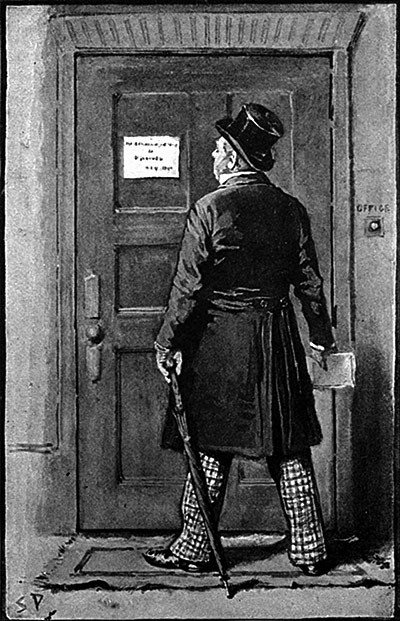
This morning, Mr. Wilson says, he went to his work at ten o’clock as usual, and found the door shut and locked, with a little square of cardboard tacked to the middle of the panel. He holds it up. It reads: “THE RED-HEADED LEAGUE IS DISSOLVED. October 9, 1890.”
Holmes and Watson look from the card to Mr. Wilson’s rueful face, and burst out laughing. Mr. Wilson flushes up to the roots of his flaming head, and Holmes begs his pardon at once: “I really wouldn’t miss your case for the world.”
The landlord downstairs, an accountant, knew no Duncan Ross: only a solicitor called William Morris, with red hair, who had moved out the day before to 17 King Edward Street, near St. Paul’s. That address was a manufactory of artificial knee-caps, and nobody there had heard of either name.
“From what you have told me,” says Holmes, “I think that it is possible that graver issues hang from it than might at first sight appear.”
What does Calder do?
Where this comes from in the book
I went to my work as usual at ten o’clock, but the door was shut and locked, with a little square of cardboard hammered on to the middle of the panel with a tack.
Read it in the book
THE RED-HEADED LEAGUE IS DISSOLVED. October 9, 1890.
Read it in the book
the comical side of the affair so completely overtopped every other consideration that we both burst out into a roar of laughter.
Read it in the book
flushing up to the roots of his flaming head.
Read it in the book
I really wouldn’t miss your case for the world.
Read it in the book
I went to the landlord, who is an accountant living on the ground floor,
Read it in the book
his name was William Morris. He was a solicitor and was using my room as a temporary convenience until his new premises were ready. He moved out yesterday.
Read it in the book
Yes, 17 King Edward Street, near St. Paul’s.
Read it in the book
it was a manufactory of artificial knee-caps, and no one in it had ever heard of either Mr. William Morris or Mr. Duncan Ross.
Read it in the book
From what you have told me I think that it is possible that graver issues hang from it than might at first sight appear.
Read it in the book
The words quoted are Arthur Conan Doyle’s, from The Adventures of Sherlock Holmes.
Baker Street
The assistant
Calder asks, and Holmes leans forward. “This assistant of yours who first called your attention to the advertisement—how long had he been with you?”
About a month, says Mr. Wilson. He answered an advertisement, one of a dozen who did, and was picked because he was handy and would come cheap. He is small, stout-built and very quick in his ways, with no hair on his face though he is nearly thirty, and a white splash of acid upon his forehead.
Holmes sits up in considerable excitement. “Have you ever observed that his ears are pierced for earrings?” Mr. Wilson has: the assistant told him it was done when he was a lad.
“To-day is Saturday,” says Holmes, “and I hope that by Monday we may come to a conclusion.” Mr. Wilson goes home to his shop.
What does Calder do?
Where this comes from in the book
This assistant of yours who first called your attention to the advertisement—how long had he been with you?
Read it in the book
Because he was handy and would come cheap.
Read it in the book
Small, stout-built, very quick in his ways, no hair on his face, though he’s not short of thirty. Has a white splash of acid upon his forehead.
Read it in the book
Have you ever observed that his ears are pierced for earrings?
Read it in the book
To-day is Saturday, and I hope that by Monday we may come to a conclusion.
Read it in the book
The words quoted are Arthur Conan Doyle’s, from The Adventures of Sherlock Holmes.
Baker Street
A three-pipe problem
“As a rule,” says Holmes, “the more bizarre a thing is the less mysterious it proves to be.” But he must be prompt over this matter.
Asked what he means to do, he answers in two words: to smoke. “It is quite a three pipe problem, and I beg that you won’t speak to me for fifty minutes.”
Where this comes from in the book
the more bizarre a thing is the less mysterious it proves to be.
Read it in the book
It is quite a three pipe problem, and I beg that you won’t speak to me for fifty minutes.
Read it in the book
The words quoted are Arthur Conan Doyle’s, from The Adventures of Sherlock Holmes.
Saxe-Coburg Square
Saxe-Coburg Square
Holmes curls up in his chair with his thin knees drawn up to his hawk-like nose, his eyes closed and his black clay pipe thrusting out like the bill of some strange bird. Then he springs up. “Sarasate plays at the St. James’s Hall this afternoon,” he says; but they will go through the City first.
Saxe-Coburg Square is a poky, shabby little place: four lines of dingy brick houses round a railed-in patch of weedy grass. Three gilt balls and a brown board with “JABEZ WILSON” in white letters mark the shop on the corner.
Holmes looks the houses over, his eyes shining, walks up the street and back, thumps the pavement two or three times with his stick, and goes up to the shop door to knock.
What does Calder do?
Where this comes from in the book
He curled himself up in his chair, with his thin knees drawn up to his hawk-like nose, and there he sat with his eyes closed and his black clay pipe thrusting out like the bill of some strange bird.
Read it in the book
Sarasate plays at the St. James’s Hall this afternoon,
Read it in the book
It was a poky, little, shabby-genteel place, where four lines of dingy two-storied brick houses looked out into a small railed-in enclosure,
Read it in the book
Three gilt balls and a brown board with “JABEZ WILSON” in white letters, upon a corner house, announced the place where our red-headed client carried on his business.
Read it in the book
having thumped vigorously upon the pavement with his stick two or three times, he went up to the door and knocked.
Read it in the book
The words quoted are Arthur Conan Doyle’s, from The Adventures of Sherlock Holmes.
Saxe-Coburg Square
Third right, fourth left
A bright-looking, clean-shaven young fellow opens the door. Holmes asks him the way to the Strand. “Third right, fourth left,” answers the assistant promptly, closing the door.
Calder has watched only his trousers. The knees are worn, wrinkled and stained.
“Smart fellow, that,” says Holmes as they walk away. “He is, in my judgment, the fourth smartest man in London.” Asked why he beat the pavement, Holmes says only: “This is a time for observation, not for talk. We are spies in an enemy’s country.”
What does Calder do?
Where this comes from in the book
It was instantly opened by a bright-looking, clean-shaven young fellow, who asked him to step in.
Read it in the book
I only wished to ask you how you would go from here to the Strand.
Read it in the book
answered the assistant promptly, closing the door.
Read it in the book
His knees were what I wished to see. You must yourself have remarked how worn, wrinkled, and stained they were. They spoke of those hours of burrowing.
Read it in the book
He is, in my judgment, the fourth smartest man in London, and for daring I am not sure that he has not a claim to be third.
Read it in the book
this is a time for observation, not for talk. We are spies in an enemy’s country.
Read it in the book
The words quoted are Arthur Conan Doyle’s, from The Adventures of Sherlock Holmes.
Saxe-Coburg Square
Not him
A bright-looking, clean-shaven young fellow opens the door. Holmes asks him the way to the Strand. “Third right, fourth left,” answers the assistant promptly, closing the door.
Calder has studied his face, and it gives nothing away.
Watson is sure Holmes asked the way only to see the assistant. Not him, says Holmes: “The knees of his trousers.” And what did he see? What he expected to see. “This is a time for observation, not for talk. We are spies in an enemy’s country.”
What does Calder do?
Where this comes from in the book
It was instantly opened by a bright-looking, clean-shaven young fellow, who asked him to step in.
Read it in the book
I only wished to ask you how you would go from here to the Strand.
Read it in the book
answered the assistant promptly, closing the door.
Read it in the book
The knees of his trousers.
Read it in the book
this is a time for observation, not for talk. We are spies in an enemy’s country.
Read it in the book
The words quoted are Arthur Conan Doyle’s, from The Adventures of Sherlock Holmes.
The road behind the square
Round the corner
Round the corner the road is another world: one of the main arteries of the City, its pavements black with hurrying people. The fine shops along it back onto the faded little square behind, as the front of a picture backs onto its back.
Holmes stands at the corner and reads off the line of houses. “There is Mortimer’s, the tobacconist, the little newspaper shop, the Coburg branch of the City and Suburban Bank, the Vegetarian Restaurant, and McFarlane’s carriage-building depot.”
Then he turns to the others. “We’ve done our work, so it’s time we had some play”: a sandwich, a cup of coffee, and off to the concert.
What does Calder do?
Where this comes from in the book
presented as great a contrast to it as the front of a picture does to the back.
Read it in the book
There is Mortimer’s, the tobacconist, the little newspaper shop, the Coburg branch of the City and Suburban Bank, the Vegetarian Restaurant, and McFarlane’s carriage-building depot.
Read it in the book
we’ve done our work, so it’s time we had some play.
Read it in the book
The words quoted are Arthur Conan Doyle’s, from The Adventures of Sherlock Holmes.
The road behind the square
The bank’s door
Calder stays on the busy road and watches the Coburg branch of the City and Suburban Bank until the lamps are lit. Clerks come and go. Nothing more can be seen from the street.
In the evening Calder walks back to Baker Street, and finds two hansoms standing at the door, and voices upstairs.
Where this comes from in the book
There is Mortimer’s, the tobacconist, the little newspaper shop, the Coburg branch of the City and Suburban Bank, the Vegetarian Restaurant, and McFarlane’s carriage-building depot.
Read it in the book
Two hansoms were standing at the door, and as I entered the passage I heard the sound of voices from above.
Read it in the book
The words quoted are Arthur Conan Doyle’s, from The Adventures of Sherlock Holmes.
St. James’s Hall
All afternoon he sat in the stalls
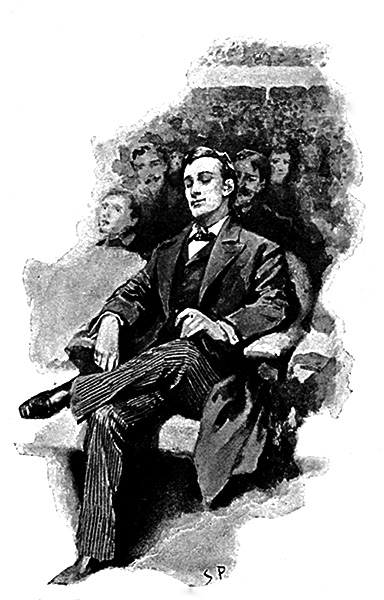
At St. James’s Hall Holmes sits in the stalls all afternoon, wrapped in the most perfect happiness, gently waving his long, thin fingers in time to the music. He looks nothing like a detective.
Outside afterwards he is brisk again. “A considerable crime is in contemplation,” he says. “I have every reason to believe that we shall be in time to stop it.” Today being Saturday makes it harder, and he will want help tonight. “Ten will be early enough.” Then he turns on his heel and is gone into the crowd.
Calder has heard what Holmes heard and seen what he saw, and still cannot see what he sees.
Where this comes from in the book
All the afternoon he sat in the stalls wrapped in the most perfect happiness, gently waving his long, thin fingers in time to the music,
Read it in the book
A considerable crime is in contemplation. I have every reason to believe that we shall be in time to stop it.
Read it in the book
Ten will be early enough.
Read it in the book
Here I had heard what he had heard, I had seen what he had seen, and yet from his words it was evident that he saw clearly not only what had happened but what was about to happen,
Read it in the book
The words quoted are Arthur Conan Doyle’s, from The Adventures of Sherlock Holmes.
17 King Edward Street
Artificial knee-caps
Calder hurries to 17 King Edward Street, near St. Paul’s. It is just as Mr. Wilson said: a manufactory of artificial knee-caps, where no one has ever heard of Mr. William Morris or Mr. Duncan Ross.
By the time Calder is back in Baker Street, the sitting-room is empty. Holmes and Watson have gone out, and nobody knows where.
What does Calder do?
Where this comes from in the book
Yes, 17 King Edward Street, near St. Paul’s.
Read it in the book
it was a manufactory of artificial knee-caps, and no one in it had ever heard of either Mr. William Morris or Mr. Duncan Ross.
Read it in the book
The words quoted are Arthur Conan Doyle’s, from The Adventures of Sherlock Holmes.
Baker Street
Ten o’clock
By ten o’clock five are gathered in Holmes’s room: Holmes, Watson, Calder, Mr. Peter Jones, the official police agent from Scotland Yard, and a long, thin, sad-faced man with a very shiny hat, Mr. Merryweather of the bank.
Mr. Merryweather is gloomy. It is the first Saturday night for seven-and-twenty years that he has not had his game of cards. The stake tonight, Holmes tells him, will be some £30,000; and for Jones, it will be the man he wants to lay his hands on: John Clay.
Jones knows the name. “He’s a young man, Mr. Merryweather, but he is at the head of his profession.” Clay’s grandfather was a royal duke, and Clay has been to Eton and Oxford; he is a thief and a forger, and Jones has been on his track for years without once setting eyes on him.
Two cabs rattle through an endless labyrinth of gas-lit streets, back to the busy road behind Saxe-Coburg Square.
Where this comes from in the book
one of whom I recognised as Peter Jones, the official police agent, while the other was a long, thin, sad-faced man, with a very shiny hat and oppressively respectable frock-coat.
Read it in the book
It is the first Saturday night for seven-and-twenty years that I have not had my rubber.
Read it in the book
For you, Mr. Merryweather, the stake will be some £ 30,000; and for you, Jones, it will be the man upon whom you wish to lay your hands.
Read it in the book
He’s a young man, Mr. Merryweather, but he is at the head of his profession, and I would rather have my bracelets on him than on any criminal in London.
Read it in the book
His grandfather was a royal duke, and he himself has been to Eton and Oxford.
Read it in the book
I’ve been on his track for years and have never set eyes on him yet.
Read it in the book
We rattled through an endless labyrinth of gas-lit streets until we emerged into Farrington Street.
Read it in the book
The words quoted are Arthur Conan Doyle’s, from The Adventures of Sherlock Holmes.
The bank’s cellar
The cellar
Mr. Merryweather leads the way through a side door, a massive iron gate, winding stone steps and another gate, then by lantern-light along a dark, earth-smelling passage into a huge vault piled all round with crates and massive boxes.
Mr. Merryweather strikes his stick on the floor. “Why, dear me, it sounds quite hollow!” Holmes asks him severely to be a little more quiet and to sit on a crate, then kneels with the lantern and a magnifying lens to examine the cracks between the stones.
They are in the cellar of the City branch of one of the principal London banks, and it holds French gold: 30,000 napoleons borrowed from the Bank of France, still in their crates.
They cannot risk the presence of a light. Each takes a place behind a crate. “They have but one retreat,” whispers Holmes. “That is back through the house into Saxe-Coburg Square.” Jones has an inspector and two officers waiting at its front door. Then Holmes shuts the slide across his lantern, and the dark is absolute.
What does Calder do?
Where this comes from in the book
Within there was a small corridor, which ended in a very massive iron gate.
Read it in the book
Mr. Merryweather stopped to light a lantern, and then conducted us down a dark, earth-smelling passage, and so, after opening a third door, into a huge vault or cellar, which was piled all round with crates and massive boxes.
Read it in the book
Why, dear me, it sounds quite hollow!
Read it in the book
I must really ask you to be a little more quiet!
Read it in the book
with the lantern and a magnifying lens, began to examine minutely the cracks between the stones.
Read it in the book
in the cellar of the City branch of one of the principal London banks.
Read it in the book
We had occasion some months ago to strengthen our resources and borrowed for that purpose 30,000 napoleons from the Bank of France.
Read it in the book
But I see that the enemy’s preparations have gone so far that we cannot risk the presence of a light.
Read it in the book
That is back through the house into Saxe-Coburg Square.
Read it in the book
I have an inspector and two officers waiting at the front door.
Read it in the book
such an absolute darkness as I have never before experienced.
Read it in the book
The words quoted are Arthur Conan Doyle’s, from The Adventures of Sherlock Holmes.
The bank’s cellar
A light between the stones
The wait seems to last all night, though it is only an hour and a quarter. Calder can hear the others breathe: the deep, heavy breath of Jones, the thin, sighing note of the bank director.
Then a spark of light shows on the stone floor. It lengthens to a yellow line; a gap opens; and a white hand comes up through it and feels about in the little patch of light.
What does Calder do?
Where this comes from in the book
From comparing notes afterwards it was but an hour and a quarter,
Read it in the book
I could distinguish the deeper, heavier in-breath of the bulky Jones from the thin, sighing note of the bank director.
Read it in the book
At first it was but a lurid spark upon the stone pavement.
Read it in the book
a hand appeared, a white, almost womanly hand, which felt about in the centre of the little area of light.
Read it in the book
The words quoted are Arthur Conan Doyle’s, from The Adventures of Sherlock Holmes.
The bank’s cellar
No chance at all
Calder keeps still. With a rending, tearing sound one of the broad white stones turns over, and lantern-light streams out of a square hole. A clean-cut, boyish face peeps over the edge and looks keenly about; a man climbs out, hauling after him a companion with a pale face and a shock of very red hair. “It’s all clear,” he whispers. “Have you the chisel and the bags?”
Holmes springs out and seizes him by the collar. The red-haired one dives back down the hole, and Jones is left holding a torn piece of his coat. “It’s no use, John Clay,” says Holmes. “You have no chance at all.” Three men are waiting for his partner at the door.
John Clay is perfectly cool. He asks to be called “sir” and “please”, since he has royal blood in his veins, makes a sweeping bow, and walks quietly upstairs in the custody of Mr. Jones. Mr. Merryweather says the bank does not know how to thank Mr. Holmes.
Where this comes from in the book
With a rending, tearing sound, one of the broad, white stones turned over upon its side and left a square, gaping hole, through which streamed the light of a lantern.
Read it in the book
Over the edge there peeped a clean-cut, boyish face, which looked keenly about it,
Read it in the book
hauling after him a companion, lithe and small like himself, with a pale face and a shock of very red hair.
Read it in the book
Have you the chisel and the bags?
Read it in the book
Sherlock Holmes had sprung out and seized the intruder by the collar.
Read it in the book
I heard the sound of rending cloth as Jones clutched at his skirts.
Read it in the book
You have no chance at all.
Read it in the book
There are three men waiting for him at the door
Read it in the book
You may not be aware that I have royal blood in my veins.
Read it in the book
Have the goodness, also, when you address me always to say ‘sir’ and ‘please.’
Read it in the book
He made a sweeping bow to the three of us and walked quietly off in the custody of the detective.
Read it in the book
There is no doubt that you have detected and defeated in the most complete manner one of the most determined attempts at bank robbery that have ever come within my experience.
Read it in the book
The words quoted are Arthur Conan Doyle’s, from The Adventures of Sherlock Holmes.
Baker Street
Every link rings true
In the early hours of the morning, back in Baker Street, Holmes explains. The League and its copying had one object: to get the pawnbroker out of the way for some hours every day. And an assistant who came for half wages must have had some strong motive for wanting the place.
His photography, and his trick of vanishing into the cellar, meant something done down there for hours a day, for months: a tunnel. The worn, stained knees of his trousers spoke of those hours of burrowing. Beating on the pavement showed that the cellar did not run out in front. And round the corner, the City and Suburban Bank stood against Mr. Wilson’s house.
Closing the League meant that the tunnel was finished, and would be used soon; and Saturday gave the two men two days to escape. So it had to be tonight.
“You reasoned it out beautifully,” says Watson. “It is so long a chain, and yet every link rings true.”
Case solved
This is how the book ends: Holmes takes John Clay in the bank’s cellar, his partner is taken at the door, and the French gold is safe.
Where this comes from in the book
it was perfectly obvious from the first that the only possible object of this rather fantastic business of the advertisement of the League,
Read it in the book
From the time that I heard of the assistant having come for half wages, it was obvious to me that he had some strong motive for securing the situation.
Read it in the book
I thought of the assistant’s fondness for photography, and his trick of vanishing into the cellar. The cellar! There was the end of this tangled clue.
Read it in the book
His knees were what I wished to see. You must yourself have remarked how worn, wrinkled, and stained they were. They spoke of those hours of burrowing.
Read it in the book
I was ascertaining whether the cellar stretched out in front or behind. It was not in front.
Read it in the book
I walked round the corner, saw the City and Suburban Bank abutted on our friend’s premises, and felt that I had solved my problem.
Read it in the book
that was a sign that they cared no longer about Mr. Jabez Wilson’s presence—in other words, that they had completed their tunnel.
Read it in the book
Saturday would suit them better than any other day, as it would give them two days for their escape.
Read it in the book
It is so long a chain, and yet every link rings true.
Read it in the book
Sherlock Holmes had sprung out and seized the intruder by the collar.
Read it in the book
There are three men waiting for him at the door
Read it in the book
There is no doubt that you have detected and defeated in the most complete manner one of the most determined attempts at bank robbery that have ever come within my experience.
Read it in the book
When you drove home after the concert I called upon Scotland Yard and upon the chairman of the bank directors, with the result that you have seen.
Read it in the book
The words quoted are Arthur Conan Doyle’s, from The Adventures of Sherlock Holmes.
The bank’s cellar
Stop, thief!
Calder shouts. The hand vanishes, and the line of light goes out. Somewhere under the floor, two men are scrambling back through their tunnel.
They have but one way out: back through the house into Saxe-Coburg Square. At its front door an inspector and two officers are waiting, and both are taken there.
The gold is safe, and both men are held. But Holmes says little on the way home: in the vault they would have been taken in the very act, with the stone turned up and the chisel and the bags in their hands.
Solved, the noisy way
In the book nobody makes a sound. Holmes waits until the first man is out of the hole, and takes him in the cellar.
Where this comes from in the book
That is back through the house into Saxe-Coburg Square.
Read it in the book
I have an inspector and two officers waiting at the front door.
Read it in the book
There are three men waiting for him at the door
Read it in the book
such an absolute darkness as I have never before experienced.
Read it in the book
With a rending, tearing sound, one of the broad, white stones turned over upon its side and left a square, gaping hole, through which streamed the light of a lantern.
Read it in the book
Sherlock Holmes had sprung out and seized the intruder by the collar.
Read it in the book
The words quoted are Arthur Conan Doyle’s, from The Adventures of Sherlock Holmes.
Scotland Yard
Scotland Yard
Calder takes the card to Scotland Yard and reports the Red-headed League as a fraud on Mr. Wilson. A constable is sent to Saxe-Coburg Square to ask questions at the shop.
The assistant answers the door, listens politely and knows nothing. That night nothing happens anywhere. On Monday morning the assistant does not come down to open the shop; his room is empty, and nobody ever sees Vincent Spaulding again.
The men behind the League were warned, and got away.
Case lost
In the book nobody goes to the police until Holmes knows what the League was for. He calls at Scotland Yard himself on the Saturday evening, knowing the crime will come that night.
Where this comes from in the book
THE RED-HEADED LEAGUE IS DISSOLVED. October 9, 1890.
Read it in the book
His name is Vincent Spaulding, and he’s not such a youth, either.
Read it in the book
When you drove home after the concert I called upon Scotland Yard and upon the chairman of the bank directors, with the result that you have seen.
Read it in the book
A considerable crime is in contemplation. I have every reason to believe that we shall be in time to stop it.
Read it in the book
The words quoted are Arthur Conan Doyle’s, from The Adventures of Sherlock Holmes.
Saxe-Coburg Square
A word too many
At the pawnbroker’s door the clean-shaven young assistant answers Calder’s questions with a pleasant smile, and closes the door. A man so quick needs no telling that someone is looking into Mr. Wilson’s affairs.
That night nothing happens anywhere. On Monday morning the assistant is gone from Saxe-Coburg Square, and his red-headed friend is never seen again.
The men behind the League were warned, and got away.
Case lost
In the book Holmes only asks the way to the Strand, looks at the assistant’s knees, and goes. He and the assistant had had some skirmishes, but had never set eyes on each other before.
Where this comes from in the book
It was instantly opened by a bright-looking, clean-shaven young fellow, who asked him to step in.
Read it in the book
He is, in my judgment, the fourth smartest man in London, and for daring I am not sure that he has not a claim to be third.
Read it in the book
I only wished to ask you how you would go from here to the Strand.
Read it in the book
His knees were what I wished to see. You must yourself have remarked how worn, wrinkled, and stained they were. They spoke of those hours of burrowing.
Read it in the book
We have had some skirmishes, but we had never set eyes upon each other before.
Read it in the book
The words quoted are Arthur Conan Doyle’s, from The Adventures of Sherlock Holmes.
The bank’s cellar
A match in the dark
The match flares for a moment and goes out. Holmes says nothing at all.
The wait goes on: one hour, then two. No light ever shows between the stones. Below, someone saw a glimmer through a chink in the floor, and the tunnel is left alone.
On Monday morning the assistant is gone from Saxe-Coburg Square, and Jones never sets eyes on John Clay.
Case lost
In the book they sit in absolute darkness for an hour and a quarter, until the light shows from below.
Where this comes from in the book
But I see that the enemy’s preparations have gone so far that we cannot risk the presence of a light.
Read it in the book
At first it was but a lurid spark upon the stone pavement.
Read it in the book
I’ve been on his track for years and have never set eyes on him yet.
Read it in the book
such an absolute darkness as I have never before experienced.
Read it in the book
From comparing notes afterwards it was but an hour and a quarter,
Read it in the book
At first it was but a lurid spark upon the stone pavement.
Read it in the book
The words quoted are Arthur Conan Doyle’s, from The Adventures of Sherlock Holmes.