Opening the book…
1892 — John Froelich’s Gasoline Tractor
John Froelich, an American inventor, built the first successful gasoline-powered tractor capable of moving forward and backward. This breakthrough represented a major improvement over steam engines.

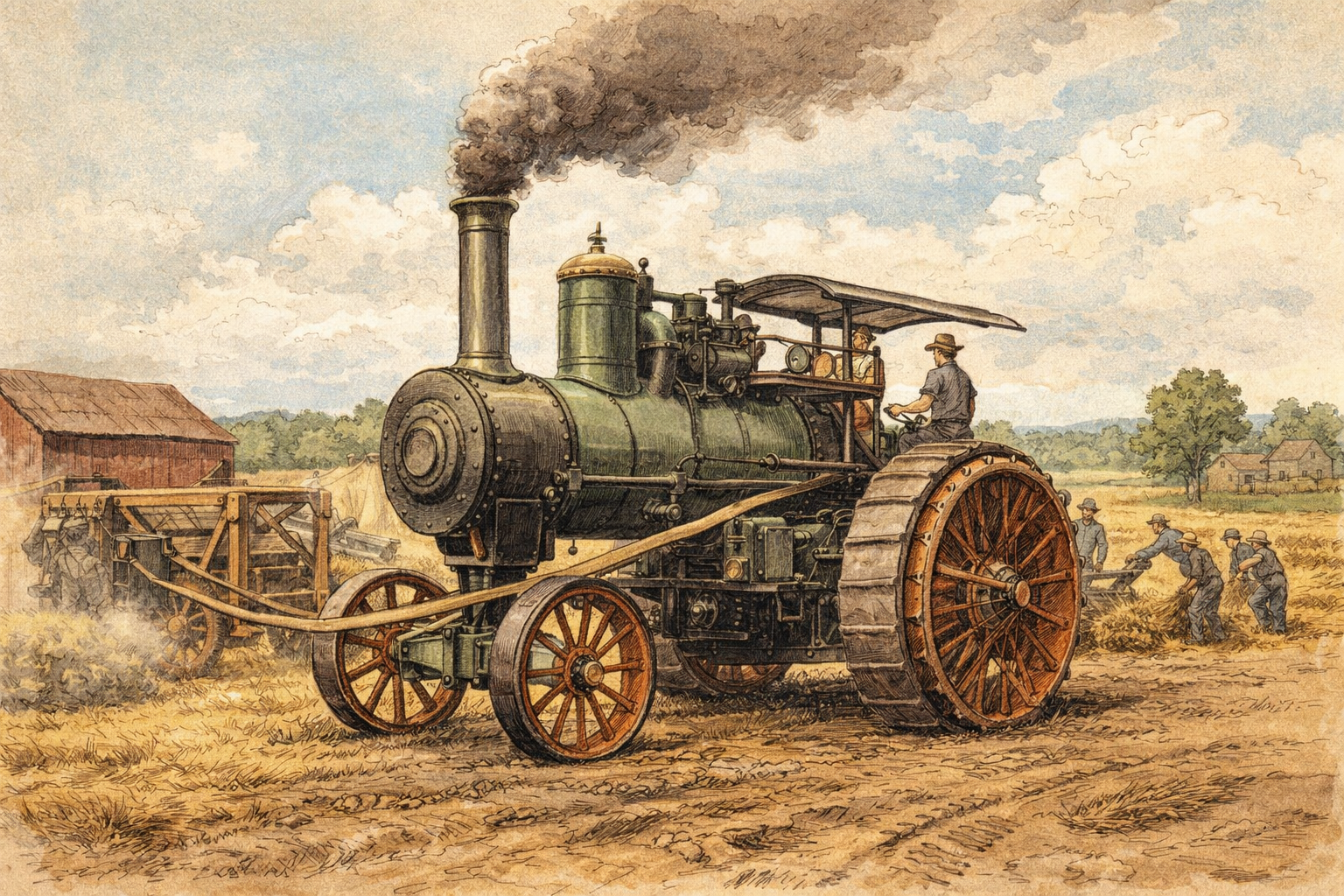
Early 1900s — Rise of Steam Tractors on Farms
Large steam tractors became common for threshing and plowing. They were powerful but slow, heavy, and difficult to maneuver.
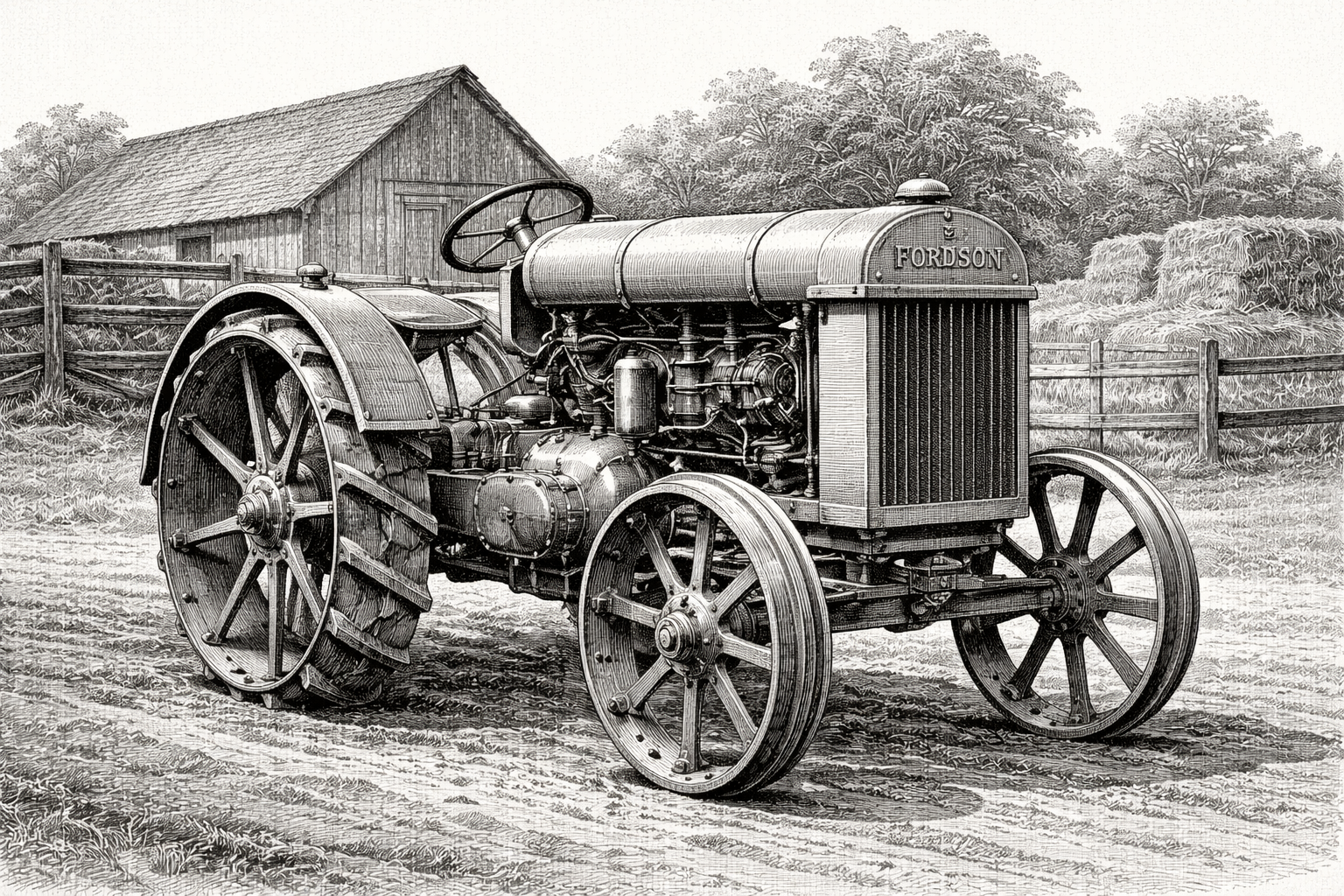
1917 — Fordson Model F
Henry Ford introduced the Fordson, the first mass-produced and affordable tractor. Its success accelerated the shift from animal to mechanical power on farms.
1920s — Expansion of Major Manufacturers
Companies such as John Deere, Massey Ferguson, and International Harvester began mass production of gasoline-powered tractors, making them widely available around the world.
1930s — Rubber Tires Replace Steel Wheels
Steel traction wheels gave way to rubber tires, improving comfort, traction, and efficiency.

1940s – 1950s — Diesel Power Dominates
Diesel engines became the preferred power source, offering more torque and better fuel economy.
1960s – 1970s — Comfort and Hydraulics
Tractors gained enclosed cabs, heating, and air conditioning, along with stronger engines and improved hydraulic systems for a wider range of attachments.
1980s – 1990s — Electronics and GPS
Electronic controls and early satellite-based guidance systems arrived, increasing precision and productivity.
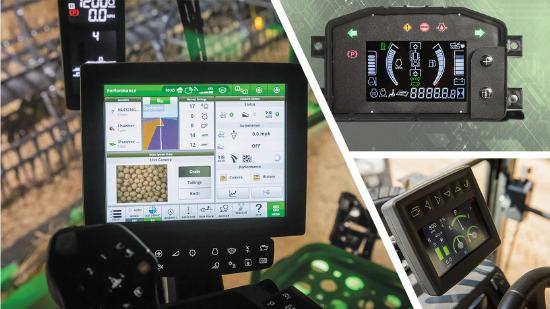 Figure 1.2.5 Agricultural machinery displays.
2000s — Precision Farming Expands
Computers, sensors, and real-time data tracking became standard, enabling farmers to optimize nearly every aspect of crop production.
 Figure 1.2.6 Modern tractor with guidance system
2010s — Smart Tractors and Automation
Sensors, network connectivity, and semi-autonomous driving capabilities entered mainstream agriculture, allowing around-the-clock operation with minimal human input.

2020s — Electric and Fully Autonomous Machines
Manufacturers are now developing fully electric, self-driving tractors. These machines are cleaner, quieter, and capable of operating with remarkable precision using artificial intelligence.

Fig. 1.2.1 "create an image of a 1892 — John Froelich's Gasoline Tractor" (prompt), ChatGPT, OpenAI, 15 Feb. 2026, https://chat.openai.com. Copyright status: No copyright claimed (U.S.); AI-generated work.
Fig. 1.2.2 "create a drawing of an Early 1900s Steam Tractor on a Farm" (prompt), ChatGPT, OpenAI, 15 Feb. 2026, https://chat.openai.com. Copyright status: No copyright claimed (U.S.); AI-generated work.
Fig. 1.2.3 "create a drawing of a 1917 Fordson tractor" (prompt), ChatGPT, OpenAI, 15 Feb. 2026, https://chat.openai.com. Copyright status: No copyright claimed (U.S.); AI-generated work.
Fig. 1.2.4 "create an image of 1930s metal tires vs rubber tires on tractor" (prompt), ChatGPT, OpenAI, 15 Feb. 2026, https://chat.openai.com. Copyright status: No copyright claimed (U.S.); AI-generated work.
Fig. 1.2.5 "create images of dashboard electronics and GPS on a tractor" (prompt), ChatGPT, OpenAI, 15 Feb. 2026, https://chat.openai.com. Copyright status: No copyright claimed (U.S.); AI-generated work.
Fig. 1.2.6 "create an image of a precision agriculture capable tractor" (prompt), ChatGPT, OpenAI, 15 Feb. 2026, https://chat.openai.com. Copyright status: No copyright claimed (U.S.); AI-generated work.
Fig. 1.2.7 "create an image of a smart tractor's in-cab view" (prompt), ChatGPT, OpenAI, 15 Feb. 2026, https://chat.openai.com. Copyright status: No copyright claimed (U.S.); AI-generated work.
Fig. 1.2.8 "create an image of an autonomous tractor" (prompt), ChatGPT, OpenAI, 15 Feb. 2026, https://chat.openai.com. Copyright status: No copyright claimed (U.S.); AI-generated work.
This page titled 1.2: A Timeline of Tractor Development was last modified on Fri, 15 May 2026 18:16:19 GMT and is shared under a CC BY 4.0 license and was authored, remixed, and/or curated by Peter Maokosy.
The book could not be loaded just now.