From LibreTexts, under CC BY-SA 4.0, as the source states it; its equations are written in TeX, which the PDF shows typeset. This page at LibreTexts.
12.3A: The Functionalist Perspective
Opening the book…
Learning Objectives
Explain the social functions of the family through the perspective of structural functionalism
Structural functionalism is a framework that sees society as a complex system whose parts work together to promote solidarity and stability. In this way, society is like an organism and each aspect of society (institutions, social constructs, etc.) is like an organ that works together to keep the whole functioning smoothly. This approach looks at society through a macro-level orientation, which is a broad focus on the social structures that shape society as a whole. Functionalism addresses society in terms of the function of its constituent elements: norms, customs, traditions and institutions. Functionalists, in general, identify a number of functions families typically perform: reproduction; socialization; care, protection, and emotional support; assignment of status; and regulation of sexual behavior through the norm of legitimacy.
The Family
Radcliffe-Brown proposed that most stateless, “primitive” societies that lack strong centralized institutions are based on an association of corporate-descent groups. Structural functionalism also took on the argument that the basic building block of society is the nuclear family, and that the clan is an outgrowth, not vice versa. Durkheim was concerned with the question of how certain societies maintain internal stability and survive over time. Based on the metaphor above of an organism in which many parts function together to sustain the whole, Durkheim argued that complicated societies are held together by organic solidarity.
Nuclear Family: Structural functionalism also took on the argument that the basic building block of society is the nuclear family, and that the clan is an outgrowth, not vice versa.
Functions of the Family
For functionalists, the family creates well-integrated members of society and instills culture into the new members of society. It provides important ascribed statuses such as social class and ethnicity to new members. It is responsible for social replacement by reproducing new members, to replace its dying members. Further, the family gives individuals property rights and also affords the assignment and maintenance of kinship order. Lastly, families offer material and emotional security and provides care and support for the individuals who need care.
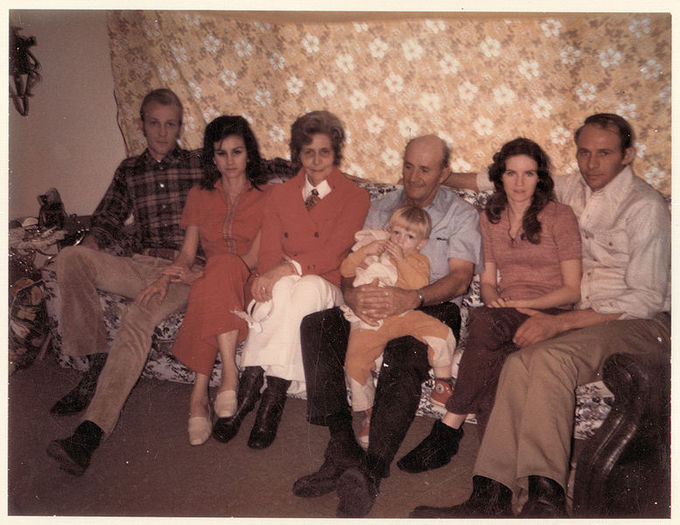
Expectant Family: Family expecting an additional family member.Family in the 1970s: For functionalists, the family creates well-integrated members of society and teaches culture to the new members of society.
Key Points
Functionalists identify a number of functions families typically perform: reproduction; socialization; care, protection, and emotional support; assignment of status; and regulation of sexual behavior through social norms.
For functionalists, the family creates well-integrated members of society by instilling the social culture into children.
Radcliffe-Brown proposed that most stateless, “primitive” societies, lacking strong centralized institutions, are based on an association of descent groups. These clans emerge from family units.
Key Terms
family: A group of people related by blood, marriage, law or custom.
Radcliffe-Brown: A British social anthropologist from the early twentieth century who contributed to the development of the theory of structural-functionalism.
institution: An established organization, especially one dedicated to education, public service, culture, or the care of the destitute, poor etc.