From LibreTexts, under CC BY 4.0, as the source states it; its equations are written in TeX, which the PDF shows typeset. This page at LibreTexts.
9.8: Confirmation Bias
Opening the book…
Confirmation bias is a person’s tendency to seek, interpret and use evidence in a way that conforms to their existing beliefs. This can lead a person to make certain mistakes such as: poor judgments that limits their ability to learn, induces changing in beliefs to justify past actions, and act in a hostile manner towards people who disagree with them. Confirmation bias lead a person to perpetuate stereotypes or cause a doctor to inaccurately diagnose a condition.
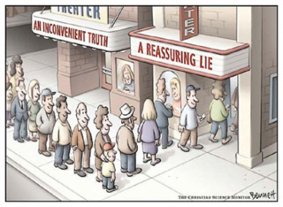
Figure 7. Most people use conformation bias unwittingly because it is usually easier to cling to a reassuring lie than an inconvenient truth.
What is noteworthy about confirmation bias is that it supports the The Argumentative Theory.Although confirmation bias is almost universally deplored as a regrettable failing of reason in others, the argumentative theory of reason explains that this bias is Adaptive Behavior because it aids in forming persuasive arguments by preventing us from being distracted by useless evidence and unhelpful stories.
Interestingly, Charles Darwin made a practice of recording evidence against his theory in a special notebook, because he found that this contradictory evidence was particularly difficult to remember.