The creative arts are as natural to young children’s lives as language and play are. The arts build skills such as problem solving and critical thinking; they bring parallel opportunities for the development of language/communication, mathematics, and the development of social and interpersonal skills. The following activities are often referred to as children’s play: scribbling with a crayon, pretending to be a pirate or a bird, humming bits of a tune, banging on a drum, or swaying to music. But these behaviors in fact show elements of artistic expression and creation that support continuous development of artistic skills. They also show the hallmarks of children’s abilities to express themselves through symbols and aesthetic images.[1]
The creative arts domain is presented in four familiar disciplines:
Visual Art: The visual arts include the practice of drawing, painting, sculpting, and assembling collages in two or three dimensions. Preschool visual art is process-based and open-ended, allowing children to explore by using a variety of materials. The product is not the focus, though the children will likely view their creation as a masterpiece!
Music: Preschoolers love to listen to music as well as sing along and move with music. Music learning in preschool is a time to make new discoveries. Preschoolers can engage in music making, performing rhythms, musical sounds and passages with a variety of instruments, or simply sing along to a favorite tune.
Drama: For preschoolers, this domain involves both spontaneous dramatic play and teacher-structured drama, each of which inspires the other. Preschoolers are naturally inclined to engage in solitary, parallel, and group play, and draw on these experiences when acting out situations and using props (with teacher guidance). Similarly, engaging in drama feeds children’s imagination and inspires dramatic play. A goal in dramatic play and drama for preschoolers is unleashing the child’s imagination. Thus, the focus is on children’s creative engagement in drama rather than on actual performance or “the theater.”
Dance: The dance domain for preschoolers is interested in the creative and often expressive use of movement. Movement is explored in all its range (e.g., small and large, fast or slow, hopping or marching) and for various purposes, such as learning math or language skills, or for the joy of moving. Dance can be a nonverbal tool for expressing ideas, telling stories, or communicating emotions. It is often rhythmic and accompanied by music. Requiring thinking, social interaction, and physical exercise, dance is a motivating way for preschoolers to engage in learning.
The specific foundations, which are the knowledge, skills, and behaviors that preschool children typically develop in a quality preschool environment as they relate to visual art, music, drama, and dance are included later in the chapter as each strand is explored.[6]
Much of children’s development in the creative arts during the preschool years proceeds naturally and needs only fertile soil, along with time, to grow. Children initiate many behaviors and routines when they simply go about their play. They practice many skills along the way, and supportive physical and social–emotional development occurs as children progress from ages three to five. At the same time, their drawings become more mature and expressive, their pretend characters and settings become more complex and social, their musical expression skills grow with their muscular coordination and abilities to discern beat, tone, and melody, and the movements they coordinate with music or simply orchestrate in silence gain in surety and expressive complexity.
A primary responsibility of the preschool teacher is to let such natural developments occur. Child-initiated artistic activity is valuable not only because it is so enmeshed with a host of developments for children, but also because children cherish ownership of much of what they do. Children follow their hearts and minds to what interests them and to areas where they experience increasing mastery. They draw as they will and may not be interested in exactly what thing, animal, or person the creation represents. They may hold firm to their idea of how to draw a tree, behave like a bear, or sing like a bird; it often becomes important for teachers and other adults to avoid critiquing such expressions (except where the child may solicit advice). Teachers would do well to let the child experiment with, and perhaps revise, her expressions as the need occurs or as maturing views of the world and its possible representations take hold.
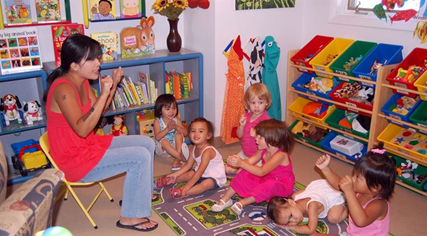
Figure 11.5 Participating and having fun with the arts should be the focus[1]
Along with child-initiated art, a complementary perspective needs reinforcement. This perspective recognizes the ways that teachers can and should support young learners in their development. An element of this scaffolding is creating conditions in the preschool program in which interesting and important connections between the arts and other developments can take place. Capitalizing on language and communication opportunities is another example; placing children in settings where cooperation is important and where cooperative dispositions and skills may grow is yet another. Some art activities can help children become aware of and reflect on differences among people, become exposed to diverse art forms from different cultures, and create a common platform of learning for children between home and school. These considerations will set the stage for children’s growth and interest in the arts.[2]