Opening the book…
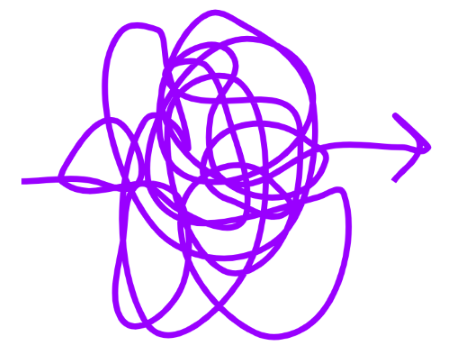 The Research Process is Messy!
Research is a process of developing knowledge by asking increasingly complex questions whose answers lead to new questions. If we already know exactly what we think on a topic and what we are going to say in our paper or presentation, we are not doing research -- we are just expressing our own thoughts and opinions. Conducting research requires curiously engaging with information we don't already know. Writing the paper and then finding sources that will support the arguments we’ve already made does not allow us to engage deeply with the topic, learn from experts through a variety of sources, challenge our previous assumptions, and develop our knowledge and analysis of a topic.
Research and Scholarly Conversation
As multiple scholars examine the same topic, asking their own questions and seeking answers, they enter a "conversation" with other scholars who have explored the same topic. We'll explore scholarly conversation in more depth in Chapter 10. As we explore how to approach research assignments in this chapter, imagine yourself joining a conversation that has been going on since before you arrived, and will continue after you finish your assignment and move on. Consider what each source you use contributes to the conversation, what your sources have to say to each other, and what your own voice adds to the conversation.
6.2: The Research Process is shared under a CC BY-NC-SA license and was authored, remixed, and/or curated by Ellen Carey.
The book could not be loaded just now.