Opening the book…
Antonín Dvořák, Symphony No. 9 “From the New World”
Throughout the 19th century, Europeans considered the United States to be a cultural backwater. Americans, of course, were preoccupied not with artistic innovation but with expanding and stabilizing their nation. Those who did pursue the arts were expected to receive their training in Europe and to imitate European models. In the late 19th century, however, American composers became increasingly interested in developing a unique national voice.
None of this is to say that there was no distinctively American music in the 19th century. There certainly was—much of which is explored elsewhere in this volume. Hymn composers in New England and the South had already developed several new strains of church music, while diverse folk traditions flourished in rural areas. In addition, there were the rich musical traditions of Native Americans, who faced eradication on a national scale, and African Americans, whose influence was first felt in the sphere of popular and dance music. However, none of this mattered to members of the arts establishment. They valued European-style concert music and sought a way to express American identity in that context.
Surprisingly, the composer who is usually cited as launching the American school of composition was not an American at all, but a Czech. Although he did not actually break new ground, Antonín Dvořák (1841-1904) tends to get credit for the bizarre reason that he was European, and therefore commanded greater respect and attention from his contemporaries than did American composers. In fact, Dvořák was brought to the United States for the express purpose of guiding the development of American music.
Dvořák was a prime candidate for teaching Americans how to express national identity in music, for he had first made a name for himself by doing the same for the Czech musical establishment. His first successful composition was a series of orchestral pieces ostensibly based on Slavic dances. For Dvořák, however, his national identity was a source of frustration. He struggled to be accepted not as a Czech composer but as a good composer.

When Dvořák came to New York City in 1891, he was at the height of his career. He had been invited to serve as the first director of the National Conservatory of Music, which was to train American musicians in the European concert tradition. He was also expected to contribute to the development of American concert music. Dvořák produced two monumental “American” works during his stay in the United States, both of which were premiered in 1893. One was his String Quartet No. 12, known as the “American Quartet” (a work composed, ironically, during his visit to a Czech community in the midwest). The other was his Symphony No. 9 “From the New World.” The symphony in particular exemplifies Dvořák’s ideas about what was American in music.
Dvořák was regularly asked for his views on this subject, and in 1895 he published an article entitled “Music in America” that contained his advice to American composers wishing to develop a national style. He recommended, unsurprisingly, that they draw inspiration from folk music: specifically, that of African Americans and Native Americans. Dvořák, of course, knew very little about American folk traditions—he was completely ignorant of folk music in most parts of the country, while his ideas about Native American music were more fantasy than fact. His observation that Native American and African American musics were “practically identical” betrays his shallow thinking on the subject.
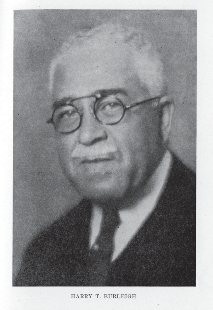
The one thing Dvořák really did know something about was African American spirituals. He encountered this repertoire through Harry Burleigh, who was a student at the National Conservatory of Music during the time that Dvořák served as director. Burleigh had learned to sing spirituals from his grandfather, who had been born a slave but had purchased his freedom in the 1830s, and he later gained international fame both for his concert arrangements of spirituals and for his original art songs. At Dvořák’s request, Burleigh frequently sang for him in his home. He reported that “Swing Low, Sweet Chariot,” apparently the composer’s favorite item in his repertoire, was the basis for the theme in the first movement of Symphony No. 9. The second movement, which we will consider in detail, also features a spiritual-like theme. In fact, it was such a convincing fake that it was frequently mistaken for a genuine spiritual after a student of Dvořák’s wrote a text for it, titled “Goin’ Home,” in 1922.
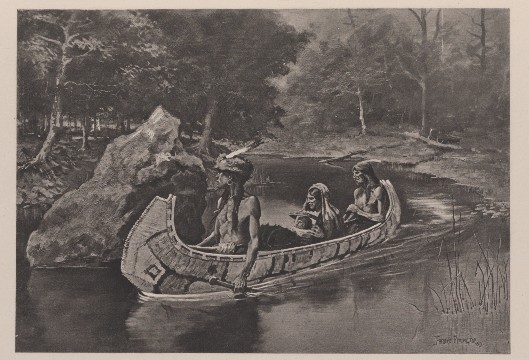
Dvořák’s Symphony No. 9 also has a Native American connection, although it is romanticized and inauthentic. Dvořák, like most Europeans, was familiar with Henry Wadsworth Longfellow’s 1855 epic poem The Song of Hiawatha, in which the poet provides a largely fictionalized account of the life of an Ojibwe warrior. Hiawatha had been translated into Czech in 1870, and Dvořák was familiar with it before his visit to the United States. Although Symphony No. 9 is an example of absolute music and should not be understood to communicate a specific, coherent narrative, Dvořák told interviewers that the two internal movements were both influenced by Hiawatha, and that he intended the second movement as a sketch for a dramatic setting of the text (a project that he never in fact pursued). Although Dvořák offered few specifics, it has been argued that the two themes of the second movement—one gentle and romantic, one distraught and funereal—portray the wooing and death of Hiawatha’s bride, Minnehaha.
Composer: Antonín Dvořák. Performance: Berliner Philharmoniker, conducted by Ferenc Fricsay (1960).
Video produced by Berliner Philharmoniker, all rights reserved. It it not openly licensed but freely available to all.
Symphony No. 9, “From the New World"
|
Time |
Form |
What to listen for |
|---|---|---|
|
0’00” |
Intro |
The brass play a sequence of sustained harmonies |
|
0’53” |
A |
The spiritual-inspired theme is heard in the English horn; it has a form of aba’ |
|
2’44” |
Intro |
The woodwinds repeat the sequence of harmonies |
|
3’12” |
A |
Muted strings play the b section of the A theme; the English horn concludes with the a’ section |
|
4’54” |
The horns play the opening motif of the A theme |
|
|
5’20” |
B |
This plaintive, minor-mode theme, played by the oboe, is accompanied by tremolo strings |
|
5’56” |
C |
For this minor-mode theme, pizzicato strings provide the steady pulse of a funeral march |
|
6’45” |
B |
The B theme returns in the muted violins |
|
7’52” |
D |
This theme, also cast as a funeral march, is played by the muted violins |
|
8’48” |
B |
The B theme briefly returns in the muted strings |
|
9’11” |
E |
Various instruments and sections, beginning with the oboe and flute, imitate birdsong |
|
9’27” |
The cyclical theme, which returns in each movement, is heard in the low brass, while the A theme is heard in the trumpets |
|
| 10’08” | A |
This theme returns in the English horn; the b section A is played by muted strings; the a’ section begins in solo strings |
| 12’43” | Intro | The opening passage is repeated in the brass; it resolves via an ascending string passage into a quiet, low-range final chord |
Dvořák’s Symphony No. 9 follows the standard four-movement pattern for a European symphony, two examples of which were examined in Chapter 7. We will take a look at the slow movement, which Dvořák placed second. This movement is in ternary form, with a brief introductory passage that also serves as the conclusion. The introduction consists of a series of seven chords, played slowly by the brass section. The harmonies, which are unexpected and dramatic, seem to lift the curtain on a magical scene.
The first section features Dvořák’s spiritual-inspired theme. It is first played by the English horn—a double reed instrument that can be thought of as a low-pitched oboe. The theme itself is also in ternary form (a b a’). The a’ section concludes with an ascent in the melody that brings it to a satisfying close. The first statement of the theme is followed by a repetition of the introductory chords in the winds, the b section of the theme in the strings, and the conclusion of the theme in the English horn. The tempo throughout is extremely slow (marked Largo by Dvořák), and the mood is peaceful.
The middle section of the movement offers a marked change in mood, as Dvořák increases the tempo and switches from the major to the minor mode. This section is primarily in rondo form, meaning that a principle theme alternates with secondary themes. The principle theme is agitated and mournful, featuring a repeated descending figure, while the secondary themes are accompanied by a steady bass line that could belong to a funeral march. After the final abbreviated statement of the principle theme, Dvořák inserts a major-mode passage in which the winds and strings imitate birds. Dvořák frequently included birdsong in his compositions, and his “American Quartet” also features such imitations. In this case, the birdsong can be directly related to Hiawatha, which includes the telling of a myth in which people are turned into birds.
Next, Dvořák includes a reference to the first-movement theme based on “Swing Low, Sweet Chariot,” overlaid with the spiritual-like theme from this movement. By stating the two themes simultaneously, Dvořák draws our attention to their similarity. Both, after all, reflect the same African American influence. Dvořák is also continuing the practice of connecting the movements of a symphony, known as cyclical technique, that we first saw at work in Berlioz’s Fantastical Symphony. The closing section contains the last statement of the spiritual theme, although this time the b passage is laced with pauses. These convey the impression that the
“singer” of this wordless song is overcome with emotion, needing perhaps to sob or catch their breath. Finally, the opening chords are heard once more, the last of which is repeated and sustained.
This movement—and Symphony No. 9 as a whole—can be taken as Dvořák putting his own advice to American composers into action. Those composers, however, did not necessarily appreciate his guidance. Their negative reactions were largely understandable. To begin with, the American arts establishment had already been grappling with the task of developing a unique national voice. That a foreigner would step in and tell them what to do was, to many, unpalatable. Composers also objected to Dvořák’s specific advice. The music of Native Americans and African Americans, they argued, was not the music of all Americans. It represented only a small portion of the populace and could not stand in for the country as a whole. While certain individuals objected for racist reasons, most simply did not accept Dvořák’s argument that a national style could be derived from these narrow sources.
Amy Beach, Gaelic Symphony
One of many composers who rejected Dvořák’s approach was Amy Beach (1867- 1944). As we will see, Beach preferred to found an American style on the folk music of her ancestors, who hailed from the British Isles. Before examining her response to Dvořák’s Symphony No. 9, however, we need to learn something about this extraordinary woman.
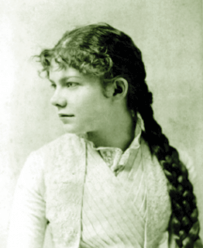
Beach counts among the many composers who began their careers as child prodigies. Born into a well-to-do New Hampshire family, she demonstrated a thorough grasp of pitch before she could talk and was harmonizing melodies at the age of two. She composed her first piano music—a set of waltzes—at the age of four, and was soon giving public piano recitals that attracted the attention of the press. When her family moved to a Boston suburb in 1875, Beach was able to receive professional training in music, although she was to remain almost entirely self-taught as a composer. She would learn by analyzing newly-published music from Europe and studying Berlioz’s textbook on orchestration.

Composer: Amy Beach. Performance: Detroit Symphony Orchestra, conducted by Neeme Järvi (1992).
Video posted by Neeme Järvi - Topic, all rights reserved. It is not openly licensed but freely available to all.
Beach gave her debut performance with the Boston Symphony Orchestra at the age of sixteen, and might have gone on to become the great piano virtuoso of her era. Instead, at the age of 18, she married. Her husband, Dr. Henry Harris Aubrey Beach, was twenty-four years her senior and, in Beach’s own words, “old-fashioned.” He believed that it was a man’s honorable obligation to support his wife, and he was not willing to allow Beach to pursue a career performing or teaching piano. He supported her work as a composer, however, and did a great deal to promote her success. For the twenty-five years of their marriage, therefore, Beach committed herself to composition. She won accolades from both the press and her peers, and was warmly accepted into what has been termed the Second New England School of composers.
Beach first gained attention in 1892 with her Mass in E-flat major, which was the first work by a woman ever to be performed by Boston’s prestigious Handel and Haydn Society. Then in 1896 the Boston Symphony Orchestra premiered her Gaelic Symphony, the first to be composed by an American woman. Although it is only fair to acknowledge Beach’s role as a trailblazer, many now consider the Gaelic Symphony to be the first great American symphony, regardless of the composer’s identity. Beach preferred not to write or speak about her experiences as a female composer in an era when women were discouraged from entering the field, and later stated only that she had met with no particular difficulty. In 1900, Beach appeared as soloist with the Boston Symphony Orchestra in her Piano Concerto in C-sharp minor—a rare public performance during her married years. The extreme difficulty of the work attests to Beach’s virtuosic abilities.
Upon her husband’s death in 1910, Beach resumed her performance career. She toured Europe in the 1910s, where she was praised as a rare American composer whose work equalled that of Europeans in quality. Both her Gaelic Symphony and her Piano Concerto—again with the composer at the keyboard—were well received. Back in the United States, Beach continued to compose and perform while also developing music programs for children and mentoring younger composers.
Beach—like all American composers active in the 1890s—was well aware of Dvořák’s advice and intimately familiar with his Symphony No. 9. In 1893, she was one of a number of prominent composers interviewed by the Boston Herald on the topic of Dvořák’s recent call for music based on the melodies of African Americans (he would only later praise Native American influence). Each was asked what they thought about Dvořák’s advice and what they saw as the future of American concert music. Beach acknowledged that spirituals were beautiful and expressive, but she rejected them as the basis for an American style. Instead, as she put it, “We of the North should be far more likely to be influenced by the old English, Scotch, or Irish songs inherited with our literature from our ancestors.” She agreed, it seems, with Dvořák’s call to incorporate folk influences, but disagreed about which folk music embodied American identity—or, at least, her identity. Beach’s response indicates that, while Southern composers might be differently influenced by their musical environment, the music of the plantations meant nothing to her.
Beach put her theory into practice with the Gaelic Symphony. She began by studying Irish folks tunes, which were to form the basis of her work. She eventually incorporated four melodies that had been published in an 1841 Dublin magazine. However, it was her intent not only to quote genuine Irish folk melodies but also to absorb their musical language and use it in her original themes. Beach began by writing the second movement, which we will examine. Her symphony, like Dvořák’s, is traditional in its overall structure. It opens and closes with lengthy movements in sonata form, while the third movement is slow and expressive.
The second movement begins with a complete presentation of an Irish folk tune titled “The Little Field of Barley.” After a brief introduction by the horn and strings, the tune is played by the oboe—a choice of instrument perhaps inspired by the English horn in the second movement of Dvořák’s symphony. Accompanying drones in the clarinets and bassoon can be heard as imitating a bagpipe. At the conclusion of the melody, the tempo changes, suddenly becoming much faster. We then hear a series of variations on the tune. The first is provided by the violins, who play rapid series of high, sparkling notes. Next we hear from the winds, who pass the theme back and forth with the violins. The horn and English horn then take the theme to the minor mode. Upon the recovery of the major mode, the tempo slows and we hear the original tune once more from the English horn. At this point the music swells dramatically, although a concluding fast passage featuring flutes and violins means that the movement ends with a smile.
This page titled 9.9: Contesting the Representation of the United States was last modified on Wed, 28 Oct 2026 19:52:23 GMT and is shared under a CC BY-SA 4.0 license and was authored, remixed, and/or curated by Esther M. Morgan-Ellis with Contributing Authors (University of North Georgia Press) via source content that was edited to the style and standards of the LibreTexts platform.
The book could not be loaded just now.