Opening the book…
“At its best the net gives us voices and perspectives we would have never discovered otherwise….at its worst, our net-mediated digital world becomes an endless stream of binary actions—like/don’t like, share/pass, agree/disagree, all in an architecture that slowly segments and slips us into our correct market position a click at a time, delivering us a personalized, segregated world. We can’t laud the successes of one half of this equation without making a serious attempt to deal with the other side of the story” (Caulfield).
Polarization for Profit

Leading scholars in this field have argued that digital platforms are using algorithms to promote polarization for profit. That is, corporations use these algorithms to engage and outrage, to knowingly cause divisiveness and polarization, ultimately for one simple purpose: to sell ads. In other words, these platforms have used “massive surveillance of our behavior, online and off, to generate increasingly accurate, automated predictions of what advertisements we are most susceptible to and what content will keep us clicking, tapping, and scrolling down a bottomless feed” (Tufekci).
For a fascinating explanation of this, watch the following TED Talk [22:47] from Zeynep Tufekci, techno-sociologist and Associate Professor at UNC School of Information and Library Science:
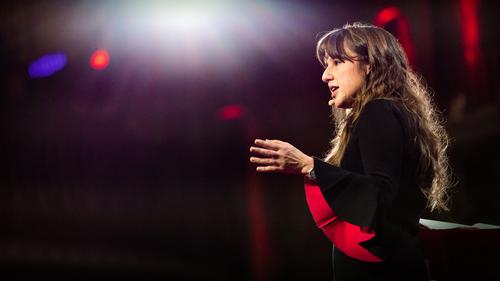
A TED element has been excluded from this version of the text. You can view it online here: http://pb.libretexts.org/collegeresearch/?p=60
Note: Turn on closed captions with the subtitles button or use the interactive text transcript if you prefer to read.
Sources
Caulfield, Mike. “Announcing the Digital Polarization Initiative, an Open Pedagogy Project.” Hapgood, 7 Dec. 2016.
Image: “Twemojis” by Twitter Open Source are licensed under CC BY 4.0
Tufekci, Zeynep. “It’s the (Democracy-Poisoning) Golden Age of Free Speech.” Wired, 16 Jan. 2018.
“We’re Building a Dystopia Just to Make People Click on Ads: Zeynep Tufekci” by TED is licensed under CC BY-NC-ND 4.0
This page titled 2.5: Algorithms and Polarization was last modified on Wed, 20 Jul 2022 06:51:23 GMT and is shared under a CC BY 4.0 license and was authored, remixed, and/or curated by Walter D. Butler; Aloha Sargent; and Kelsey Smith via source content that was edited to the style and standards of the LibreTexts platform.
The book could not be loaded just now.