Opening the book…
What Is the Baroque?
https://upload.wikimedia.org/wikipedia/commons/3/3b/Portrait_of_Sir_Isaac_Newton,_1689.jpg

The Baroque period lasted from about 1600–1750. It includes composers that remain familiar today, including Bach, Handel, Vivaldi, and Pachelbel. Their music still appears in films, television, commercials, ceremonies, and concert programs.
The Baroque was also an important period in the commercialization of music. Public opera developed into a major form of entertainment, and celebrated singers and composers became public personalities. Music increasingly circulated beyond exclusively religious and court settings.
The term Baroque has a disputed history. It may derive from the Italian barocco, associated with something irregular or outside ordinary logic, or from the Portuguese barroco, a term for an irregularly shaped pearl. Later writers used “Baroque” to describe an artistic style characterized by contrast, ornament, movement, drama, and departures from Classical restraint.
A Changing View of the World
Science
https://upload.wikimedia.org/wikipedia/commons/1/12/Frans_Hals,_Portrait_of_Ren%C3%A9_Descartes.jpg

Scientific discoveries transformed how Europeans understood nature and the universe. Johannes Kepler used astronomical observations to conclude that planets travel around the sun in elliptical rather than perfectly circular orbits. William Harvey’s anatomical research described the circulation of blood through the body.
Later in the century, Isaac Newton developed major ideas concerning motion and universal gravitation. These discoveries strengthened a growing confidence that the physical world could be investigated through observation, mathematics, and reason.
Philosophy and the Enlightenment
René Descartes explored questions of knowledge, certainty, the relationship between mind and body, and the classification of human emotions. These interests paralleled a growing fascination among Baroque artists and musicians with the ability of art to produce powerful emotional responses.
John Locke became an important figure in Enlightenment philosophy. His writings emphasized natural rights, obligations of government toward citizens, and limits on political authority. Such ideas contributed to changing European understandings of the individual and the state.
Baroque Art: Movement and Drama
https://upload.wikimedia.org/wikipedia/commons/8/8b/%27David%27_by_Michelangelo_Fir_JBU001.jpg

Baroque visual art frequently emphasizes motion, emotional intensity, theatricality, and dramatic contrasts. Italian sculptor and architect Gian Lorenzo Bernini became one of the defining artists of this style.
Michelangelo and Bernini: Two Davids
Compare Michelangelo’s Renaissance David (1501–1504) with Bernini’s Baroque David (1623–1624). Michelangelo presents the figure before action: upright, balanced, and apparently absorbed in thought. Bernini instead captures a fleeting instant of physical action, with David twisting his body as he prepares to release the sling.
The contrast provides a useful visual analogy for Baroque music. Rather than avoiding order or structure, Baroque artists often used structure to intensify movement, tension, contrast, and emotional expression.
Art, Architecture, and Power
Elaborate architecture and formal gardens also communicated political power. In France, highly ordered gardens used geometry, symmetry, and enormous scale to suggest human control over nature. Such displays became closely associated with royal prestige and absolutist government.

Literature and the Theater of Emotion
Baroque-era literature frequently explored dramatic conflicts and intense human emotions. William Shakespeare’s plays continued to influence composers, and works such as Hamlet later became sources for opera and other musical adaptations.
Other important writers included Miguel de Cervantes, whose Don Quixote was published beginning in 1605; Jean Racine, known for psychologically intense tragedies; John Milton, author of Paradise Lost; John Dryden, whose theatrical works sometimes incorporated music by Henry Purcell; and Jonathan Swift, author of Gulliver’s Travels.
This fascination with drama and emotional conflict has a direct musical parallel. During the Baroque period, genres such as opera and oratorio made storytelling, theatricality, and emotional expression central musical concerns.
Power, Religion & Expansion
Absolutism and Patronage
https://upload.wikimedia.org/wikipedia/commons/7/7c/Rigaud_Louis_XIV_1701.jpg
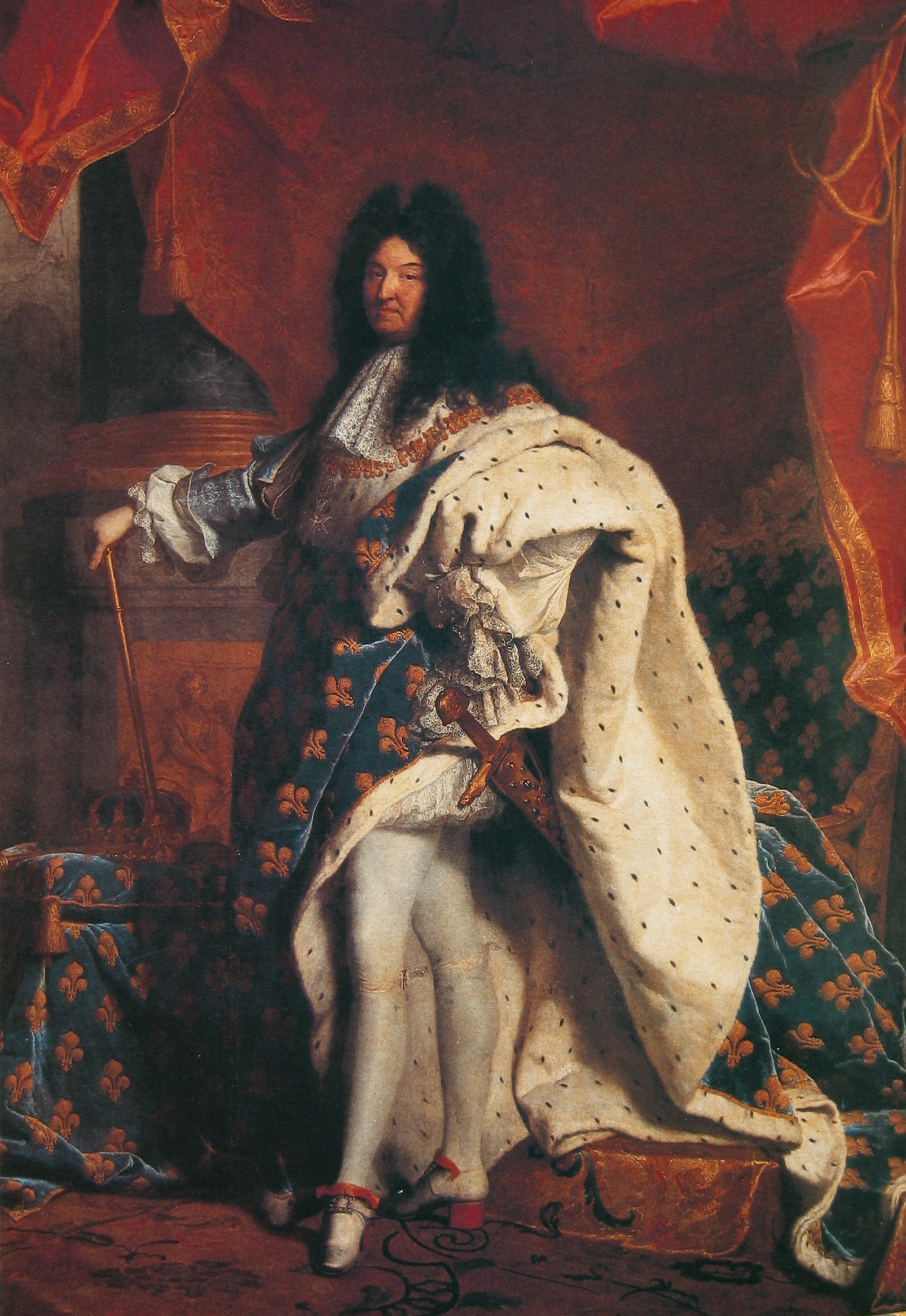
Nation-states such as France and England developed into major European powers. Absolute monarchs accumulated wealth and authority and displayed both through architecture, ceremony, music, and the arts. Patronage therefore remained an important source of employment for composers and performers.
Religion
The religious divisions created during the Reformation continued to shape European music. Protestantism became firmly established across much of northern Europe. Johann Sebastian Bach, for example, spent his career in Lutheran Germany and composed a large repertory of music for Lutheran worship.
Colonialism and Global Trade
European colonial expansion accelerated during the seventeenth century. France and England established colonies in North America, while expanding trade networks connected Europe more intensely with Africa, Asia, and the Americas. These systems generated enormous wealth while also depending heavily on conquest, displacement, and the transatlantic slave trade.
Events including the English settlement at Plymouth (1620), the establishment of Boston (1630), and the founding of Harvard College (1636) occurred within this larger process of colonization and expansion.
Musical Timeline
| Sort Year | Date | Type (History & Society / Music) | Title | Description | Image URL | Image Alt Text | Further Study Link |
|---|---|---|---|---|---|---|---|
| 1597 | 1597 | Music | Gabrieli: Sacrae Symphoniae | Multiple vocal and instrumental groups create dramatic spatial contrasts associated with the emerging Baroque style. | https://upload.wikimedia.org/wikipedia/commons/d/d3/Giovanni_Gabrieli_in_Ecclesiis.png | Page of Giovanni Gabrieli’s polychoral music, illustrating multiple independent musical groups. | |
| 1605 | 1605 | History & Society | Cervantes publishes Don Quixote | The landmark Spanish novel explores perception, identity, social change, and the tension between imagination and reality. | https://upload.wikimedia.org/wikipedia/commons/b/ba/Title_page_first_edition_Don_Quijote.jpg | Title page of the first 1605 edition of Miguel de Cervantes’s Don Quixote. | |
| 1607 | 1607 | Music | Monteverdi: L'Orfeo | Monteverdi’s opera demonstrates how music, drama, poetry, and instrumental color could combine in the new genre of opera. | https://upload.wikimedia.org/wikipedia/commons/4/4c/Monteverdi's_L'Orfeo.PNG | Page from the 1609 Venice edition of Claudio Monteverdi’s opera L’Orfeo. | |
| 1618 | 1618–1648 | History & Society | Thirty Years’ War | A devastating European conflict intertwines religious division, dynastic rivalry, and struggles for political power. | https://upload.wikimedia.org/wikipedia/commons/9/91/Peter_Snayers_-_The_siege_of_Armenti%C3%A8res_with_a_rainbow.jpg | Peter Snayers’s painting of the siege of Armentières during the Thirty Years’ War. | |
| 1623 | 1623–1624 | History & Society | Bernini: David | Bernini captures the biblical hero in motion, exemplifying Baroque drama, physical energy, and psychological intensity. | https://upload.wikimedia.org/wikipedia/commons/b/b3/David_by_Bernini,_1623-1624,_Villa_Borghese,_Rome.jpg | Bernini’s marble David twists dynamically as he prepares to release his sling. | |
| 1642 | 1642–1651 | History & Society | English Civil Wars | Conflict between monarchy and Parliament transforms English political authority. | https://upload.wikimedia.org/wikipedia/commons/1/12/Battle_of_Naseby.jpg | Historical painting of the 1645 Battle of Naseby, a decisive English Civil War battle. | |
| 1643 | 1643–1715 | History & Society | Louis XIV rules France | The Sun King makes royal ceremony, architecture, dance, and music powerful instruments of absolutist rule. | https://upload.wikimedia.org/wikipedia/commons/7/7c/Rigaud_Louis_XIV_1701.jpg | Hyacinthe Rigaud’s state portrait of Louis XIV in royal robes. | |
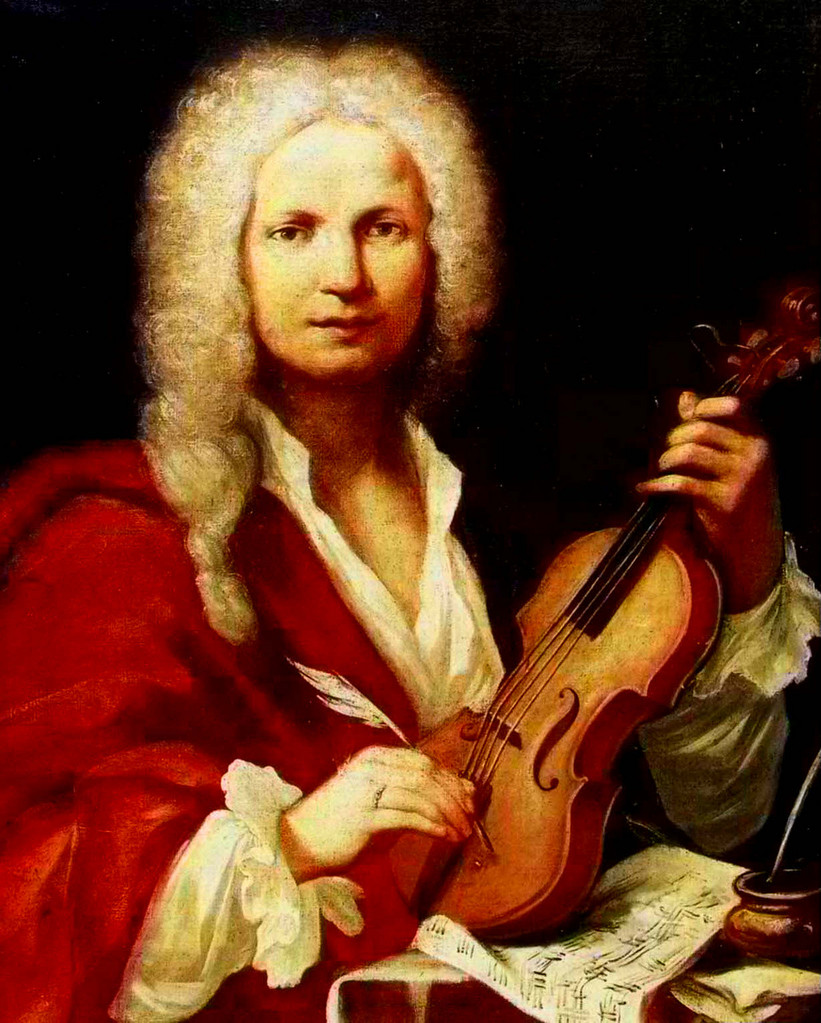
| 1678 | 1678 | Music | Antonio Vivaldi born | The Venetian composer becomes one of the period’s major figures in concerto writing and instrumental virtuosity. | https://upload.wikimedia.org/wikipedia/commons/9/98/Antonio_Vivaldi_portrait.jpg | Eighteenth-century portrait generally identified as composer and violinist Antonio Vivaldi. | |
| 1685 | 1685 | Music | Bach and Handel born | Johann Sebastian Bach and George Frideric Handel, two defining composers of the late Baroque, are born in German lands. | https://upload.wikimedia.org/wikipedia/commons/6/6a/Johann_Sebastian_Bach.jpg | Portrait of Johann Sebastian Bach by Elias Gottlob Haussmann; Bach and Handel were both born in 1685. | |
| 1687 | 1687 | History & Society | Newton publishes Principia | Newton’s mathematical account of motion and gravitation becomes a landmark of the Scientific Revolution. | https://upload.wikimedia.org/wikipedia/commons/3/3b/Portrait_of_Sir_Isaac_Newton,_1689.jpg | Portrait of Isaac Newton around the period in which his scientific work transformed European thought. | |
| 1741 | 1741–1742 | Music | Handel: Messiah | Handel composes his English-language oratorio, first performed in Dublin in 1742. | https://upload.wikimedia.org/wikipedia/commons/f/ff/Handel's_Messiah.jpg | Page from George Frideric Handel’s autograph manuscript of Messiah, composed in 1741. | |
| 1750 | 1750 | Music | J. S. Bach dies | Bach’s death is conventionally used as a convenient endpoint for the Baroque period. | https://upload.wikimedia.org/wikipedia/commons/6/6a/Johann_Sebastian_Bach.jpg | Portrait of Johann Sebastian Bach by Elias Gottlob Haussmann. |




This page titled 2.2.1: Introduction & Historical Context was last modified on Wed, 16 Sep 2026 21:39:44 GMT and is shared under a CC BY-SA 4.0 license and was authored, remixed, and/or curated by Clark, Heflin, Kluball, and Kramer (GALILEO Open Learning Materials) via source content that was edited to the style and standards of the LibreTexts platform.
The book could not be loaded just now.