Opening the book…
Music Beyond Entertainment
Music can entertain us, help us celebrate, accompany movement, shape memory, and connect us with other people. It can also be used intentionally in clinical and educational settings. One of the clearest examples is music therapy: the evidence-based use of music interventions by trained professionals to support individualized therapeutic goals.
Music therapy reminds us of an important idea for this course: music is not only an object that we listen to and analyze. It is also something that people use. Across cultures and throughout history, humans have used music to support movement, communication, memory, emotion, identity, ritual, and community.
What Is Music Therapy?
Music therapy is a professional health discipline, not simply listening to a favorite playlist to relax. Credentialed music therapists receive specialized education and clinical training so that they can select and adapt musical experiences for specific therapeutic goals.
Depending on the individual and setting, those goals might involve communication, movement, cognition, emotional wellbeing, or social interaction. Music therapists work in settings that can include hospitals, rehabilitation programs, schools, mental-health services, and long-term care.
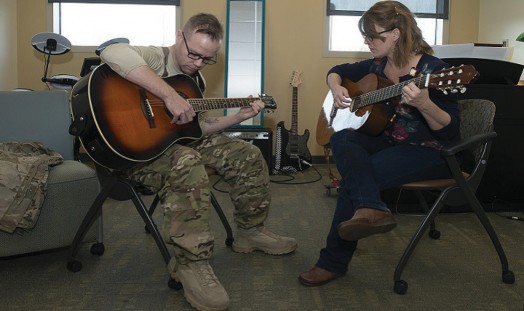
Why can music be useful in these settings? Musical activity can engage systems involved in hearing, movement, attention, memory, emotion, and communication. A steady pulse, for example, can provide an external timing cue for movement. Singing can combine language, breathing, memory, and motor activity. Familiar music can also provide powerful cues for autobiographical memory.
Music, Movement, and Wellbeing
Rhythm has a particularly direct relationship with movement. When we hear a strong beat, we may tap a foot, nod our head, dance, or unconsciously adjust the timing of our movements. Therapists can make purposeful use of this connection when working toward movement and coordination goals.
Music can also influence mood, attention, stress, and social connection. Singing or making music with other people combines musical activity with shared timing, breathing, listening, and cooperation. These experiences can contribute to a sense of belonging and connection.
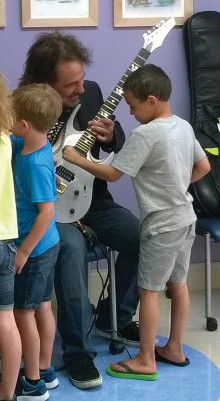
The important distinction is between the broad benefits people may experience from everyday music-making and music therapy as a clinical practice. Singing with friends, playing an instrument, or listening to music may be meaningful and beneficial without being music therapy. Therapy involves a trained professional, an individualized goal, and a structured therapeutic process.
Why Do Humans Make Music?
The usefulness of music raises a much larger question: Why do humans make music at all?
Humans were making musical instruments long before the development of modern recording technology and long before most of the musical traditions we will study in this course. Archaeological discoveries such as prehistoric bone flutes show that music-making reaches deep into human history.
We cannot know exactly why early humans made music. Music may have supported social bonding, coordinated movement, ritual, communication, play, courtship, storytelling, or other activities. It may also simply have been pleasurable. Most likely, music has never served only one purpose.

Instead of asking only “What does this music sound like?”, we can also ask “What are people using this music to do?”
Musical Ability: Aptitude and Achievement
People sometimes describe musical ability as though it were something you either possess or do not possess: someone is “musical,” “talented,” or “tone deaf.” A more useful distinction is between aptitude and achievement.
Aptitude describes a person’s capacity or readiness for learning, while achievement describes the skills that person has actually developed through experience, practice, instruction, and participation. The two are not the same.

Someone who learns an instrument, sings regularly, creates music, practices listening, or studies musical concepts develops musical skills over time. Prior experience certainly matters, but unfamiliarity with musical notation or performance does not mean that a person is incapable of understanding music.
That distinction matters in a music appreciation course. You do not need to arrive already knowing how to sing, read notation, identify chords, or play an instrument. The purpose is to develop your ability to notice, describe, interpret, and connect what you hear.
Music Is Learned Through Culture
Humans begin learning about musical sound long before taking a music class. Through repeated exposure, we become familiar with the rhythms, timbres, melodic patterns, performance practices, and expectations that surround us.
This process is similar in some ways to language. Long before learning formal grammar, children become familiar with the sounds and patterns of the languages spoken around them. Likewise, listeners develop expectations about music through participation and repeated listening.
This also means that what sounds “natural” in music is often partly learned. A musical pattern that feels obvious, stable, emotional, or unusual to one listener may be interpreted differently by someone whose listening experience comes from another musical tradition.
As we encounter unfamiliar music in this course, the goal is therefore not to judge it according to what already feels familiar. Instead, we will practice learning what its sounds mean within the musical and cultural world that produced them.
Music and Human Flourishing
Music can be a profession, an art form, a social activity, a therapeutic tool, a cultural tradition, a form of entertainment, or simply something people enjoy doing together. None of these roles cancels out the others.
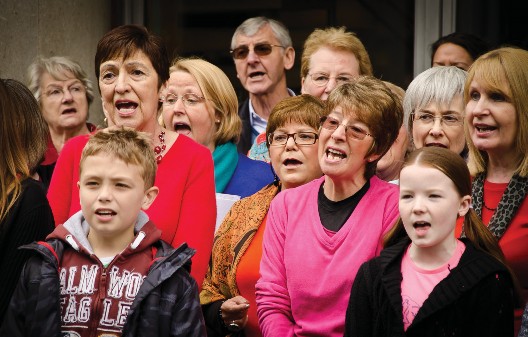
This is one reason music appreciation is about more than learning composers, dates, and vocabulary. Those things can help us understand what we hear, but the larger goal is to understand why music has mattered to people—and why it continues to matter.
As you encounter new music, ask not only whether you like it, but what role it plays in the lives of the people who make, perform, and hear it.
This page titled 3.1: EXPLORE. Why Do Humans Make Music? was last modified on Tue, 18 Aug 2026 16:04:27 GMT and is shared under a CC BY-SA 4.0 license and was authored, remixed, and/or curated by Esther M. Morgan-Ellis with Contributing Authors (University of North Georgia Press) via source content that was edited to the style and standards of the LibreTexts platform.
The book could not be loaded just now.