Opening the book…
The Early Romantic Era (c. 1800–1850)
This chapter considers music of the nineteenth century, a period often called the “Romantic era” in music. Romanticism might be defined as a cultural movement stressing emotion, imagination, and individuality. It started in literature around 1800 and then spread to art and music. By around 1850, the dominant aesthetic (artistic philosophy) of literature and visual art began to shift to what is now often called a time of realism (cultural expressions of what is perceived as common and contemporary). Cultural Nationalism (pride in one’s culture) and Exoticism (fascination with the other) also became more pronounced after 1850, as reflected in art, literature, and music. Realism, nationalism, and Exoticism were prominent in music as well, although we tend to treat them as sub-categories under a period of musical Romanticism that spanned the entire century.
In his Preface to the second edition of the Lyrical Ballads (1801), English poet William Wordsworth declared that “all good poetry is the spontaneous overflow of powerful feelings.” The power and expression of emotion exalted by literary Romanticism was equally important for nineteenth-century music, which often explicitly attempted to represent every shade of human emotion, the most prominent of which are love and sorrow. Furthermore, the Romantics were very interested in the connections between music, literature, and the visual arts. Poets and philosophers rhapsodized about the power of music, and musicians composed both vocal and instrumental program music explicitly inspired by literature and visual art. In fact, for many nineteenth-century thinkers, music had risen to the top of the aesthetic hierarchy. Music was previously perceived as inferior to poetry and sculpture, as it had no words or form. In the nineteenth century, however, music was understood to express what words could not express, thus transcending the material for something more ideal and spiritual; some called this expression “absolute music.”
As we listen to nineteenth-century music, we might hear some similarities with music of the classical era, but there are also differences. Aesthetically speaking, classicism tends to emphasize balance, control, proportion, symmetry, and restraint. Romanticism seeks out the new, the curious, and the adventurous, emphasizing qualities of remoteness, boundlessness, and strangeness. It is characterized by restless longing and impulsive reaction, as well as freedom of expression and pursuit of the unattainable. There are many parallels between what was going on historically in society and what was occurring in music. We cannot study one without studying the other because they are so inter-related, though music will be our guiding focus.
Revolution, Nationalism & the Individual
The Early Romantic era grew out of revolution and war. The French Revolution was followed by the Napoleonic Wars, and Napoleon’s conquests helped intensify nationalist feeling across Europe. After his defeat, the Congress of Vienna (1814–1815) attempted to restore political stability, but revolutions continued—including the widespread uprisings of 1848. At the same time, industrialization, rail travel, and a growing middle class were changing who held social and economic power. Composers increasingly wrote for public audiences rather than only courts and churches.
Political nationalism also shaped the period. Napoleon’s conquests encouraged Italians, Austrians, Germans, Eastern Europeans, and Russians to think more intensely about cultural identity. Nationalism was connected to the rise of the middle class, republicanism, and ideas about individual rights. These forces would become even more important after 1850, but their roots are already visible in Early Romantic art and music.
Philosophy
Romantic thinkers inherited the philosophical questions of Immanuel Kant and developed them in new directions. G. W. F. Hegel described history and ideas as developing through conflict and resolution, while Arthur Schopenhauer emphasized the limits of reason and the importance of inner experience. Such ideas helped elevate music: because instrumental music did not need to describe a concrete object, Romantic writers increasingly imagined it as uniquely capable of expressing an inner or spiritual reality beyond words.
Nature, Science & the Romantic Imagination
Science and Technology
Science and technology changed the experience of distance and time. Railroads and steamships increased mobility, while the commercial telegraph of the 1830s allowed information to travel faster than people. Early photography appeared during the first half of the nineteenth century. These technologies could feel exciting, destabilizing, or even uncanny—exactly the kinds of emotional tensions Romantic artists explored.
https://upload.wikimedia.org/wikiped...dubon_1826.jpg
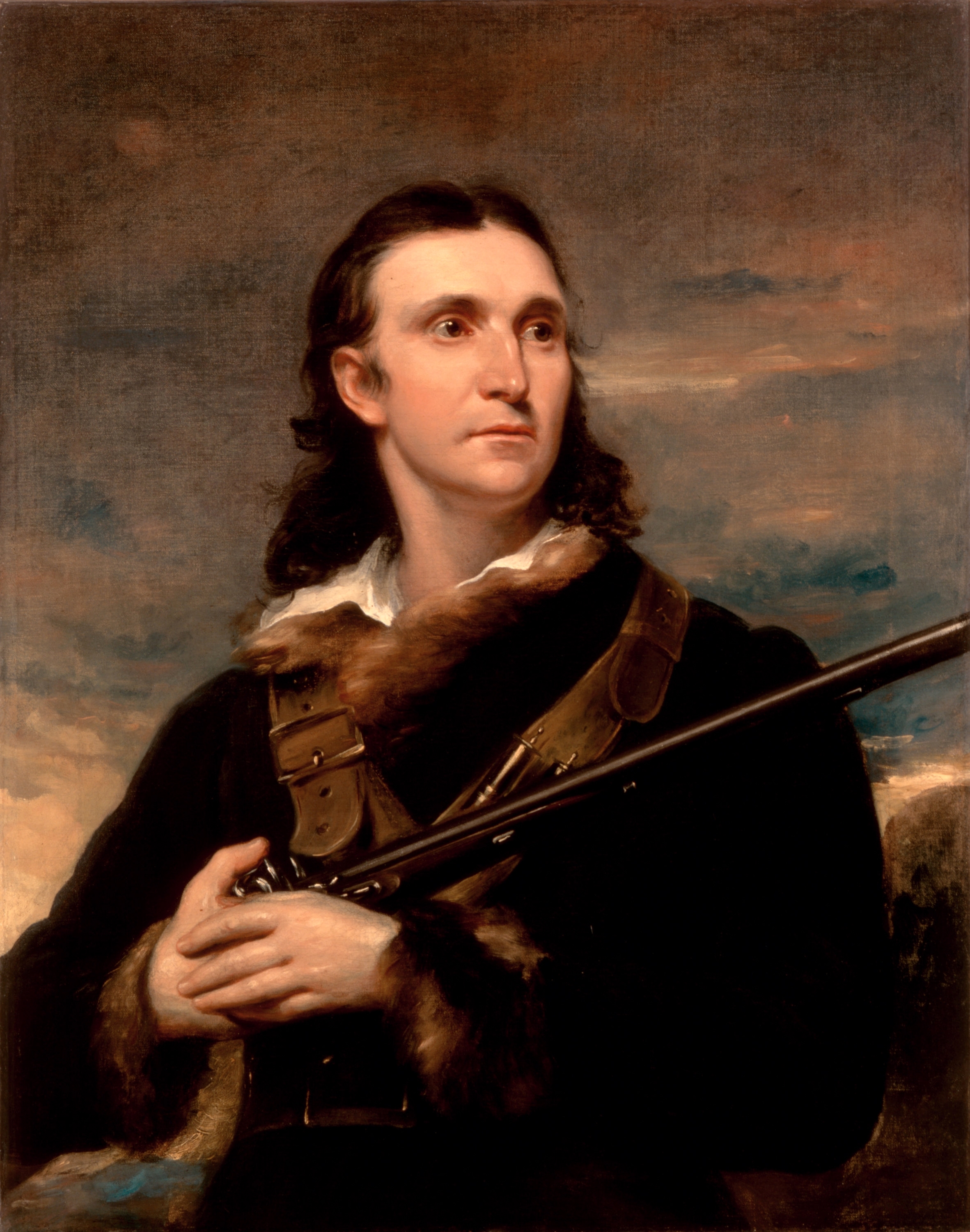
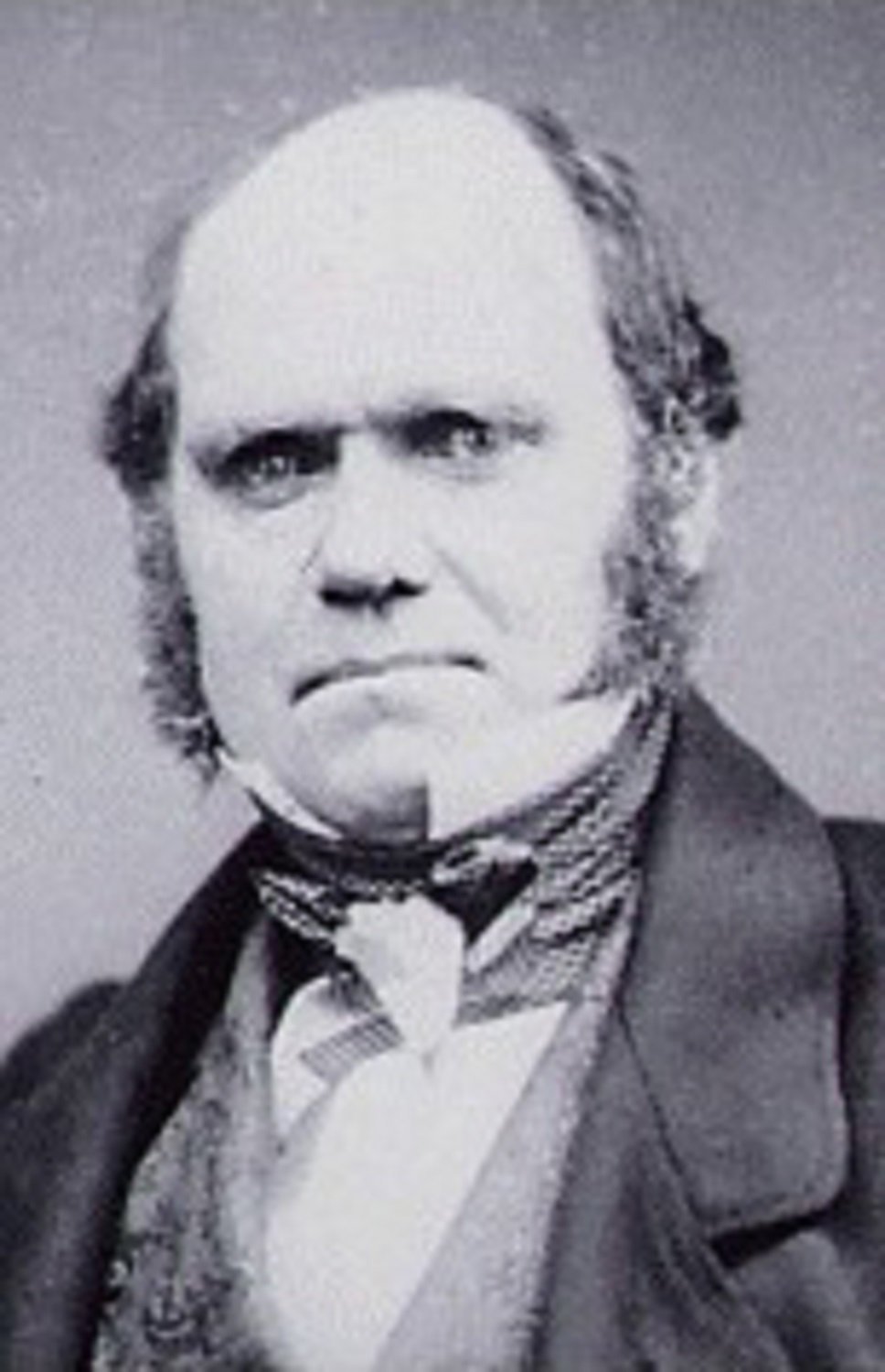
Romantics were fascinated by nature—not simply as scenery, but as something vast, mysterious, beautiful, and sometimes frightening. Naturalists such as John James Audubon carefully documented the living world. Charles Darwin belongs slightly beyond our 1850 boundary, but his 1830s voyages and later evolutionary work grew from the same expanding culture of observation and scientific inquiry.
The Sublime, the Gothic & the Supernatural
https://upload.wikimedia.org/wikiped...-_WGA08332.jpg

Romantics were fascinated by the imaginary, the grotesque, and by that which was chronologically or geographically foreign. Emphasis on these topics began to appear in such late eighteenth-century works as Swiss painter Henry Fuseli’s Nightmare from 1781. Romantics were also intrigued by the Gothic style: a young Goethe raved about it after visiting the Gothic Cathedral in Strasbourg, France. His writings in turn spurred the completion of the Cathedral in Cologne, Germany, which had been started in the Gothic style in 1248 and then completed in that same style between the years of 1842 and 1880.
https://upload.wikimedia.org/wikiped...r_Dom_1855.jpg

Romantic interest in the individual, nature, and the supernatural is also very evident in nineteenth-century landscapes, including those of Caspar David Friedrich (1774-1840). One of his most famous paintings, Wanderer Above the Sea of Fog (1818), shows a lone man with his walking stick, surrounded by a vast horizon. The man has progressed to the top of a mountain, but there his vision is limited due to the fog. We do not see his face, perhaps suggesting the solitary reality of a human subject both separate from and somehow spiritually attuned to the natural and supernatural.

Revolution, Literature & Musical Life
Revolution on Canvas
https://upload.wikimedia.org/wikiped..._-_WGA6177.jpg

In France, Eugène Delacroix (1798-1863) captured the revolutionary and nationalist fervor of the time in such paintings as Liberty Leading the People (1830). He was also a good friend with musicians Fryderyk Chopin and Hector Berlioz, whom he immortalized in portraits.
https://upload.wikimedia.org/wikiped...T_DP817382.jpg

Francisco de Goya (1746 -1828) was born in Fuendetodos, Spain. He painted for the Spanish Royal court, producing portraits of nobility. However, he also painted works criticizing the social and political problems of his era.
https://upload.wikimedia.org/wikiped..._en_Madrid.jpg

One of Goya’s personal projects, Disasters of War, however, was commissioned by no one. It was Goya’s private project, which he never even published in his lifetime. Disasters of War unflinchingly depicts mutilation, torture, rape, and many other atrocities indiscriminately inflicted on Spanish citizens by French and Spanish alike. In The Third Day of May, Goya commemorated the Spanish resistance to Napoleon’s Armies in 1808 in the Peninsular War. It portrays an execution by Napoleon’s Troops.
By mid-century, Romanticism increasingly overlapped with new realist approaches to contemporary life. That later development belongs more fully to the second half of the nineteenth century.
Literature
Literature was central to Romantic culture. Goethe’s Faust explored knowledge, desire, and the supernatural. Mary Shelley’s Frankenstein (1818) connected new scientific possibilities with an older story about the human desire to control nature. Poets including Wordsworth, Coleridge, Byron, and Keats emphasized imagination, emotion, memory, nature, and the extraordinary within ordinary experience.
German writers such as Goethe, Schiller, Heine, Novalis, Tieck, and E. T. A. Hoffmann became especially important to musicians. Their poems, stories, and dramas supplied texts and subjects for songs, operas, and instrumental program music.
Music Moves into Public Life
Music became increasingly important to the expanding middle class. Amateur music making flourished in homes, salons, and local societies, with the piano at the center of domestic musical life. Music magazines and published scores circulated widely, while salons and soirées—often organized by upper-middle-class and aristocratic women—created important spaces for private performance and artistic exchange.
Public concerts also expanded. Audiences heard solo recitals, chamber music, and increasingly large orchestras. Conservatories professionalized musical training, while touring virtuosos such as Clara Wieck, Franz Liszt, and Fryderyk Chopin helped create a new kind of musical celebrity.
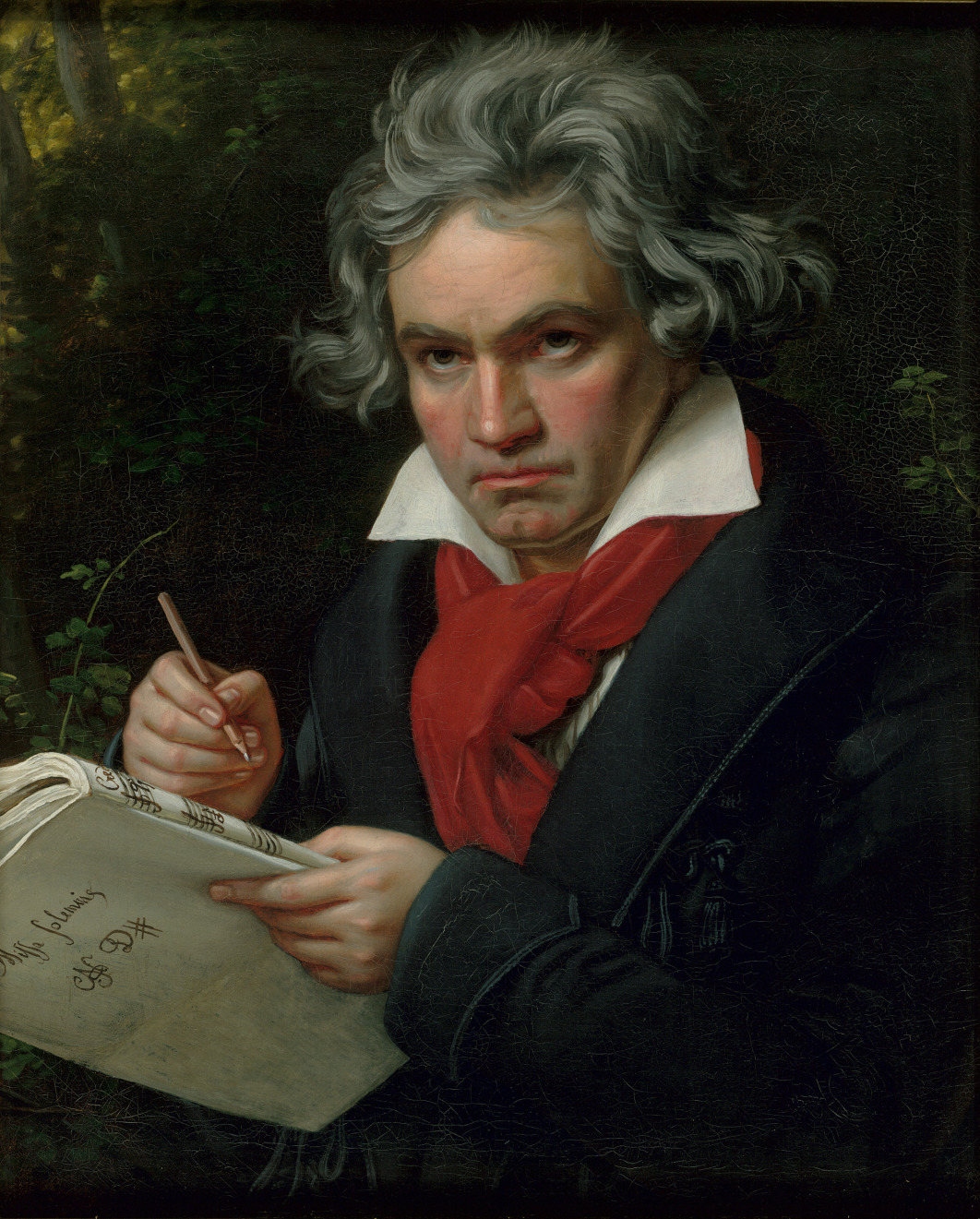
Romantic aesthetics tended to conceptualize musicians as highly individualistic and often eccentric. Beethoven modeled these concepts and was the most influential figure of nineteenth-century music, even after his death in 1827. His perceived alienation from society, the respect he was given, and the belief in the transformative power of music that was often identified in his compositions, galvanized romantic perceptions. His music, popular in its own day, only became more popular after his death. Subsequent composers looked to his innovations in symphonic compositions, especially his use of recurring motives and themes, as we heard in the Fifth Symphony. For them, Beethoven was also something of a problem: how might one compose in the shadow of such a musical giant?
Musical Timeline
| Sort Year | Date | Type (History & Society / Music) | Title | Description | Image URL | Image Alt Text | Further Study Link |
|---|---|---|---|---|---|---|---|
| 1801 | 1801 | History & Society | Wordsworth defines Romantic feeling | The preface to Lyrical Ballads describes poetry as the “spontaneous overflow of powerful feelings,” a useful summary of Romantic aesthetics. | https://upload.wikimedia.org/wikipedia/commons/f/f5/Wordsworth_portrait.png | Portrait of English Romantic poet William Wordsworth. | |
| 1814 | 1814–1815 | History & Society | Congress of Vienna | European leaders redraw borders after Napoleon and attempt to restore political stability and monarchical power. | https://upload.wikimedia.org/wikipedia/commons/a/a5/CongressVienna.jpg | Delegates gathered at the Congress of Vienna. | |
| 1815 | 1815 | Music | Schubert: Erlkönig | Schubert turns Goethe’s supernatural poem into an intensely dramatic art song, with one singer portraying multiple characters. | https://upload.wikimedia.org/wikipedia/commons/f/f9/Possible_portrait_of_the_young_Franz_Schubert.jpg | Possible portrait of the young Franz Schubert. | |
| 1818 | 1818 | History & Society | Mary Shelley publishes Frankenstein | The novel connects Romantic fascination with emotion and the supernatural to contemporary anxieties about science and controlling nature. | https://upload.wikimedia.org/wikipedia/commons/3/35/Frankenstein_1818_edition_title_page.jpg | Title page of the 1818 first edition of Mary Shelley’s Frankenstein. | |
| 1818.1 | c. 1818 | History & Society | Friedrich: Wanderer above the Sea of Fog | A solitary figure confronts a vast landscape, embodying Romantic ideas of nature, mystery, isolation, and the sublime. | https://upload.wikimedia.org/wikipedia/commons/a/af/Caspar_David_Friedrich_-_Wanderer_above_the_Sea_of_Fog.jpeg | Caspar David Friedrich’s Wanderer above the Sea of Fog. | |
| 1827 | 1827 | Music | Beethoven dies | Beethoven’s death reinforces his growing image as the independent, heroic composer whose music became a model for the Romantic generation. | https://upload.wikimedia.org/wikipedia/commons/b/be/Beethoven_1820.jpg | Portrait of Ludwig van Beethoven by Joseph Karl Stieler. | |
| 1829 | 1829 | Music | Mendelssohn revives Bach’s St. Matthew Passion | The celebrated Berlin performance helps renew nineteenth-century interest in J. S. Bach and in music of the past. | https://upload.wikimedia.org/wikipedia/commons/5/5b/Portrait_of_Felix_Mendelssohn-Bartholdy,_composer_(1809-1847)_-_Archivio_Storico_Ricordi_ICON010733.jpg | Nineteenth-century portrait of Felix Mendelssohn. | |
| 1830 | 1830 | History & Society | Delacroix: Liberty Leading the People | Delacroix transforms revolutionary conflict into a dramatic Romantic image of liberty, violence, and collective action. | https://upload.wikimedia.org/wikipedia/commons/2/21/Eug%C3%A8ne_Delacroix_-_Liberty_Leading_the_People_(28th_July_1830)_-_WGA6177.jpg | Eugène Delacroix’s Liberty Leading the People. | |
| 1830.1 | 1830 | Music | Berlioz: Symphonie fantastique | Berlioz uses a recurring melody and an enormous orchestra to tell a hallucinatory autobiographical story without sung words. | https://upload.wikimedia.org/wikipedia/commons/5/5c/Hector_Berlioz_portrait.jpg | Portrait of French Romantic composer Hector Berlioz. | |
| 1831 | 1831 | Music | Chopin settles in Paris | Political turmoil in Poland brings Chopin to Paris, where he builds a career centered on the piano, salons, publication, and an international artistic circle. | https://upload.wikimedia.org/wikipedia/commons/9/9a/Eug%C3%A8ne_Delacroix_-_Fr%C3%A9d%C3%A9ric_Chopin_-_WGA06194.jpg | Eugène Delacroix’s portrait of Fryderyk Chopin. | |
| 1835 | 1830s | Music | Virtuoso performers become celebrities | Clara Wieck and Franz Liszt tour widely, showing how public concerts and virtuosity could create a new kind of musical fame. | https://upload.wikimedia.org/wikipedia/commons/2/29/A_Kneisel_nach_C_Brand_-_Clara_Schumann_geb._Wieck_(Lithographie_1838).jpg | 1838 lithograph of pianist and composer Clara Wieck, later Clara Schumann. | |
| 1840 | 1840 | Music | Clara Wieck and Robert Schumann marry | Their marriage joins two major Romantic musical careers: Clara as a virtuoso pianist and composer, Robert as a composer and critic. | https://upload.wikimedia.org/wikipedia/commons/2/25/E_Kaiser_-_Robert_%2B_Clara_Schumann_(Litho_1847).jpg | 1847 lithograph depicting Robert and Clara Schumann. | |
| 1848 | 1848 | History & Society | Revolutions of 1848 | A wave of uprisings across Europe challenges monarchies and intensifies debates over nationalism, political representation, and individual rights. | https://upload.wikimedia.org/wikipedia/commons/2/21/Eug%C3%A8ne_Delacroix_-_Liberty_Leading_the_People_(28th_July_1830)_-_WGA6177.jpg | Delacroix’s Liberty Leading the People, used here as an emblem of nineteenth-century revolutionary politics. |




This page titled 4.2.1: Introduction & Historical Context was last modified on Sat, 22 Aug 2026 19:53:35 GMT and is shared under a CC BY-SA 4.0 license and was authored, remixed, and/or curated by Clark, Heflin, Kluball, and Kramer (GALILEO Open Learning Materials) via source content that was edited to the style and standards of the LibreTexts platform.
The book could not be loaded just now.