Opening the book…
How Do We Categorize Music?
What kinds of music do you listen to? Classical? Hip-hop? Country? EDM? Rock? R&B? We constantly sort music into categories. Streaming services, record stores, concert venues, radio stations, musicians, and listeners all use labels to help organize an enormous musical world.
These categories can be useful—but they can also be artificial, incomplete, and limiting. As we begin moving through historical periods in this course, it is important to remember that the labels we use to organize music are tools. They can help us notice patterns, but they do not always describe how music actually functioned for the people who created and heard it.
Classical, Popular, and Folk?
One common way of dividing music is into three broad categories: classical, popular, and folk. These labels can be convenient, but their boundaries quickly become difficult to defend.
Classical Music
If someone says they enjoy “classical” music, you might imagine orchestras, opera, concert halls, written scores, or music composed long ago. Those associations are understandable, but none of them provides a perfect definition.

Music we now call “classical” was not necessarily removed from popular culture when it was new. Mozart, for example, wrote music for paying audiences and depended on attracting listeners. At the same time, composers continue to write orchestral and concert music today, often using sounds that are dramatically different from Mozart’s.
So does “classical” describe a sound, a historical tradition, a performance setting, an audience, or some combination of these?
Popular Music
“Popular music” usually refers to commercially distributed music intended to reach a broad audience. But popularity itself cannot define the category: an experimental rock band might have very few listeners, while a centuries-old work by Mozart might be recognized around the world.
The label is still useful because many popular traditions share performance practices, technologies, venues, forms, and instruments. The important point is that the category describes more than whether a piece of music is literally popular.
Folk Music
“Folk music” can be even more difficult to define. The term is often used for music passed between people and generations within a community, sometimes without a single known composer. But many traditions complicate that definition.
Woody Guthrie, for example, is an icon of American folk music even though he wrote many of his own songs and had a professional career.
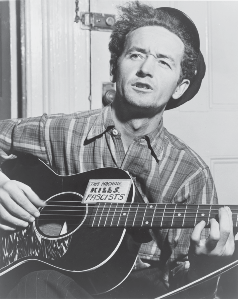
There is another problem: whose traditions get to represent the “folk music” of a nation? American folk traditions include far more than the Anglo-American singer with an acoustic guitar. They also include traditions such as corridos in Mexican and Mexican-American communities, polka traditions in the Midwest, Indigenous musical practices, and many others.
Categories can help us organize music, but they can also hide the diversity that exists inside them.
Genre and Subgenre
A more specific way of categorizing music is by genre. Genres connect musical works and artists that share some combination of stylistic, formal, historical, technological, and cultural characteristics. Rock, hip-hop, country, string quartet, opera, and reggae can all function as genre labels—even though those labels tell us very different kinds of information.
Genres can contain more specialized subgenres. Electronic dance music (EDM), for example, includes many styles of electronically produced dance music, while labels such as house, techno, trance, and dubstep describe more specific musical practices and communities.

Genre can tell us about sound, instrumentation, audience, place, history, identity, or performance practice—but not every genre label tells us the same things. “String quartet,” for example, tells us very precisely about instrumentation: two violins, viola, and cello. It tells us much less about when the music was written or what it will sound like. A string quartet could have been composed in the eighteenth century or yesterday.
A label such as “French reggae,” by contrast, tells us something about musical style, cultural lineage, language, geography, and historical context, while leaving instrumentation somewhat flexible.
Genres are therefore useful clues rather than complete descriptions.
Who Creates Musical Categories?
Musical categories do not simply appear on their own. They are created and maintained by people: musicians, audiences, critics, scholars, record companies, streaming platforms, and other institutions.
In the commercial music industry, genre has often been used to market recordings to particular audiences. That can help listeners find music they enjoy and can help communities form around shared musical interests. But categories can also reinforce social divisions.
In the United States, the recording industry once marketed recordings by Black musicians as “race records” while marketing music by white Southern musicians through categories such as “hillbilly records.” Musical practices that shared significant stylistic roots were therefore separated partly according to assumptions about race and audience.

Whenever you encounter a genre label, it is therefore worth asking:
- What does this category tell me about the music?
- What does it leave out?
- Who created or popularized the label?
- Whose music or identity might not fit comfortably inside it?
Composition and Improvisation
Another useful way to compare musical traditions is to ask how much of a performance is determined in advance.
In a fixed composition, many musical decisions—such as pitch, rhythm, form, instrumentation, and length—are established before a performance. Written notation is one way to preserve these decisions, although fixed compositions do not have to be written down.
Improvisation, by contrast, involves creating or altering musical material during a performance. Improvisation does not mean “playing anything you want.” Improvisers work within stylistic expectations, forms, patterns, harmonies, rhythms, or other agreed-upon boundaries.

Different traditions balance these practices differently. A jazz musician might improvise melodies over a predetermined harmonic structure. North Indian classical musicians improvise within sophisticated systems of melodic and rhythmic organization. A Baroque performer might play a written composition while adding ornaments or flourishes according to the expectations of the style.

This distinction will become especially important as we enter the Baroque period. Although much Baroque music survives in written notation, performers were often expected to improvise ornaments, realize accompaniments, and make musical decisions that were not completely specified by the composer.
Does Music Express Emotion?
For many listeners, emotional expression is one of the most important things music does. It is also difficult to explain. The same piece might make one listener cry, another feel energized, and another feel nothing at all.
Still, listeners who share musical and cultural experiences often develop similar expectations about what particular sounds communicate. Tempo, rhythm, mode, articulation, melodic shape, dynamics, and timbre can all influence the way we interpret a musical passage.
Consider music by the Baroque composer George Frideric Handel. In his 1740 work L’Allegro, il Penseroso ed il Moderato (The Cheerful Person, the Thoughtful Person, and the Moderate Person), contrasting characters advocate for different emotional states.
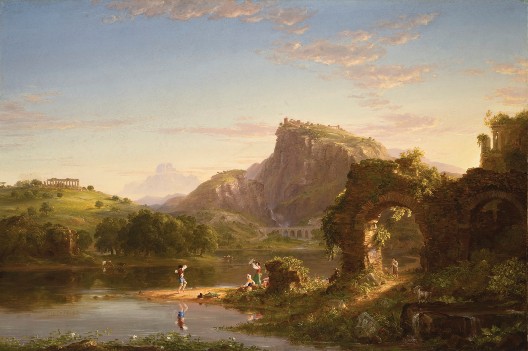

The cheerful music moves quickly, uses lively rhythms, energetic articulation, and bright instrumental colors. The thoughtful music is slower, smoother, and more restrained. These musical differences can encourage contrasting emotional interpretations.
But there is an important complication: musical meaning is partly cultural. In many Western traditions, for example, listeners have learned to associate major-mode music with brightness or happiness and minor-mode music with sadness or seriousness. Those associations are not universal laws of nature. They are conventions reinforced through repeated cultural experience.
When music seems to “mean” something, ask how much comes from the sound itself—and how much you have learned to hear through culture.
Music in the World
As we move through this course, we will use labels such as Baroque, Classical, Romantic, jazz, rock, and many others. These categories are useful because they help us organize history and recognize shared musical practices. But they should never become boxes that prevent us from seeing connections.
We will also keep asking questions that categories alone cannot answer: Who made this music? Who listened to it? What was it used for? How much did performers create in the moment? What emotions or ideas did listeners associate with its sounds? And how did culture shape the answers?
Those questions are especially useful as we enter the Baroque period, when many genres and performance practices that remain familiar today began to take recognizable forms.
This page titled 2.1: EXPLORE. How Do We Categorize Music? was last modified on Tue, 18 Aug 2026 16:03:13 GMT and is shared under a CC BY-SA 4.0 license and was authored, remixed, and/or curated by Esther M. Morgan-Ellis with Contributing Authors (University of North Georgia Press) via source content that was edited to the style and standards of the LibreTexts platform.
The book could not be loaded just now.