Opening the book…
Distinguishing between Information Sources
Information is published in a variety of formats, each with its own special considerations when it comes to evaluation. Consider the following formats.
Social Media

Figure 3.1.1 (CC BY-NC 4.0; Andi Adkins Pogue)
Social media has been a rising star in the landscape of information gathering. Facebook updates, Tweets, wikis, and blogs have made information creators of us all and have a strong influence not just on how we communicate with each other but also on how we learn about current events or discover items of interest.
Anyone can create or contribute to social media and nothing that’s said is checked for accuracy before it’s posted for the world to see. So do people really use social media for research? Currently, the main use for social media like tweets and Facebook posts is as primary sources that are treated as the objects under study rather than sources of information on a topic. But the Modern Language Association has a recommended way to cite a post on X, so social media may, in fact, be gaining credibility as a resource.
News Articles
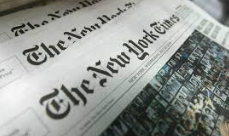
Figure 3.1.2 (CC BY-NC 4.0; Andi Adkins Pogue)
These days, social media will generally be among the first to cover a big news story, with news media writing an article or report after more information has been gathered. News articles are written by journalists who either report on an event they have witnessed firsthand, or after making contact with those more directly involved.
The focus is on information that is of immediate interest to the public and these articles are written in a way that a general audience will be able to understand. Such articles go through a fact-checking process, but when a story is big and the goal is to inform readers of urgent or timely information, inaccuracies may occur. In research, news articles are often best treated as primary sources, especially if they were published immediately after a current event.
Magazine Articles
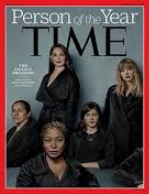
Figure 3.1.3 (CC BY-NC 4.0; Andi Adkins Pogue)
While news articles and social media tend to concentrate on what happened, how it happened, who it happened to, and where it happened, magazine articles are more about understanding why something happened, usually with the benefit of at least a little hindsight.
Writers of magazine articles also fall into the journalist category and rely heavily on investigation and interviews for research. Fact-checking in magazine articles tends to be more accurate because magazines publish less frequently than news outlets and have more time to get facts right. Depending on the focus of the magazine, articles may cover current events or just items of general interest to the intended audience. The language may be more emotional or dramatic than the factual tone of news articles, but the articles are written at a similar reading level so as to appeal to the widest audience possible. A magazine article is considered a popular source rather than a scholarly one, which gives it less weight in an academic research context, but doesn’t take away the value of these sources.
Scholarly Articles
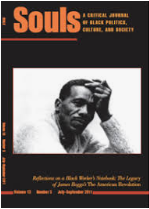
Figure 3.1.4 (CC BY-NC 4.0; Andi Adkins Pogue)
Scholarly articles are written by and for experts and scholars in a field and generally describe formal research studies or experiments conducted to provide new insight on a topic rather than reporting current events or items of general interest. You may have heard the term “peer review” in relation to scholarly articles. This means that before an article is published, it undergoes a review process in order to confirm that the information is accurate and the research it discusses is valid. This process adds a level of credibility to the article that you would not find in a magazine or news article.
Scholarly articles tend to be long and feature specialized language that is not easily understood by someone who does not already have some level of expertise on the topic. Though they may not be as easy to use, they carry a lot of weight in a research context (academic or otherwise), especially if you are working in a field related to science or technology. These sources will give you information to build on in your own original research.
Books

Figure 3.1.5 (CC BY-NC 4.0; Andi Adkins Pogue)
Books have been a staple of the research process since Gutenberg invented the printing press because a topic can be covered in more depth in a book than in most other types of sources. Also, the conventional wisdom for books is that anyone can write one, but only the best ones get published. This is becoming less true as books are published in a wider variety of formats and via a wider variety of venues than in previous eras, which is something to be aware of when using a book for research purposes. For now, the editing process for formally published books is still in place and research in the humanities, which includes topics such as literature and history, continues to be published primarily in this format.
This section was compiled, reworked, and/or written by Andi Adkins Pogue and is licensed under a Creative Commons Attribution-NonCommercial-ShareAlike 4.0 International License, except where otherwise noted.
This page titled 3.1: Information Formats was last modified on Sat, 03 Oct 2026 20:29:19 GMT and is shared under a CC BY-NC-SA 4.0 license and was authored, remixed, and/or curated by Kari Wergeland.
The book could not be loaded just now.