From LibreTexts, under CC BY-NC 4.0, as the source states it; its equations are written in TeX, which the PDF shows typeset. This page at LibreTexts.
9.1.2: Verbos pronominales
Opening the book…
Los verbos pronominales, numerosos en español, son los que se conjugan con pronombres reflexivos. Generalmente tienen significados específicos cuando son pronominales y no siempre indican una acción del sujeto sobre sí mismo o sobre su cuerpo, como los estudiados en la sección 47 (levantarse, vestirse, arreglarse, etc.). Por ejemplo:
Pronominal verbs are those conjugated with reflexive pronouns. Their number is considerable in Spanish. They usually have specific meanings as pronominal verbs, not always referring to an action that the subject performs on itself or its body, as studied in section 47 (levantarse, vestirse, arreglarse, etc.). Consider, for example, the verb secar(se) (to dry):
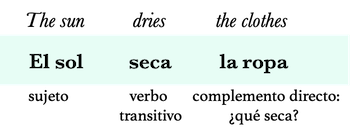
Aquí secar es un verbo transitivo
(un sujeto seca a un objeto directo): el sol está secando la ropa
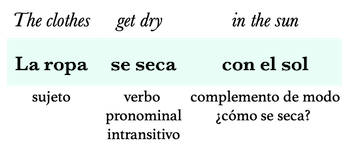
Aquí secarse (pronominal) es un verbo intransitivo
(no hay objeto directo; la ropa no se seca a sí misma)
"se" indica un cambio de estado: la ropa se está secando al sol
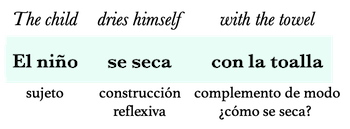
Aquí secarse (pronominal) está en construcción reflexiva
(el sujeto y el objeto son el mismo:
el niño se seca a sí mismo)
"se" indica una acción del sujeto sobre sí mismo: el niño se está secando con la toalla
Tipos
A. Algunos verbos son casi siempre pronominales:
A. Some verbs are almost always pronominal:
arrepentirse(de) (-ie-) Prometí ir, pero me arrepentí: no voy a ir.
Tu castigo será menor si te arrepientes de tu crimen. atreverse(a) No se atrevieron a contradecirme.
Debes atreverte a ser diferente. enterarse(de) Ayer nos enteramos de tu viaje.
Fui el último en enterarme de lo que pasaba. esforzarse(en/por) (-ue-) En nuestra empresa nos esforzamos por mejorar.
El equipo se esfuerza en ofrecer el mejor servicio. extralimitarse(en) El gobierno se extralimitó en las medidas de seguridad. quejarse (de/por) Siempre os estáis quejando del mal tiempo.
Llamé para quejarme por el mal servicio. rebelarse(contra) Los oprimidos se rebelan tarde o temprano. suicidarse La poeta Alfonsina Storni se suicidó en el mar.
to repent, to regret, to change one's mind
I promised to go, but I changed my mind. I won't go.
Your punishment will be less heavy if you regret your crime.
to dare (to)
They didn't dare to contradict me.
You should date to be different.
to find out (about)
We learned about your trip last night.
I was the last one to find out what was going on.
to make and effort (to), to apply oneself (to)
In our company, we push ourselves to improve.
The team applies itself to offer the best service.
to cross the line, to overextend, exceed one's limits
The government exceeded its powers with the safety measures.
to complain
You guys are always complaining about bad weather.
I called to complain about bad service.
to rebel (against)
The oppressed rebel sooner or later.
to commit suicide
Poet Alfonsina Storni committed suicide in the ocean.
B. Otros son pronominales solamente cuando no son transitivos (no tienen objeto directo). A veces ambos significan casi lo mismo, pero en otros casos el significado es bastante diferente. Por ejemplo:
B. Other verbs are pronominal only when they're not transitive (have no direct object). Sometimes both forms mean almost the same, but in other cases their meanings are quite different. For example:
Forma transitiva (con objeto directo): acordar (algo), comunicar (algo), conformar (algo), despedir (algo o a alguien), equivocar (algo), enamorar (a alguien), olvidar (algo o a alguien), reunir (algo), sentir (algo [sustantivo])
Forma pronominal (sin objeto directo): acordarse (de), comunicarse (con), conformarse (con), despedir (de), equivocarse (de), enamorarse (de), olvidarse (de), reunirse (con), sentirse (de una manera)
We agreed on keeping the secret. She communicated the news to me. They formed a good team.
The boss firedthe secretary.
The cab driver confusedthe way.
My talent seducedthe audience.
I already forgot that incident.
Did you gatherthe money?
I felt pride for you.
Acordamos guardar el secreto.
Ella me comunicóla noticia. Conformaron un buen equipo .
El jefe despidió al secretario.
El taxista equivocóel camino.
Mi talento enamoró al público.
Ya olvidéese incidente.
¿Reunisteel dinero? Sentíorgullo por ti.
No nos acordamos de la fecha.
No se comunicó con nadie. Se conformó con tu explicación.
No se despidió de nadie.
El taxista se equivocó de camino.
Él se enamoróde otra persona. Me olvidéde los detalles.
¿Te reunistecon amigos? Me sentí orgullosa de ti.
We don't remember the date.
She communicated with no one. He settled for your explanation.
He said goobye to no one.
The driver took the wrong way.
He fell in love with someone else.
I forgot (about) the details.
Did you get together with friends?
I felt proud of you.
C. En algunos verbos, el pronominal indica un carácter definitivo, total o enfático de la acción. Por ejemplo:
C. In some verbs, the pronominal points to a definitive, total or emphatic aspect of the action. For example:
Forma no pronominal: acción sin énfasis particular
Forma pronominal: acción enfática, con carácter total o definitivo
I learned a lot in this class.
They drank too much wine.
The dog ate early today.
She decided to leave early.
Did you go to the bank?
S/he took the children to the park.
Aprendí mucho en esta clase. Bebieron demasiado vino.
El perro comió temprano hoy.
Ella decidió salir temprano.
¿Fuiste al banco? Llevó a los niños al parque.
Me aprendí todala canción. Se bebieron la botella (completa).
El perro se comió mi cena. Se decidió a cambiar de empleo.
¿Por qué te fuiste tan temprano? Se llevó a los niños.
I learned the whole song by heart.
They drank up the (whole) bottle.
The dog ate up my dinner.
She made up her mind about.
Why did you leave so early?
S/he took the children away.
Cambios de estado
Un cuarto grupo de verbos pronominales, el más numeroso, son los que indican un cambio de estado, que puede ser mental o físico, general o específico, súbito o gradual.
A. Para cambios generales, se emplean comúnmente los siguientes:
A fourth group of pronominal verbs, the largest one, consists of those used to indicate a change of state, often conveyed in English with the verbs to become or to get.
B. The following are common ways to express the idea of becoming:
convertirse en (-ie-) + sustantivo
transformación objetiva y duradera Los problemas pueden convertirse en oportunidades.
Japón se convirtióen una potencia industrial. La vida se convirtióen un juego para mí.
Si se entrena, se va a convertir en una gran atleta. hacerse + adjetivo, sustantivo o adverbio (≈ llegar a ser)
transformación gradual que puede requerir esfuerzo o tiempo
(profesiones, riqueza, etapas de la vida o del día) ¿Quieres hacerte abogada? Me voy a hacer artista. Se hizo rico después de hacerse viejo. Vamos, se está haciendo tarde. ponerse + adjetivo
cambios temporales, generalmente repentinos
(común con estados emocionales y físicos) ¿Se pusieron pálidos de miedo o rojos de ira?
Al enterarme, primero me pusetriste y luego furioso.
La conversación se puso más interesante después. volverse + adjetivo o sustantivo
cambios relativamente duraderos Nuestra amistad se volvió muy profunda con el tiempo. Don Quijote se volvió loco por leer tanto. La reunión se volvió una fiesta gracias a tus chistes. quedarse + adjetivo (ciego, sordo, mudo)
cambios duraderos, casi siempre negativos Beethoven se quedó sordo al final de su vida. transformarse (en) (≈ convertirse en) Los problemas pueden transformarse en oportunidades. Japón se transformóen una potencia industrial.
to become, convert into + noun
signals objective, lasting transformation
Problems can become opportunities.
Japan became an industrial power.
Life became (like) a game for me.
If she trains, she's going to become a great athlete.
to become + adjective, noun or adverb ("make oneself")
signals gradual transformation, often requiring effort or time
(common with profession, wealth, life stages and time)
Do you want to become a lawyer? I'm becoming an artist.
He became rich after getting old.
Let's go, it's getting late.
to become/get + adjective (to "be put in[to]" a state)
signals temporary, often sudden, changes
(most common with emotional or physical states)
Did they get pale with fright or turned red with anger?
Upon finding out, I first got sad and then furious.
The conversation got more interesting later.
to become/get + adjectives or nouns (to "turn into" a state)
signals relatively lasting changes
Our friendship got deeper in time.
Don Quijote went mad with so much reading.
The meeting became a party thanks to your jokes.
to become + adjective (to fall into and remain in a state)
for lasting changes such as going blind, deaf, mute...
Betthoven went deaf towards the end of his life.
to become, be transformed into
Problems can be transformed into opportunities.
Japan transformed itself into an industrial power.
• ponerse y volverse son a veces intercambiables con adjetivos: El tema se puso /se volvió difícil.
Algunas diferencias:
- ponerse nunca se usa con sustantivos.
- volverse indica cambios más duraderos.
- ponerse bien es una manera común para expresar recuperación de una enfermedad (sinónimo: mejorarse).
• ponerse and volverse + adjective are interchangeable in some cases:
The topic got / became difficult.
Some differentes to keep in mind:
- ponerse is never used with nouns.
- volverse signals more lasting changes.
- ponerse bien is a common expression meaning "getting well" from an illness (sinónimo: mejorarse).
• El pronominal quedarse también significa permanecer en un lugar o en un estado (mental, emocional, marital): Nos vamos a quedar en un hotel. Me quedé sin palabras con ese regalo. Después de tu llamada se quedó más tranquila. Se quedaron impresionados con tus dibujos.
No me quería quedar solo. ¿No puedes quedarte quieto un minuto?
• The pronominal quedarse also means to stay in a place or remain in a state (could be mental, emotional, marital...):
We're going to stay in a hotel.
I was (left) wordless with that gift.
After your call, she got (and remained) more relaxed.
They were (and remained) impressed with your drawings.
I didn't want to be left/remain alone.
Can't you stay/remain/be still for a minute?
B. Numerosos verbos pronominales indican cambios de estado o procesos específicos. Estos son algunos ejemplos:
B. Many pronominal verbs are used to indicate specific processes or changes of state. Here are some examples:
to get bored
to get used (to)
to get/be glad
to get tired
to get confused
to realize
to get upset
to get excited
to get angry
to get enthusiastic
to get upset/annoyed
to get lost
to get worried
to get prepared
to get surprised
to break down
to get hot
to get damaged
to get deteriorated
to fall asleep
to get sick
to get cold
to get dirty
to get well
to get wet
to get cloudy
to get dark
to break
to get dry
to get bent
to get close(r)
to get away
to get off (a vehicle)
to get married
to unsubscribe
to turn off
to get divorced
to sign up
to move (one's body)
to stand up
to stand up
to check in, register
to sit down
to get separated
to get on (a vehicle)
Ejemplos:
No me acostumbré a esa rutina. Nos estamos aburriendo mucho.
¿Cómo te diste cuenta de eso?
El tren se averió y tuvimos que bajarnos.
No debes preocuparte por nada.
Nunca me duermo temprano. Nos desviamos porque la vía estaba cerrada.
Necesitas moverte más para bajar de peso.
El último vagón se separó del tren en marcha.
I did not get used to that routine.
We're getting pretty bored.
How did you realize that?
The train broke down and we had to get off.
You shouldn't worry about a thing.
I never go to sleep early.
We took a detour because the road was closed.
You need to move more in order to lose weight.
The last wagon got separated from the moving train.
• Los verbos que expresan reacciones emocionales a menudo pueden ser pronominales o emplearse con el pronombre de objeto indirecto (en construcciones valorativas). Aunque la forma pronominal hace más énfasis en el cambio emocional de la persona, el significado de ambas construcciones es casi igual. Por ejemplo:
• Verbs that express emotional reaction are often either pronominal or used with an indirect object pronoun (in constructions like the one used with gustar). Although the pronominal form tends to emphasize the change experienced by the person who reacts, both constructions have pretty much the same meaning. For example:
Construcción valorativa (con pronombre de objeto indirecto):
Forma pronominal (con pronombre reflexivo):
The news made them glad.
Empty talk tires me.
Your attitude didn't irritate me.
Did my answer bother you?
Sales worry the boss.
Seeing you surprises us.
Les alegró la noticia.
La palabrería me cansa.
A mí no me irritó tu actitud.
¿Te molestó mi respuesta?
Al jefe le preocupan las ventas. Nos sorprende verte.
Se alegraron con la noticia. Me cansode la palabrería.
Yo no me irritépor tu actitud.
¿Te molestastepor mi respuesta?
Él se preocupapor las ventas. Nos sorprendimosde verte.
They got glad with the news.
I get tired with empty talk.
I didn't get irritated at your attitude.
Did you get upset with my answer?
He worries about sales.
We got surprised to see you.